
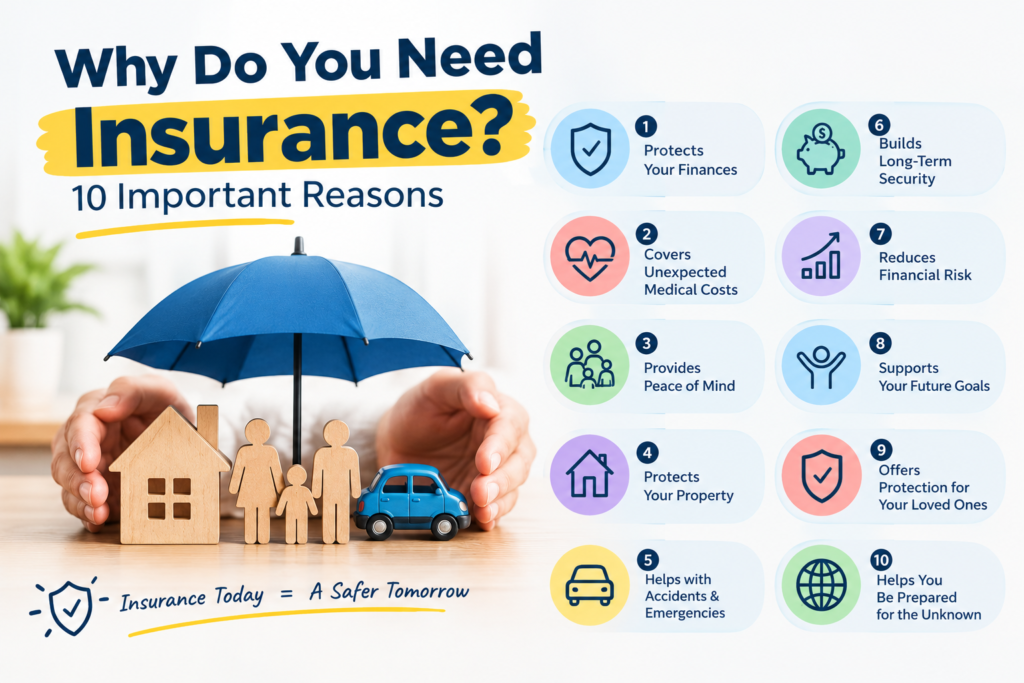

Life is unpredictable. A car accident, medical emergency, house fire, or sudden loss of income can create serious financial problems. Insurance helps people manage certain risks and reduce the financial impact of unexpected events.
But why do you need insurance? Is it worth paying for every month? And which types of insurance should you consider?
In this beginner-friendly guide, we explain 10 important reasons why insurance matters, the main benefits it provides, and how to find suitable insurance in the United States and the United Kingdom.
What Is Insurance?
Table of Contents
Insurance is an agreement between a person or business and an insurance company. You pay an amount called a premium, and the insurer agrees to provide specified financial protection under the terms of your policy.
For example, if your car is damaged in a covered accident, your auto insurance may pay eligible repair costs after applying the deductible and other policy conditions.
Insurance does not cover every situation. Your protection depends on your policy’s coverage, exclusions, and limits.
For more information, visit the National Association of Insurance Commissioners (NAIC).
10 Important Reasons Why You Need Insurance
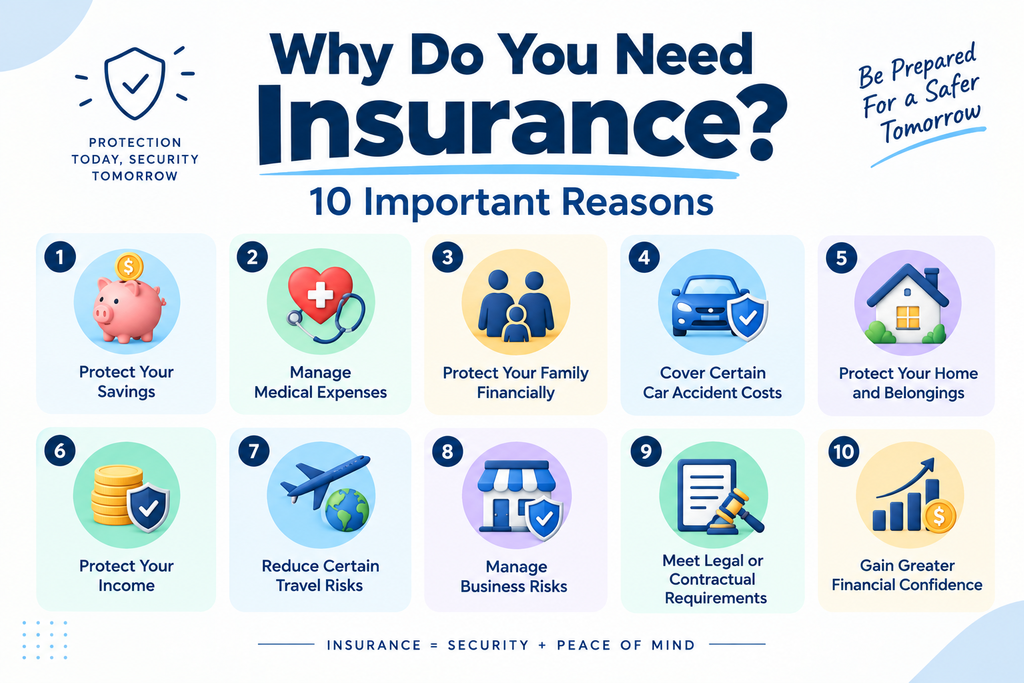
1. Protect Your Savings
An unexpected expense can quickly reduce your savings. Insurance may help cover eligible costs so that you do not have to pay the entire amount yourself.
For example, if a covered accident causes thousands of dollars in damage, suitable insurance could pay part of the bill according to your policy.
This can help you preserve savings for emergencies, education, housing, and other important goals.
2. Manage Medical Expenses
Medical treatment can be expensive, especially when it involves hospital stays, surgery, or specialist care.
Health insurance may help pay for covered medical services, depending on your plan.
Before buying health insurance, compare premiums, deductibles, out-of-pocket costs, provider networks, and exclusions.
If you live in the United States, visit HealthCare.gov to explore health insurance options.
3. Protect Your Family Financially
If your family depends on your income, life insurance may help protect them financially if you die while the policy provides coverage.
Depending on the policy and the family’s needs, a payout may help with household bills, outstanding debts, education expenses, or funeral costs.
Consider your dependants, financial responsibilities, and existing savings before deciding how much life insurance you need.
4. Cover Certain Car Accident Costs
Auto insurance can help cover eligible costs related to accidents, vehicle damage, injuries, and liability.
Depending on your policy, coverage may include:
- Liability insurance
- Collision coverage
- Comprehensive coverage
- Uninsured motorist coverage, where available
Legal requirements vary by location. Compare coverage limits and deductibles instead of choosing a policy based only on its lowest price.
5. Protect Your Home and Belongings
Homeowners insurance may cover specified damage to your house and belongings. It may also include personal liability protection.
Renters insurance can help protect a tenant’s belongings against certain covered losses and may provide liability coverage.
Read the policy carefully because floods, earthquakes, and other risks may be excluded or require separate coverage.
6. Protect Your Income
If an illness or injury prevents you from working, your income may decrease while your expenses continue.
Income protection insurance may provide payments if you meet the policy’s conditions. Check the waiting period, qualifying conditions, benefit amount, and maximum payment period before buying.
Also check whether your employer already provides similar benefits.
7. Reduce Certain Travel Risks
Travel insurance may help cover eligible expenses resulting from specified events, such as emergency medical treatment abroad, trip cancellation, travel delays, or lost baggage.
Coverage varies by policy. Check exclusions, medical conditions, activity restrictions, and cancellation rules before travelling.
8. Manage Business Risks
Business insurance can help protect companies against certain financial losses.
Depending on the business, useful options may include general liability, professional liability, commercial property, cyber, or business interruption insurance.
Business owners should choose coverage based on their industry, location, employees, contracts, and legal obligations.
9. Meet Legal or Contractual Requirements
Some insurance is required by law or by a lender.
For example, many places require drivers to carry certain motor liability insurance. A mortgage lender may require property insurance as a condition of the loan.
Check local requirements through official government or regulatory resources.
10. Gain Greater Financial Confidence
Insurance cannot prevent every problem, but suitable coverage can make certain unexpected expenses more manageable.
Understanding your policy can help you plan ahead and feel more confident about specific financial risks.
However, insurance should work alongside savings and sensible budgeting, not replace them.
Which Insurance Do You Need First?
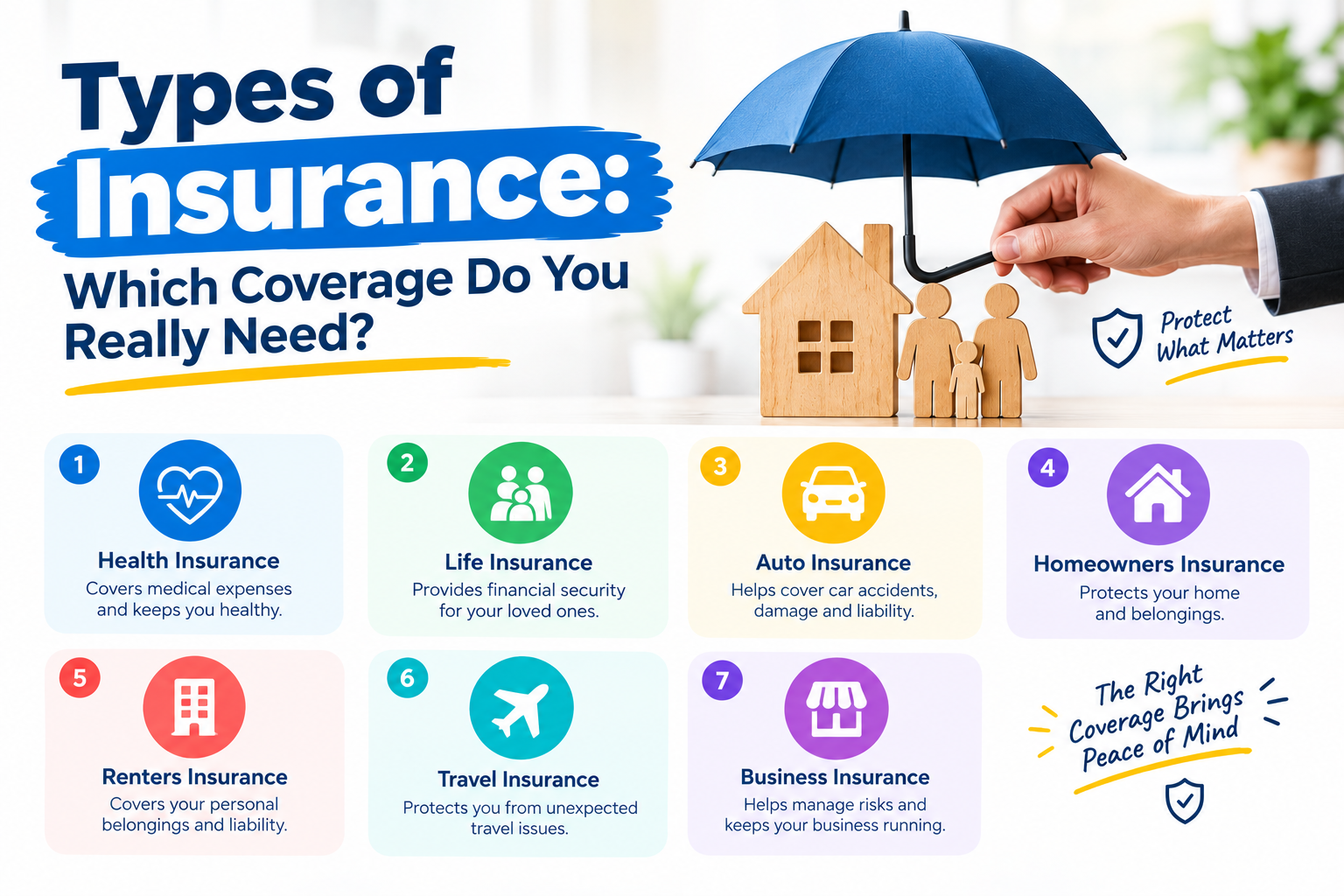
Your priorities depend on your circumstances. This table provides a starting point.
| Your situation | Insurance to consider |
|---|---|
| You own or drive a car | Auto insurance |
| You need help paying medical costs | Health insurance |
| Your family depends on your income | Life insurance |
| You own a house | Homeowners insurance |
| You rent a home | Renters insurance |
| You travel internationally | Travel insurance |
| You own a business | Business insurance |
| You are concerned about losing income due to illness or injury | Income protection insurance |
You do not necessarily need every type of insurance. Start by identifying the risks that could cause the greatest financial difficulty.
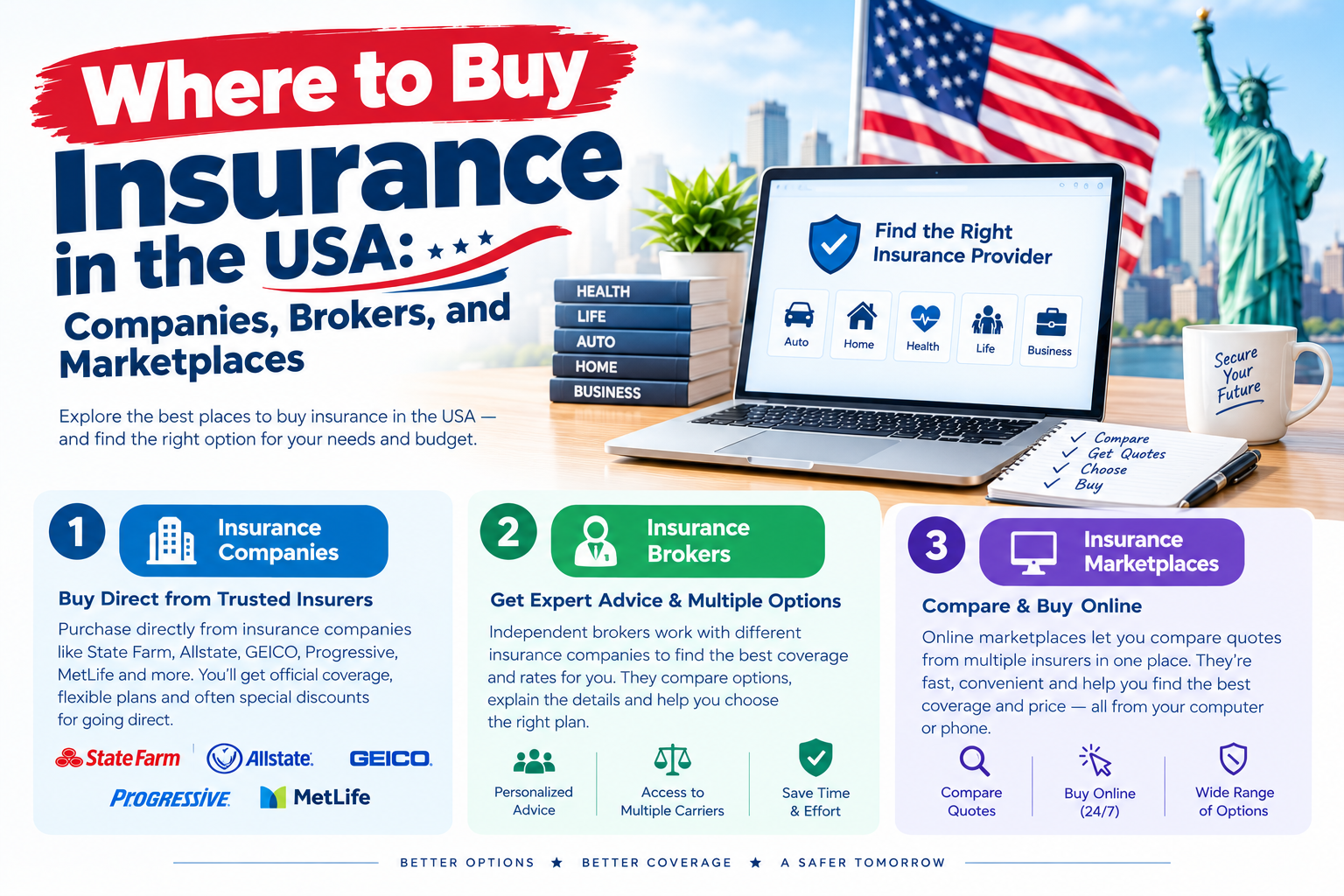
How to Find Insurance in the USA
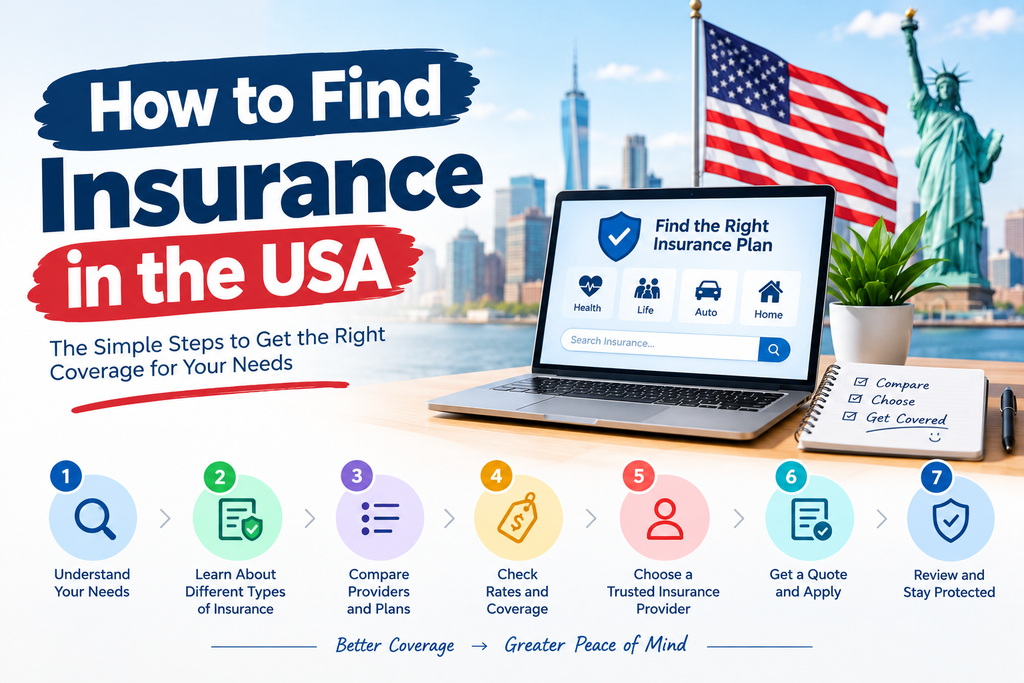
If you are looking for insurance in the United States:
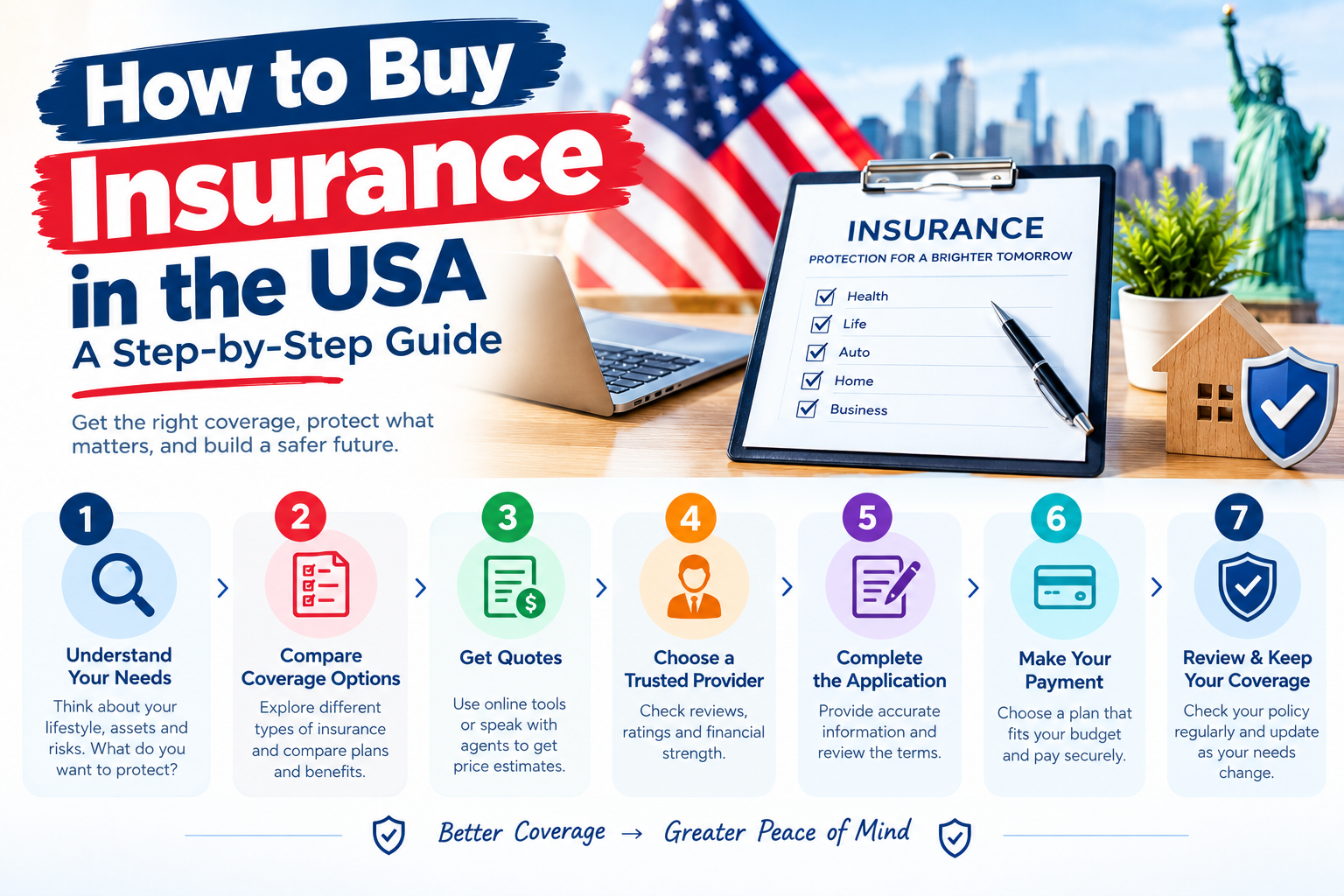
- Identify the type of coverage you need.
- Research insurers and licensed agents.
- Compare multiple quotes with similar coverage.
- Check deductibles, exclusions, limits, and cancellation rules.
- Verify the provider through relevant official resources.
- Read the complete policy before purchasing.
Useful resources include:
- NAIC Consumer Insurance Resources
- HealthCare.gov for health insurance marketplace information
- Your state’s department of insurance for local consumer guidance
How to Find Insurance in the UK
In the United Kingdom, you can compare policies directly through insurers, insurance brokers, and comparison services.
Start with MoneyHelper’s insurance guides for consumer information about different insurance products.
You can also visit the Financial Conduct Authority (FCA) for consumer resources and information about financial services firms.
Always compare policy conditions, not just prices. If you live outside the UK, check whether the provider accepts applicants in your country.
How to Make Insurance More Affordable
Insurance can be expensive, but these steps may help you find suitable coverage at a more manageable price:
- Compare quotes from several providers.
- Ask about discounts for which you qualify.
- Review your coverage limits and optional extras.
- Choose a deductible you could afford to pay.
- Avoid paying twice for overlapping benefits.
- Keep your application information accurate.
- Review your policy at renewal.
Do not reduce important coverage simply to get a lower premium. Make sure you understand the financial risk before changing your policy.
Can Insurance Give You Money Back?
Generally, insurance premiums pay for protection rather than build up as savings. If you do not make a claim, standard policies usually do not refund all your premiums.
However, refunds or payouts may be available in certain circumstances:
- An eligible refund after cancelling a policy
- A valid life insurance claim
- Cash value from certain permanent life insurance policies
- A return-of-premium benefit included in certain policies
- A refund of an incorrect overcharge
The conditions vary, and some products include fees or other restrictions. Read the policy carefully before buying.
Frequently Asked Questions
Why is insurance important?
Insurance may help protect your savings, family, property, income, or business against certain financial losses.
Is insurance mandatory?
Some types are legally required in particular circumstances, such as motor liability insurance. Other insurance is optional but may still be useful.
Is the cheapest insurance the best?
Not necessarily. A cheaper policy may have a higher deductible, lower coverage limits, or more exclusions. Compare the overall protection and cost.
Can I buy insurance online?
Many insurers let customers compare quotes, apply, and purchase policies online. Always verify the provider and read the terms.
What should I do if my insurance claim is denied?
Ask the insurer for the reason in writing. Review the policy, collect supporting evidence, and follow the insurer’s complaint or appeal process. Your rights depend on the country and policy involved.
Final Thoughts
Insurance can help you manage financial risks, protect your savings, and provide support after certain unexpected events. The right policy depends on your personal circumstances, budget, and location.
Start by identifying the risks you could not comfortably afford to cover yourself. Compare suitable policies, read the exclusions, and choose coverage that provides useful protection at a price you can manage.
Disclaimer: This article is for general educational purposes only and is not personalized financial, legal, or insurance advice. Coverage, eligibility, and legal requirements vary by country and policy.
Affiliate Disclosure: This article may contain affiliate links. If you purchase through an affiliate link, this website may earn a commission at no extra cost to you. Any affiliate links should be clearly disclosed.

Pingback: How to Buy Insurance in the USA: Step-by-Step Guide 2027