

Buying insurance in the United States can feel confusing, especially if you are purchasing a policy for the first time. There are many insurance companies, different types of coverage, and several ways to compare prices.
Whether you need health insurance, car insurance, life insurance, homeowners insurance, or renters insurance, understanding the buying process can help you make a better decision.
The good news is that you can often compare policies online, contact an insurance company directly, or work with a licensed insurance agent or broker.
In this guide, you will learn how to buy insurance in the USA, where to start, how to compare quotes, and what to check before purchasing a policy.
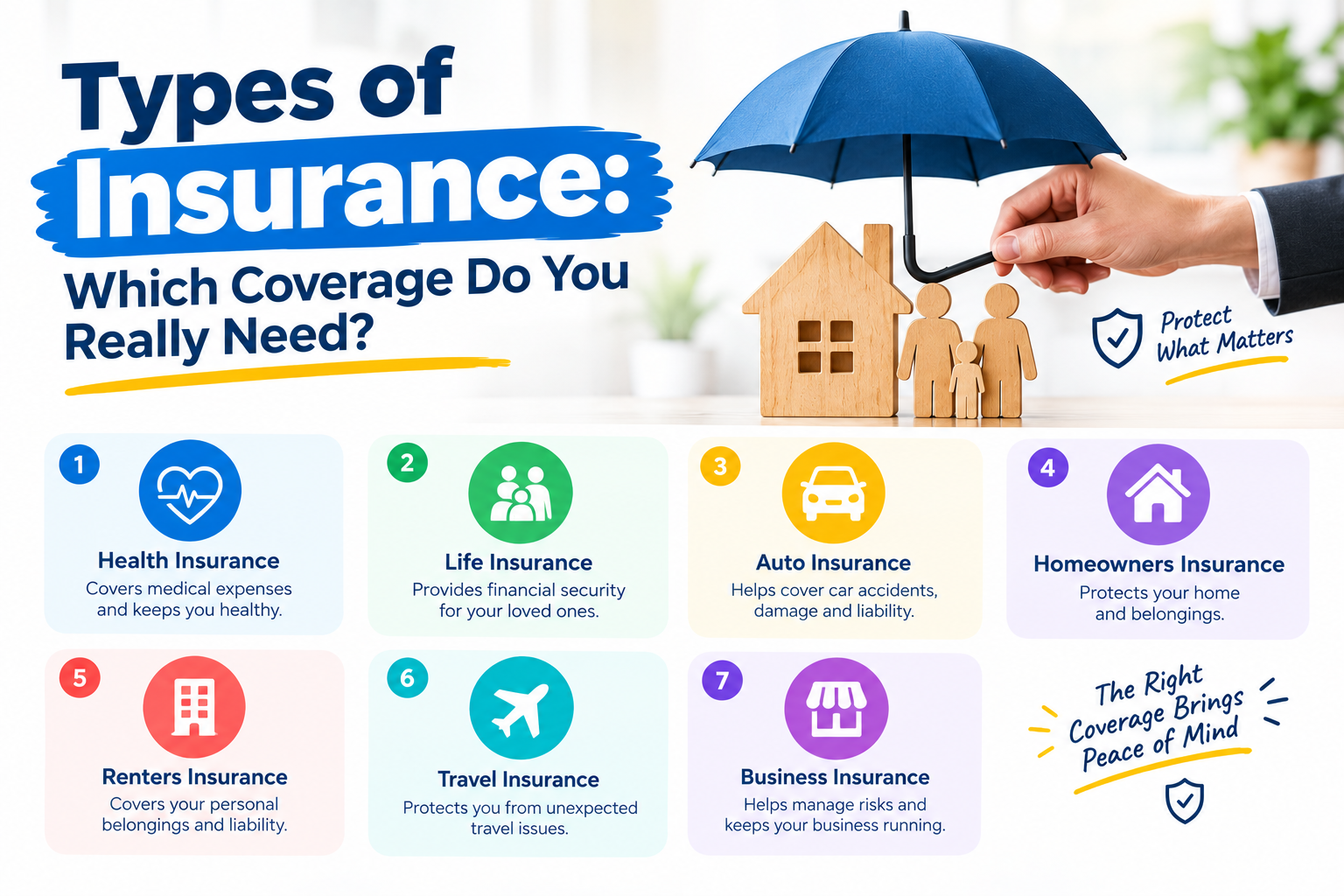
1. Decide Which Type of Insurance You Need
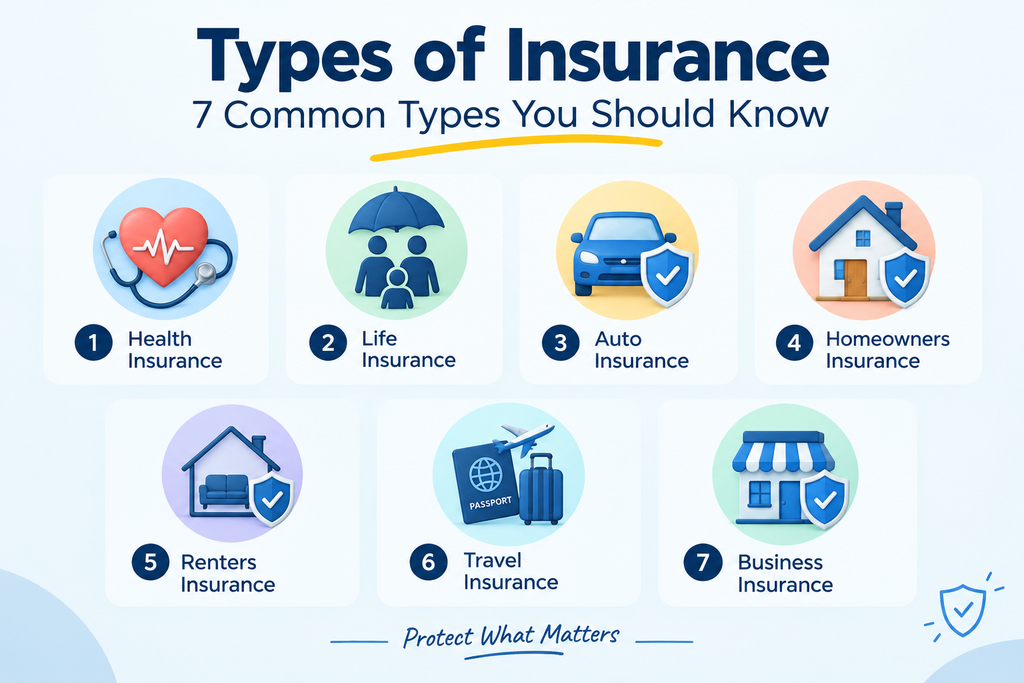
Table of Contents
Before searching for insurance, identify what you want to protect.
Different policies cover different risks. Start with the type of insurance that matches your circumstances.
Health Insurance
Health insurance helps pay for eligible medical services, depending on the plan. It may cover doctor visits, hospital treatment, prescription drugs, and other healthcare services.
If you need individual or family health coverage, visit HealthCare.gov to explore Marketplace options and check whether you qualify for financial assistance.
Auto Insurance
Auto insurance can help cover certain expenses related to car accidents, injuries, property damage, and other insured events.
Many US states require drivers to carry minimum liability insurance. The exact requirements depend on the state where the vehicle is registered and driven.
Life Insurance
Life insurance may provide a financial payout to your beneficiaries if you die while the policy is in force and the claim meets the policy conditions.
It may be worth considering if you have children, a spouse, or other people who depend on your income.
Homeowners Insurance
Homeowners insurance may cover specified damage to your house and belongings. Some policies also include liability protection and additional living expenses after a covered loss.
If you have a mortgage, your lender may require certain property insurance.
Renters Insurance
Renters insurance may help protect your personal belongings and provide certain liability benefits. It can be worth considering if you would struggle to replace your possessions after a covered loss.
Business Insurance
Business insurance can help protect companies against certain property losses, liability claims, and other business risks.
The appropriate coverage depends on your industry, location, business activities, and legal requirements.
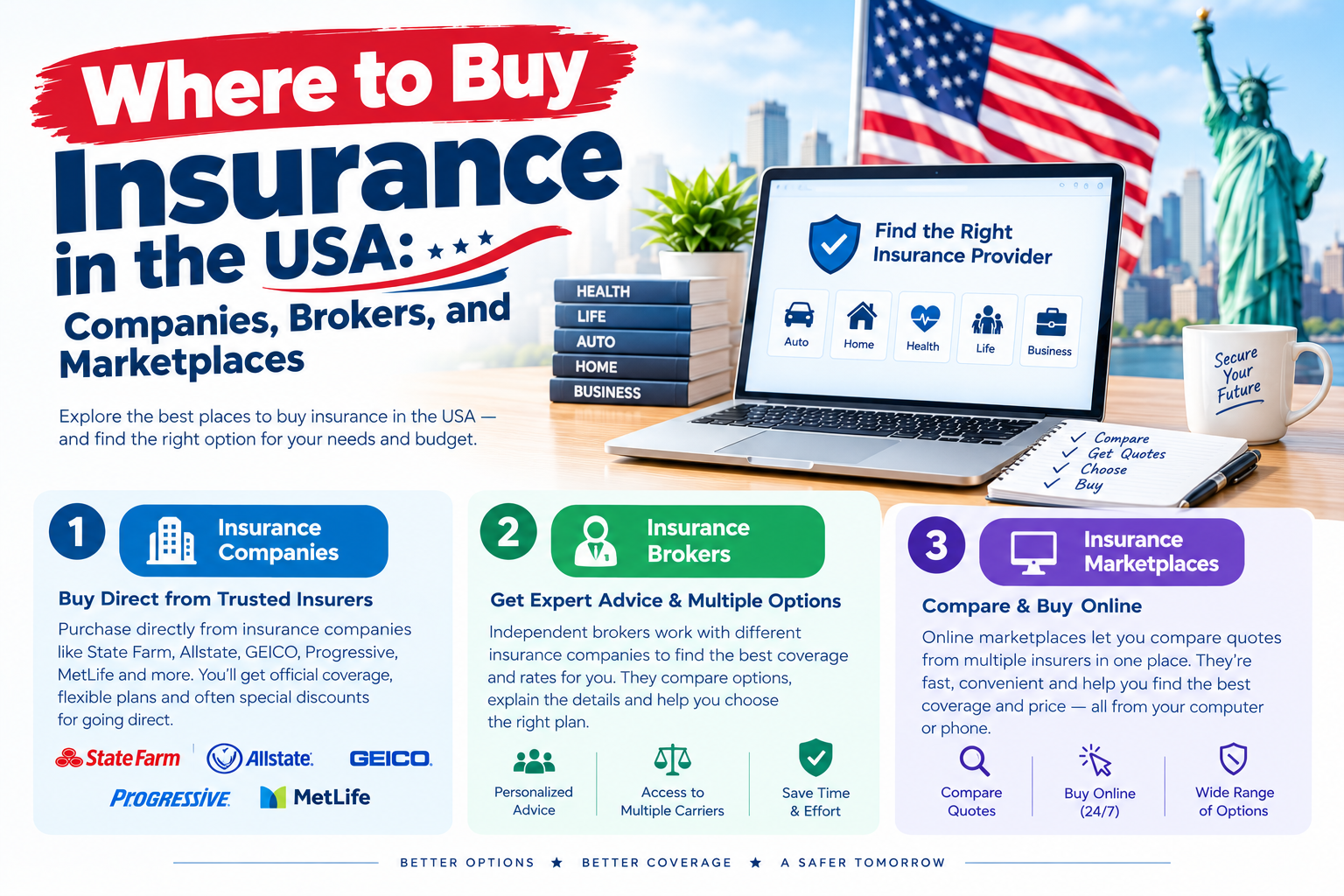
2. Understand Where You Can Buy Insurance
In the United States, there are several ways to purchase insurance.
Option A: Buy Directly From an Insurance Company
Many insurance companies offer online quotes and applications through their official websites.
This approach allows you to research a company’s products and contact its customer service team directly.
However, a direct quote only shows what that company offers. You may need to compare other providers to understand your available choices.
Option B: Use a Licensed Insurance Agent
An insurance agent can explain policies, provide quotes, and help you complete an application.
Some agents represent one insurer, while independent agents may offer products from multiple insurance companies.
Ask which companies they represent and whether any fees apply.
Option C: Work With an Insurance Broker
An insurance broker can help you explore policies from different providers, depending on their market access and licensing.
Before working with a broker, confirm their credentials, understand how they are compensated, and ask whether any service fees apply.
Option D: Use an Official Government Marketplace
For individual and family health insurance, you can use the federal Marketplace or an official state-based Marketplace, depending on where you live.
Start at HealthCare.gov. The website can direct you to the appropriate Marketplace for your state.
The NAIC also explains the different ways consumers can buy insurance in its official consumer guide. <Cite refs={[“turn651994search0″,”turn651994search1″,”turn651994search4”]}/>
3. Research Insurance Companies
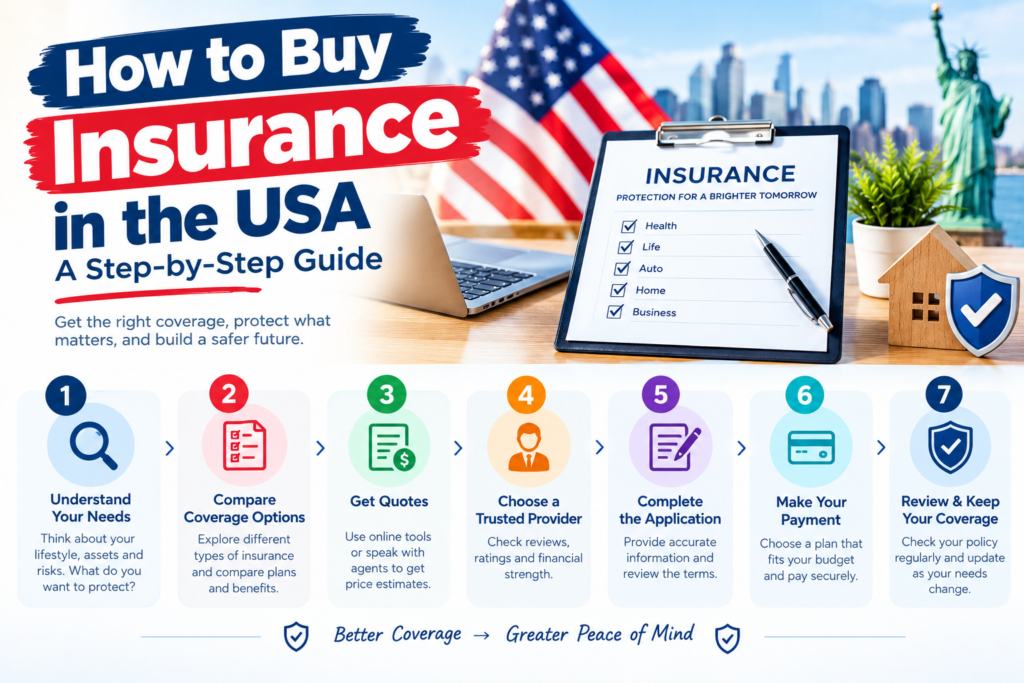
Once you know which type of insurance you need, make a shortlist of potential providers.
Do not choose a company based only on an advertisement or the lowest price you see online.
Research the following:
- Whether the insurer is authorized to sell the relevant insurance in your state.
- What coverage options it offers.
- How its claims process works.
- Whether its customer support meets your needs.
- What complaints or regulatory information may be available.
- Whether the policy includes the benefits you need.
You can start with the NAIC Consumer Resources website and your state’s department of insurance.
For example, the Texas Department of Insurance provides guidance on finding insurance companies and agents. Other states have their own official resources. <Cite refs={[“turn651994search7″,”turn651994search5”]}/>
4. Compare Multiple Insurance Quotes
Comparing quotes is one of the most important steps when buying insurance.
A quote is an estimate of the price an insurer may charge based on the information you provide. The final premium can change after the company reviews your application and other relevant details.
Request quotes from several providers where possible.
When comparing them, check:
Premium: How much will you pay monthly, annually, or according to the policy’s payment schedule?
Deductible: How much must you pay toward certain covered losses before the insurer pays its share?
Coverage limits: What is the maximum amount the insurer will pay for covered claims?
Exclusions: Which events, services, or expenses are not covered?
Additional benefits: Does the policy include useful extras, or are they available at an additional cost?
Cancellation rules: What happens if you cancel the policy early?
Compare similar coverage levels. A policy with a lower premium may provide less protection or have a higher deductible.
5. Check Whether You Qualify for Financial Assistance
Some insurance programs offer financial assistance to eligible people.
For example, people buying qualifying health coverage through the US Health Insurance Marketplace may be eligible for premium tax credits or other assistance, depending on their circumstances and applicable rules.
To explore these options, visit HealthCare.gov.
Do not assume that assistance is available for every insurance product. Eligibility rules differ by program, income, household circumstances, and other factors.
6. Prepare the Information Needed for an Application
The information required depends on the type of insurance you are buying.
For example:
- Health insurance: You may need household information, income details, and information about people applying for coverage.
- Auto insurance: You may need vehicle details, driver information, driving history, and the address where the vehicle is kept.
- Life insurance: The application may ask about age, health history, lifestyle, and the amount of coverage requested.
- Homeowners insurance: You may need the property address, construction details, estimated rebuilding cost, and information about the home’s condition.
- Business insurance: You may need details about your business activities, revenue, employees, premises, and potential risks.
These are examples, not a complete list. Requirements vary between insurers and policies.
Important: Answer all application questions accurately. Incorrect or incomplete information can cause problems with underwriting, coverage, or a future claim.
7. Read the Policy Before You Buy
Never assume that every risk is covered just because an insurance company has accepted your application.
Before paying, review the policy documents and look for:
- Covered events and services
- Exclusions and limitations
- Deductibles and other out-of-pocket costs
- Coverage limits
- Waiting periods, where applicable
- Renewal conditions
- Cancellation and refund rules
- The procedure for making a claim
If anything is unclear, ask the insurer or licensed agent to explain it before you purchase the policy.
You can also review the official NAIC guidance on how insurance works.
8. Complete the Application and Purchase the Policy
Once you have chosen a suitable policy, follow the insurer’s application process.
You may be able to apply online, by telephone, or through an agent, depending on the product.
Review your application before submitting it. Make sure your information is accurate and that you understand the payment terms.
If the insurer approves your application, follow its instructions to pay the premium and activate coverage.
Do not assume that receiving a quote means you are already insured. Confirm the policy’s effective date and any remaining requirements.
9. Save Your Insurance Documents
After purchasing your policy, keep copies of:
- Your policy documents
- Proof of payment
- Your policy number
- The insurer’s contact information
- Relevant receipts and supporting documents
- Instructions for filing a claim
Store these documents somewhere you can access them when needed.
It is also a good idea to review your policy when it renews or when your circumstances change.
How to Buy Health Insurance in the USA Online
If you are specifically looking for US health insurance, follow these steps:
- Visit HealthCare.gov.
- Find the Marketplace serving your state.
- Check when you can apply and whether you qualify for a special enrollment period.
- Create an account or follow the official application instructions.
- Provide the required household and eligibility information.
- Compare available plans, premiums, deductibles, provider networks, and out-of-pocket costs.
- Review whether you qualify for financial assistance.
- Select a suitable plan and follow the enrollment instructions.
- Confirm your coverage start date and any required first payment.
Enrollment periods and eligibility rules can affect when you can sign up. Visit HealthCare.gov’s application guide for current instructions. <Cite refs={[“turn651994search2″,”turn651994search8”]}/>
Can Someone Living Outside the USA Buy US Insurance?
It depends on the type of insurance, the insurer, and your circumstances.
Some US insurance products are designed for US residents or people with particular eligibility requirements. A person living abroad should not assume that they can buy a standard US health, auto, homeowners, or life insurance policy.
If you live outside the United States, explain your actual residency and situation to the insurer before applying.
For example, travel medical insurance for an international trip is different from a US domestic health insurance plan. Make sure the product matches your needs and eligibility.
Common Mistakes to Avoid When Buying Insurance
Avoid these common mistakes:
- Choosing a policy based only on the lowest price.
- Comparing policies with different coverage limits.
- Ignoring deductibles and exclusions.
- Giving inaccurate information on the application.
- Buying from an unverified insurer or agent.
- Assuming a quote means coverage has started.
- Missing required payments or renewal deadlines.
- Failing to keep policy documents.
- Not checking whether you qualify for financial assistance.
A little research before buying can help you avoid unexpected costs and coverage problems.
Frequently Asked Questions
What is the best website to buy insurance in the USA?
There is no single best website for every type of insurance. Health insurance shoppers can start with HealthCare.gov, while people seeking auto, home, life, or business insurance can compare official insurer websites and work with licensed agents or brokers.
Can I buy insurance directly from a company?
Yes. Many insurers sell policies directly online or by telephone. You should still compare coverage and verify that the company is authorized to sell the relevant insurance in your state.
Is an insurance quote free?
Many insurers and comparison services provide quotes without charging a fee, but terms can vary. Check whether a broker or service charges any separate fees.
How many insurance quotes should I compare?
There is no fixed number, but comparing multiple quotes can help you understand the available prices and coverage. Make sure the policies offer similar benefits and limits.
What happens if I provide incorrect information?
Incorrect information can affect the insurer’s decision, the premium, or a future claim. In some circumstances, a policy may be cancelled or a claim denied. Always answer questions accurately and correct mistakes promptly.
How can I check whether an insurance company is legitimate?
Use the relevant state’s department of insurance or official regulatory resources to verify the company’s authorization and, where applicable, the agent’s license.
Final Thoughts
Buying insurance in the USA becomes easier when you follow a clear process. Identify your needs, research providers, compare similar quotes, verify the insurer, and read the policy carefully before purchasing.
For health insurance, HealthCare.gov is an important official starting point. For other types of coverage, use trusted consumer resources and your state’s insurance department.
The goal is not simply to find the cheapest premium. It is to choose suitable coverage that fits your circumstances, budget, and financial risks.
Disclaimer: This article is for general educational purposes only and is not personalized financial, legal, or insurance advice. Insurance requirements, eligibility, and policy terms vary by state, insurer, and product. Check official sources and review your policy documents before making a decision.
Affiliate Disclosure: This article may contain affiliate links. If readers purchase through an affiliate link, this website may earn a commission at no additional cost to them. Affiliate relationships should be disclosed clearly, and any recommendations should remain accurate and transparent.


Pingback: Where to Buy Insurance in the USA & UK: A Complete Guide