

Insurance comes in many forms, and each type is designed to protect against different financial risks. Some policies help cover medical expenses, while others protect your car, home, family, travels, or business.
However, buying every available insurance policy is not necessary for everyone. The right choice depends on your personal circumstances, financial responsibilities, location, and budget.
In this guide, you will learn about the main types of insurance, what they cover, who may need them, and how to compare policies in the United States and the United Kingdom.
What Are the Main Types of Insurance?
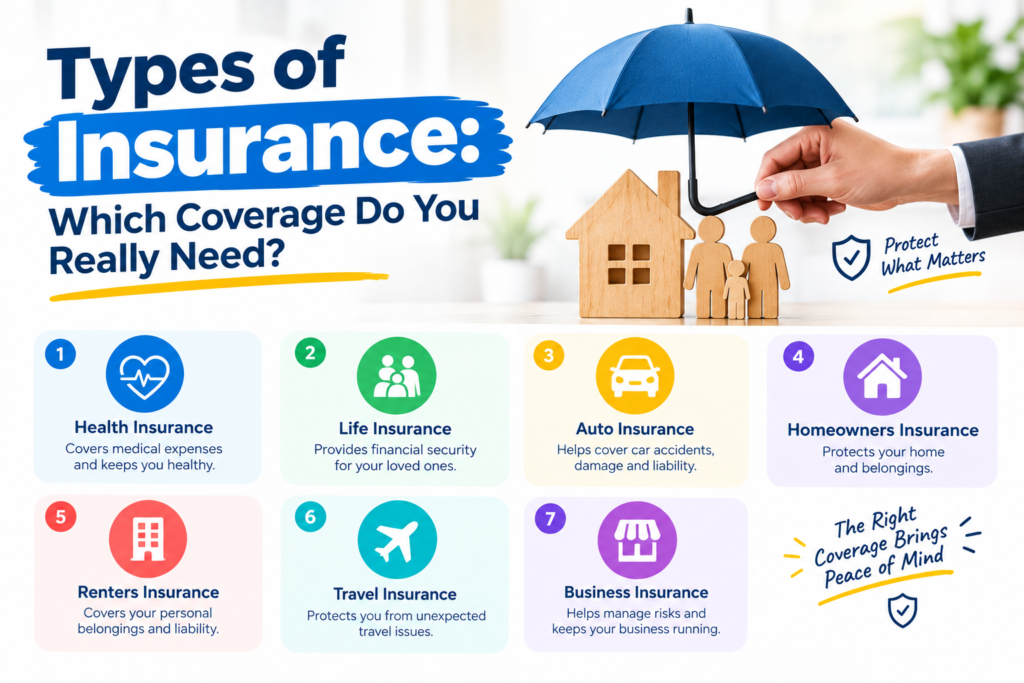
Table of Contents
Insurance policies can generally be divided into several categories, including health, life, property, vehicle, travel, and business insurance.
Each category has different coverage options, costs, exclusions, and requirements. Understanding these differences can help you make a more informed decision.
1. Health Insurance
Health insurance helps pay for eligible medical expenses according to the policy. Depending on the plan, it may cover doctor visits, hospital treatment, prescription medicines, preventive care, and specialist services.
Who may need health insurance?
Health coverage may be important if you want help managing medical costs or need access to covered healthcare services.
Before choosing a plan, compare:
- Monthly premiums
- Deductibles and out-of-pocket expenses
- Covered treatments and prescriptions
- Doctor and hospital networks
- Exclusions and waiting periods
In the United States, visit HealthCare.gov to learn about marketplace health plans and possible financial assistance.
2. Life Insurance
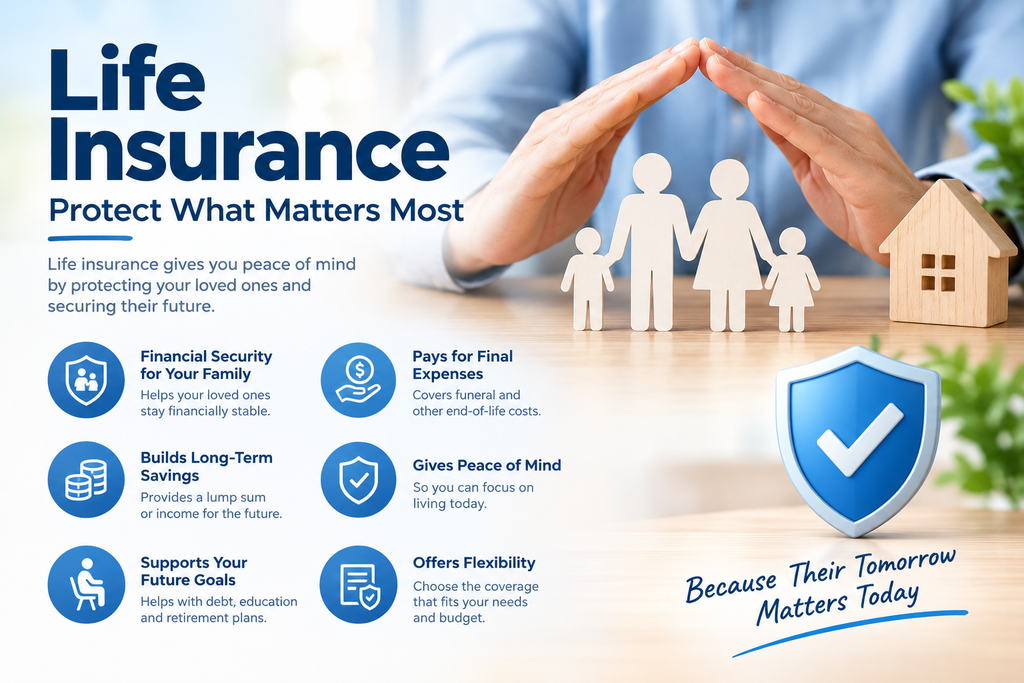
Life insurance can provide a payout to named beneficiaries if the insured person dies and the claim meets the policy conditions.
It can help families manage financial responsibilities after losing someone who provided income or other support.
Two common types are:
Term life insurance: Provides coverage for a specified period, subject to the policy terms.
Permanent life insurance: Can provide longer-term coverage and may build cash value, depending on the product.
Who may need life insurance?
It may be worth considering if you have dependent children, a spouse who relies on your income, shared debts, or other financial responsibilities.
If nobody depends on your income and you have limited financial obligations, your needs may be different.
For UK guidance, visit MoneyHelper’s life insurance guide.
3. Auto Insurance
Auto insurance helps cover certain expenses related to vehicle accidents, damage, injuries, or liability.
Common coverage options include:
- Liability insurance: May pay for covered injuries or property damage you cause to others.
- Collision coverage: May pay for eligible damage to your vehicle following a covered collision.
- Comprehensive coverage: May cover specified non-collision events, such as theft or certain weather-related damage.
- Uninsured motorist coverage: May provide protection in qualifying incidents involving uninsured drivers, where available.
Who may need auto insurance?
People who own or drive vehicles should check their local legal requirements and consider the financial risks they face.
Required coverage varies by jurisdiction. In many US states, drivers must carry certain liability insurance. In the UK, at least third-party motor insurance is generally required for driving on public roads.
Compare quotes carefully and make sure the coverage meets applicable legal requirements.
4. Homeowners Insurance
Homeowners insurance may help protect a house and its contents against specified losses. Depending on the policy, it may also include personal liability coverage and certain additional living expenses.
Who may need homeowners insurance?
Homeowners may consider this coverage to help manage the financial impact of damage to their property.
A mortgage lender may require particular property insurance as a loan condition. However, the exact requirements depend on the lender and location.
Check whether the policy covers rebuilding costs, personal belongings, liability, and temporary accommodation. Floods and earthquakes may require separate coverage.
5. Renters Insurance
Renters insurance is designed for people who rent houses or apartments.
Depending on the policy, it may cover personal belongings, certain liability claims, and additional living expenses after a covered event.
Is renters insurance worth it?
It may be worth considering if replacing your belongings after a fire, theft, or other covered loss would be difficult to afford.
Do not assume your landlord’s insurance protects your personal belongings. Check the terms of your rental agreement and your own insurance options.
6. Travel Insurance
Travel insurance may help cover certain unexpected expenses during a trip.
Depending on the policy, benefits may include emergency medical treatment abroad, trip cancellation, travel delays, lost baggage, or emergency transportation.
Who should consider travel insurance?
It may be useful for international travellers, people taking expensive trips, or anyone concerned about eligible medical and travel-related costs.
Before buying, check the destination restrictions, medical exclusions, cancellation conditions, baggage limits, and any rules relating to pre-existing medical conditions.
7. Disability and Income Protection Insurance
Disability or income protection insurance may provide financial benefits if an illness or injury prevents you from working, subject to the policy’s conditions.
The benefits, qualifying conditions, and payment periods vary by product.
Who may need income protection?
It may be worth considering if you rely heavily on your salary and would struggle to pay rent, loans, or household expenses if your income stopped.
Check whether your employer already provides sick pay, disability benefits, or another form of income protection.
8. Business Insurance
Business insurance helps companies manage certain financial risks associated with their operations.
Common options include:
- General liability insurance: May cover specified third-party injury or property damage claims.
- Professional liability insurance: May cover certain claims involving professional services or advice.
- Commercial property insurance: May cover specified damage to business property.
- Workers’ compensation insurance: May cover qualifying work-related injuries or illnesses where applicable.
- Business interruption insurance: May help cover certain lost income or operating expenses following a covered interruption.
- Cyber insurance: May provide specified protection against certain cyber-related losses.
Who needs business insurance?
Freelancers, shop owners, consultants, contractors, and larger companies may all have different insurance needs.
Choose coverage based on your business activities, contracts, legal requirements, employees, and the risks you could not comfortably afford to handle yourself.
For small business insurance information, you can explore the US Small Business Administration.
9. Pet Insurance
Pet insurance may help pay for eligible veterinary expenses, depending on the plan.
Some policies cover accidents, illnesses, or both. Others may offer additional benefits under specific conditions.
Who may need pet insurance?
Pet owners who would struggle to afford an unexpected veterinary bill may want to compare policies.
Check waiting periods, annual limits, deductibles, reimbursement rates, exclusions, and rules concerning pre-existing conditions.
10. Liability Insurance
Liability insurance may protect you or your business against certain claims that you are legally responsible for causing injury or damage to another person or their property.
The type of liability coverage required depends on the risk.
For example, businesses may consider general liability or professional liability insurance, while vehicle owners may need motor liability coverage.
Always check the specific policy terms because different liability policies cover different situations.
11. Long-Term Care Insurance
Long-term care insurance may help cover eligible services for people who need assistance with daily activities or certain ongoing care needs.
Availability and benefits differ by country and policy.
Before purchasing, consider the cost of premiums, the conditions required to qualify for benefits, waiting periods, benefit limits, and how the policy fits into your broader financial plans.
12. Critical Illness Insurance
Critical illness insurance may provide a lump-sum payment if the insured person is diagnosed with a condition specifically covered by the policy and meets its requirements.
The money may be used for eligible purposes or general expenses according to the product’s terms.
Read the list of covered conditions carefully. Not every serious illness qualifies, and the definition of a covered diagnosis can be specific.
Which Types of Insurance Do You Really Need?
You do not need every type of insurance simply because it is available. Start by considering your most significant financial risks.
| Your situation | Insurance to investigate |
|---|---|
| You drive a car | Auto insurance |
| You need help managing medical expenses | Health insurance |
| Your family depends on your income | Life insurance |
| You own a house | Homeowners insurance |
| You rent your home | Renters insurance |
| You travel internationally | Travel insurance |
| You depend on your salary to meet monthly bills | Income protection insurance |
| You run a business | Business insurance |
| You own a pet | Pet insurance |
This table is a starting point, not a personalized recommendation. Legal requirements and insurance availability vary by location.
How to Choose the Right Insurance Policy
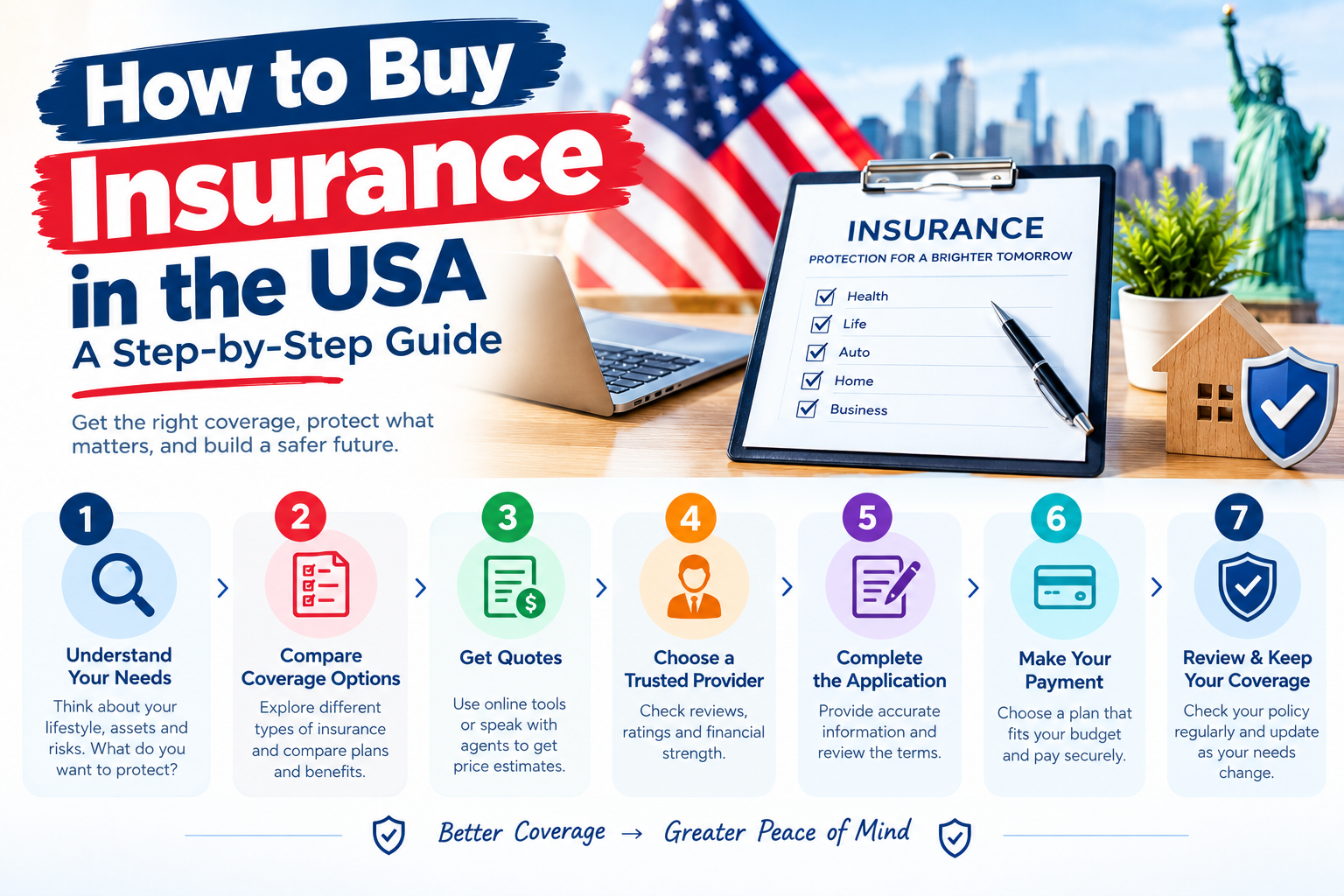
Follow these steps before buying insurance.
Step 1: Identify Your Biggest Financial Risks
Consider which unexpected expenses would cause the most serious financial difficulty.
For example, you may be more concerned about medical expenses, supporting your family, or replacing an expensive vehicle.
Step 2: Check Your Existing Coverage
Review policies you already have, including any insurance or employee benefits provided by your employer.
This can help you avoid paying for overlapping protection you do not need.
Step 3: Compare Multiple Quotes
Request quotes from several providers where possible. Compare policies with similar coverage limits, deductibles, benefits, and exclusions.
A cheaper policy may provide less protection, so do not compare premiums alone.
Step 4: Read the Policy Documents
Check what is covered, what is excluded, how claims work, and whether waiting periods or other conditions apply.
Step 5: Check the Provider
Verify that the insurer or intermediary is appropriately authorized where required. Use official regulatory resources for the country in which the policy will be sold.
Step 6: Review the Cost
Choose a policy that fits your budget and provides meaningful protection. Make sure you could afford the deductible and any other out-of-pocket expenses.
Where Can You Compare Insurance in the USA and UK?
United States
These official resources are useful starting points:
- NAIC Consumer Insurance Resources — general insurance education and consumer information.
- HealthCare.gov — health insurance marketplace information.
- US Small Business Administration — business insurance guidance.
- Your state department of insurance — local requirements and consumer resources.
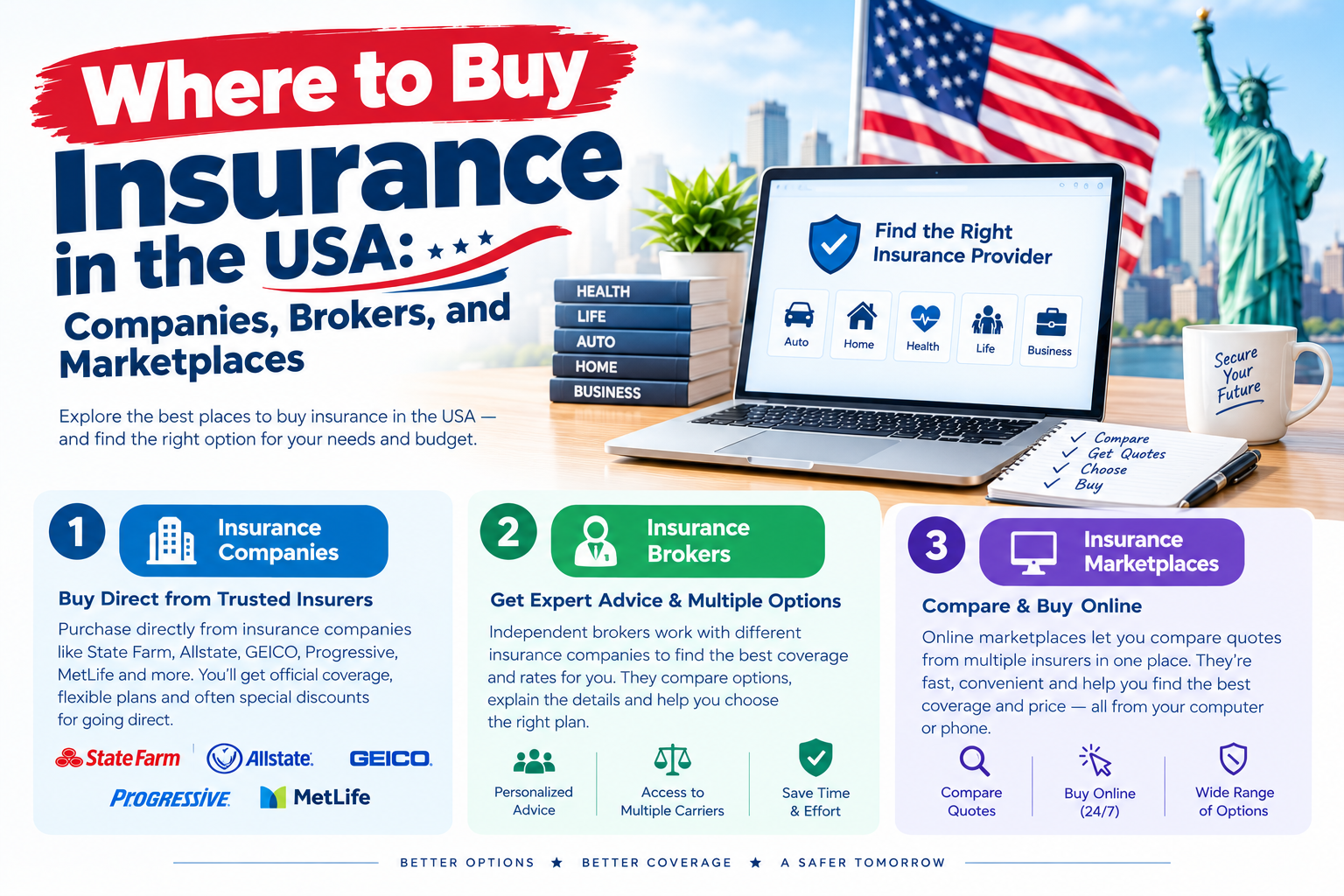
You can also request quotes directly from insurers or work with a licensed insurance agent or broker.
United Kingdom
Useful starting points include:
- MoneyHelper Insurance Guides — consumer guidance about different insurance products.
- Financial Conduct Authority — consumer information and financial services resources.
Comparison websites can help you explore available policies, but they may not show every provider. Read the full policy wording before making a decision.
If you live outside the USA or UK, check whether the provider can legally offer the policy to someone in your country.
Frequently Asked Questions
What is the most important type of insurance?
There is no single answer for everyone. Your priorities depend on your circumstances, local laws, financial responsibilities, and existing coverage.
Can I have multiple insurance policies?
Yes. People commonly have more than one type of insurance, such as health, auto, life, and homeowners insurance. Check the benefits and exclusions of each policy to understand how they work together.
Is life insurance necessary if I am single?
It depends on your financial obligations. You may have dependants, shared debts, or other responsibilities even if you are single. If nobody depends on you financially, your need may be lower.
Can I buy insurance online?
Many providers allow customers to compare quotes and purchase policies online. Verify the provider and read the policy conditions before paying.
How can I reduce my insurance costs?
Compare quotes, ask about eligible discounts, review optional coverage, and select a deductible you can afford. Avoid reducing essential protection without understanding the risks.
Final Thoughts
Different types of insurance protect against different financial risks. Health, life, auto, homeowners, renters, travel, and business insurance can all serve useful purposes, but not every policy is suitable for every person.
Start with your most important risks, review the coverage you already have, and compare policies carefully. Understanding the benefits, limitations, and costs will help you make a more informed decision.
Disclaimer: This article is for general educational purposes only and is not personalized financial, legal, or insurance advice. Insurance requirements, availability, and coverage vary by country, insurer, and policy.
Affiliate Disclosure: This article may contain affiliate links. If you purchase through an affiliate link, the website may earn a commission at no additional cost to you. Any affiliate relationship should be clearly disclosed.

Pingback: How to Buy Insurance in the USA: Step-by-Step Guide 2027