

Filing an insurance claim is supposed to help you recover financially after an unexpected event. Whether you have health, car, home, renters, or business insurance, you expect your insurance company to provide financial support when something goes wrong.
However, not every insurance claim gets approved. Sometimes insurance companies reject claims because the policy does not cover the situation, important documents are missing, information is incorrect, or the policyholder has not followed the required procedures.
A rejected claim can be frustrating, especially when you are already dealing with an accident, property damage, medical expenses, or another difficult situation.
Understanding why insurance claims get rejected can help you avoid common mistakes and protect your financial interests.
In this guide, we will explain the 10 most common reasons insurance claims are denied, what you can do after a rejection, and how to improve your chances of getting a claim approved.
What Does It Mean When an Insurance Claim Is Rejected?
Table of Contents
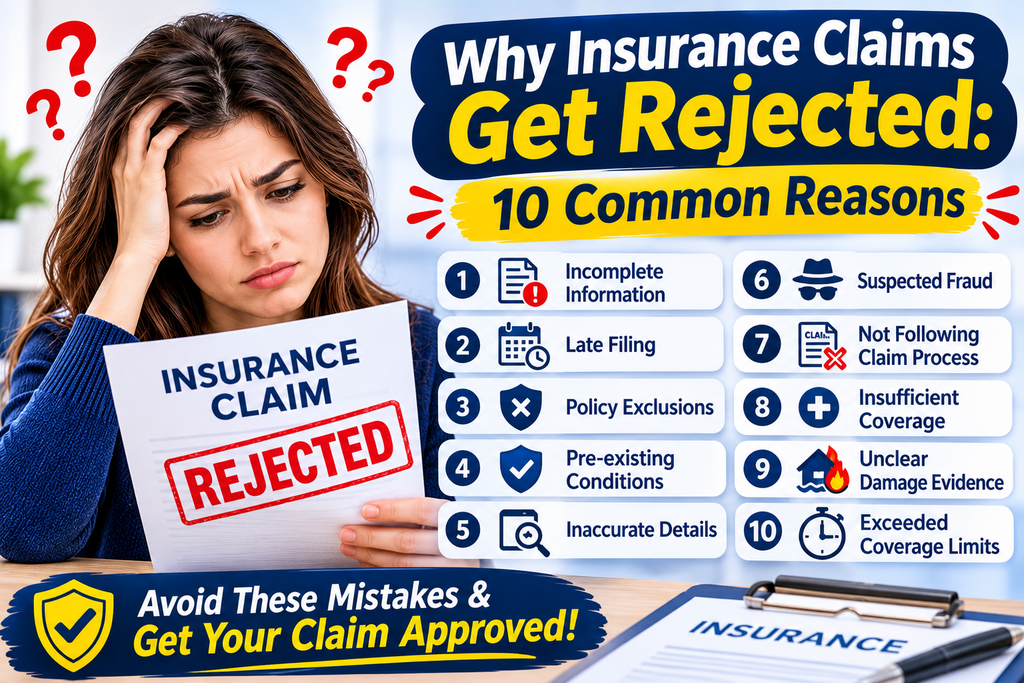
An insurance claim rejection means the insurance company has decided not to pay all or part of the amount requested by the policyholder.
For example, imagine your car is damaged in an accident and you submit a claim to your insurance company. After reviewing your policy and the accident details, the insurer may decide that the damage is not covered under your policy.
Similarly, a health insurance company may deny payment for a medical procedure because it does not meet the policy’s coverage requirements.
A rejected claim does not always mean the decision is final. Depending on the type of insurance and the reason for rejection, you may be able to correct missing information, request a review, or file an appeal.
10 Common Reasons Why Insurance Claims Get Rejected
1. The Insurance Policy Does Not Cover the Situation
One of the most common reasons insurance claims get rejected is that the event or expense is not covered by the policy.
Insurance policies have specific coverage limits and exclusions. Customers sometimes assume that their insurance protects them against every possible situation, but this is rarely true.
For example:
- A basic car insurance policy may not cover damage to your own vehicle.
- A homeowners policy may exclude certain types of flood damage.
- A health insurance policy may not cover every medical treatment.
- A renters insurance policy may not cover damage caused by every type of disaster.
Before purchasing insurance, carefully review what is included and excluded. If you already have a policy, check its coverage documents before submitting a claim.
2. Incorrect or Incomplete Information
Insurance companies need accurate information to review claims. If the details provided in a claim are incomplete, inconsistent, or incorrect, the insurer may reject it or request additional information.
Common mistakes include:
- Providing an incorrect accident date.
- Entering the wrong policy number.
- Giving incomplete details about property damage.
- Submitting incorrect medical information.
- Providing inconsistent information about an incident.
In some cases, knowingly providing false information can create serious policy and legal problems.
Always check your claim form before submitting it. Make sure the information matches your insurance documents and supporting evidence.
3. Missing Documents or Evidence
Insurance companies often require documents to verify that an incident happened and that the requested expenses are covered.
If you fail to provide the required evidence, your claim may be delayed or denied.
Depending on the insurance type, documents may include:
- Police reports.
- Medical bills and treatment records.
- Repair estimates.
- Photographs of damaged property.
- Purchase receipts.
- Proof of ownership.
- Hospital discharge documents.
For example, if your home is damaged during a storm, photographs, repair estimates, and other supporting records may help the insurer evaluate your claim.
Keep copies of all important documents and submit the information requested by your insurance company.
4. The Claim Was Filed Too Late
Many insurance policies require customers to report incidents or submit claims within specific time limits.
If you wait too long, the insurance company may reject your claim, depending on the policy terms and applicable laws.
For example, after a car accident, your policy may require you to notify the insurer promptly. A homeowners insurance policy may also contain requirements for reporting property damage and submitting supporting information.
The exact deadlines vary by policy and type of insurance.
Do not assume you can wait until you have collected every document before notifying your insurer. Report the incident as soon as reasonably possible and ask about the applicable deadlines.
5. The Insurance Premium Was Not Paid
Insurance coverage generally depends on keeping the policy active and paying the required premiums.
If you miss payments, your insurer may send a warning, apply a grace period where required, or cancel the policy according to its terms and applicable law.
If an incident happens after coverage has ended, the insurance company may reject the claim because the policy was not active on the date of the incident.
To avoid this problem:
- Pay premiums before their due dates.
- Set up automatic payments if appropriate.
- Keep payment confirmations.
- Check policy renewal notices.
- Contact your insurer if you have trouble making a payment.
Always confirm that your policy is active rather than assuming that a previous payment keeps it active indefinitely.
6. The Damage or Expense Is Excluded
Insurance policies contain exclusions that explain which situations are not covered.
These exclusions are different from general coverage limits. A policy may cover a particular type of damage but specifically exclude certain causes or circumstances.
For example:
- A homeowners policy may exclude damage caused by certain types of flooding.
- A car insurance policy may exclude damage resulting from certain unauthorized activities.
- A health insurance plan may exclude particular treatments or services.
- A business insurance policy may exclude certain professional or contractual risks.
Never rely only on an insurance advertisement or a short policy summary. Read the exclusions section to understand what your coverage does not include.
7. Required Preapproval or Authorization Was Not Obtained
Some insurance policies require approval before certain treatments, procedures, repairs, or services are received.
This is particularly common in health insurance, where some plans require prior authorization for specific medical services.
For example, a patient may receive a medical procedure without obtaining required authorization. The insurance company may then deny payment if the plan’s rules were not followed.
However, emergency care and other situations may have different rules.
Before receiving an expensive or specialized service, contact your insurer or healthcare provider to confirm whether authorization is required and whether it has been approved.
8. The Claim Exceeds the Policy Coverage Limit

Insurance policies have maximum coverage amounts. If your loss is greater than the policy limit, the insurer generally will not pay beyond the applicable limit.
For example, imagine your homeowners insurance provides $150,000 of coverage for a particular category of loss. If a covered loss reaches $200,000, you may have to pay some of the difference yourself, depending on the policy terms.
Other limits may apply to specific items, services, or types of damage.
Review your policy limits regularly, especially when your property value, business operations, or financial responsibilities change.
9. The Insurance Company Finds Conflicting Information
An insurer may investigate a claim before making a decision. If the evidence does not match the information provided, the company may question the claim.
For example:
- The accident report describes a different sequence of events.
- Photographs do not match the reported damage.
- Medical records contain different dates or details.
- Repair documents show damage that may have existed before the incident.
A disagreement does not automatically prove that a customer has done something wrong. Sometimes records contain simple mistakes or misunderstandings.
If the insurer identifies conflicting information, ask what needs clarification and provide accurate supporting evidence.
10. The Policyholder Did Not Follow Policy Requirements
Insurance policies may require customers to take certain steps after an incident.
For example, a policyholder may need to protect damaged property from further loss, cooperate with an investigation, provide requested records, or follow specific procedures for repairs.
If these requirements are ignored, the insurer may delay or reject a claim depending on the policy and applicable law.
Read your policy carefully and contact the insurance company if you are unsure what you need to do after an incident.
What Should You Do If Your Insurance Claim Is Rejected?
Receiving a rejection letter does not mean you should immediately give up. You may have the right to challenge the decision.
Here are some practical steps to follow.
Step 1: Read the Rejection Letter Carefully
Start by reading the letter or email from your insurance company.
The insurer should explain why your claim was denied. Look for the specific policy provision, exclusion, missing document, or other reason mentioned in the decision.
Do not rely only on a short message saying your claim was rejected. Ask for a more detailed explanation if necessary.
Step 2: Review Your Insurance Policy
Compare the reason for rejection with your actual policy documents.
Check the following sections:
- Covered events and services.
- Policy exclusions.
- Coverage limits.
- Deductibles.
- Reporting deadlines.
- Required documents.
- Claim procedures.
Sometimes a claim is rejected because the policyholder misunderstood what the insurance covered.
Step 3: Contact the Insurance Company
Call or email the insurance company’s claims department.
Ask specific questions:
- Why exactly was my claim rejected?
- Which policy condition applies to this decision?
- Is any additional documentation required?
- Can the decision be reviewed?
- What is the deadline for submitting an appeal?
Keep a record of conversations, emails, reference numbers, and the names of representatives you speak with.
Step 4: Collect Supporting Evidence
If you believe the decision is incorrect, gather documents that support your position.
Depending on your situation, this may include:
- Photographs and videos.
- Medical records.
- Police reports.
- Receipts and invoices.
- Repair estimates.
- Written statements.
- Copies of relevant policy documents.
Organize the evidence so the insurance company can understand why you believe the claim should be reconsidered.
Step 5: Submit a Formal Appeal
If the insurer provides an appeal process, follow its instructions and submit your appeal before the deadline.
Clearly explain why you disagree with the decision. Include the relevant policy language and attach supporting evidence.
For health insurance in the United States, consumers may have internal appeal rights and, in certain situations, the right to an external review. The process and deadlines depend on the plan and applicable rules.
If the issue involves a large financial loss or a complicated dispute, consider speaking with a qualified insurance professional or attorney.
How to Avoid Insurance Claim Rejection
You cannot guarantee that every insurance claim will be approved, but taking a few precautions can reduce the chances of avoidable problems.
1. Understand Your Coverage
Before buying insurance, read the policy and understand what it covers. Do not purchase a policy based only on its price or advertising.
2. Provide Accurate Information
Always provide honest and complete information when applying for insurance or submitting a claim.
3. Keep Important Documents
Save insurance policies, payment receipts, photographs, medical records, repair estimates, and other relevant documents.
4. Report Incidents Promptly
Notify your insurance company as soon as reasonably possible after an accident, illness-related event, or property loss.
5. Follow the Claims Process
Ask your insurer what steps are required. Do not assume that every insurance company follows the same procedures.
6. Check Your Policy Regularly
Review your insurance coverage at least once a year or whenever your circumstances change.
7. Ask Questions Before Expensive Services
For medical procedures, repairs, and other costly services, confirm whether your insurer requires prior approval.
Can You Get Your Money Back After an Insurance Claim Is Rejected?
A rejected claim does not automatically mean you can recover the requested money.
However, you may receive payment if the insurer changes its decision after reviewing additional documents, correcting an error, or completing an appeal.
For example, a health insurance company may reconsider a denied service after receiving additional medical information. A car insurance company may review a decision after receiving a police report or additional accident evidence.
If the rejection was correct under the policy terms, the insurer may still refuse payment.
The outcome depends on the reason for rejection, the policy language, the evidence, and applicable laws.
Frequently Asked Questions (FAQs)
1. What is the most common reason insurance claims are rejected?
Common reasons include lack of coverage, policy exclusions, missing documents, incorrect information, late reporting, and unpaid premiums. The exact reasons depend on the type of insurance.
2. Can an insurance company reject a claim without giving a reason?
Insurers generally must provide an explanation of an adverse claim decision under applicable laws and policy rules. If you receive an unclear rejection, request a written explanation and the specific policy language supporting the decision.
3. Can I appeal a rejected insurance claim?
Yes. Many insurance policies and laws provide a process for challenging denied claims. Review your rejection notice for instructions and deadlines before submitting an appeal.
4. How long do I have to appeal an insurance claim?
There is no single deadline for every insurance claim. Appeal periods depend on the type of insurance, policy terms, and applicable state or federal rules. Check your denial letter and contact the insurer promptly.
5. Does a rejected insurance claim affect my future premiums?
It depends on the type of insurance and the circumstances. A rejected claim does not automatically increase your premium, but claim history and other factors may influence future pricing in some insurance markets.
6. Should I hire a lawyer if my insurance claim is rejected?
Not every rejection requires a lawyer. However, legal advice may be useful when a claim involves a large financial loss, a complicated policy dispute, or a possible violation of insurance laws.
7. Can I submit the same insurance claim again?
Sometimes. If the original claim was missing documents or contained incorrect information, the insurer may allow you to provide additional information or reopen the claim. Ask the company about its procedures before submitting another claim.
Final Thoughts
Insurance claims get rejected for many reasons, but some problems can be avoided with proper preparation.
The most important steps are understanding your coverage, paying premiums on time, providing accurate information, keeping supporting documents, and following the insurer’s claim procedures.
If your claim is denied, do not immediately assume that the decision cannot be challenged. Read the rejection explanation, review your policy, contact the insurer, and consider filing an appeal when you have a reasonable basis.
Choosing the right insurance policy is important, but understanding how to use it when you need financial protection is equally important.






Pingback: How to Compare Insurance Quotes: 10 Smart Tips