
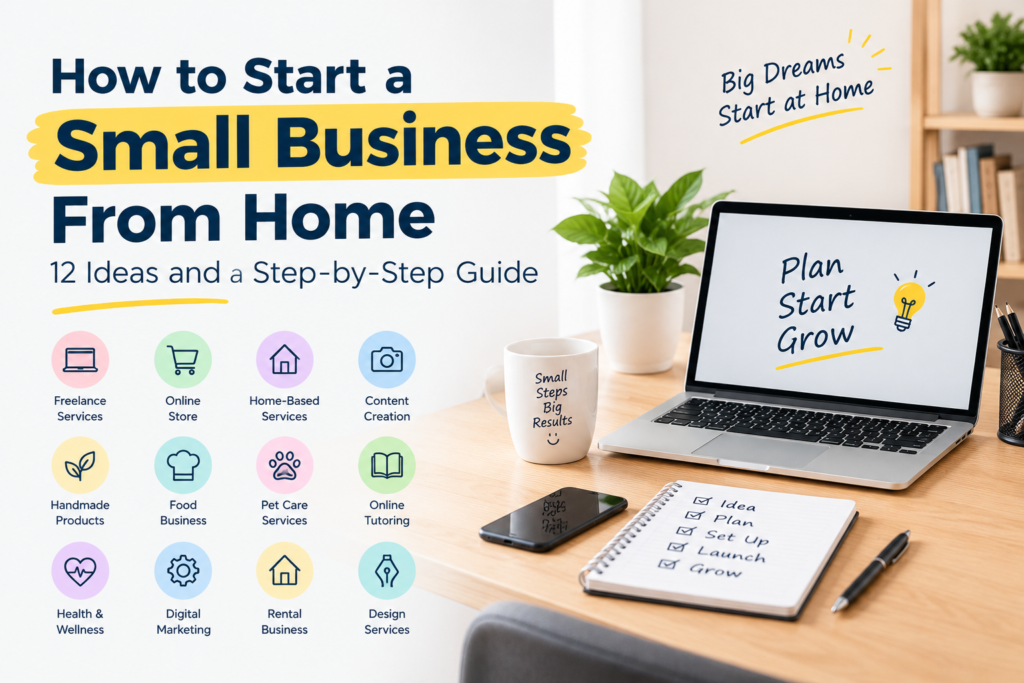

Starting a business from home can be exciting, challenging, and occasionally confusing. One day, you have a brilliant idea. The next day, you have seventeen browser tabs open and still haven’t decided what to sell.
The good news? You don’t need to figure everything out at once.
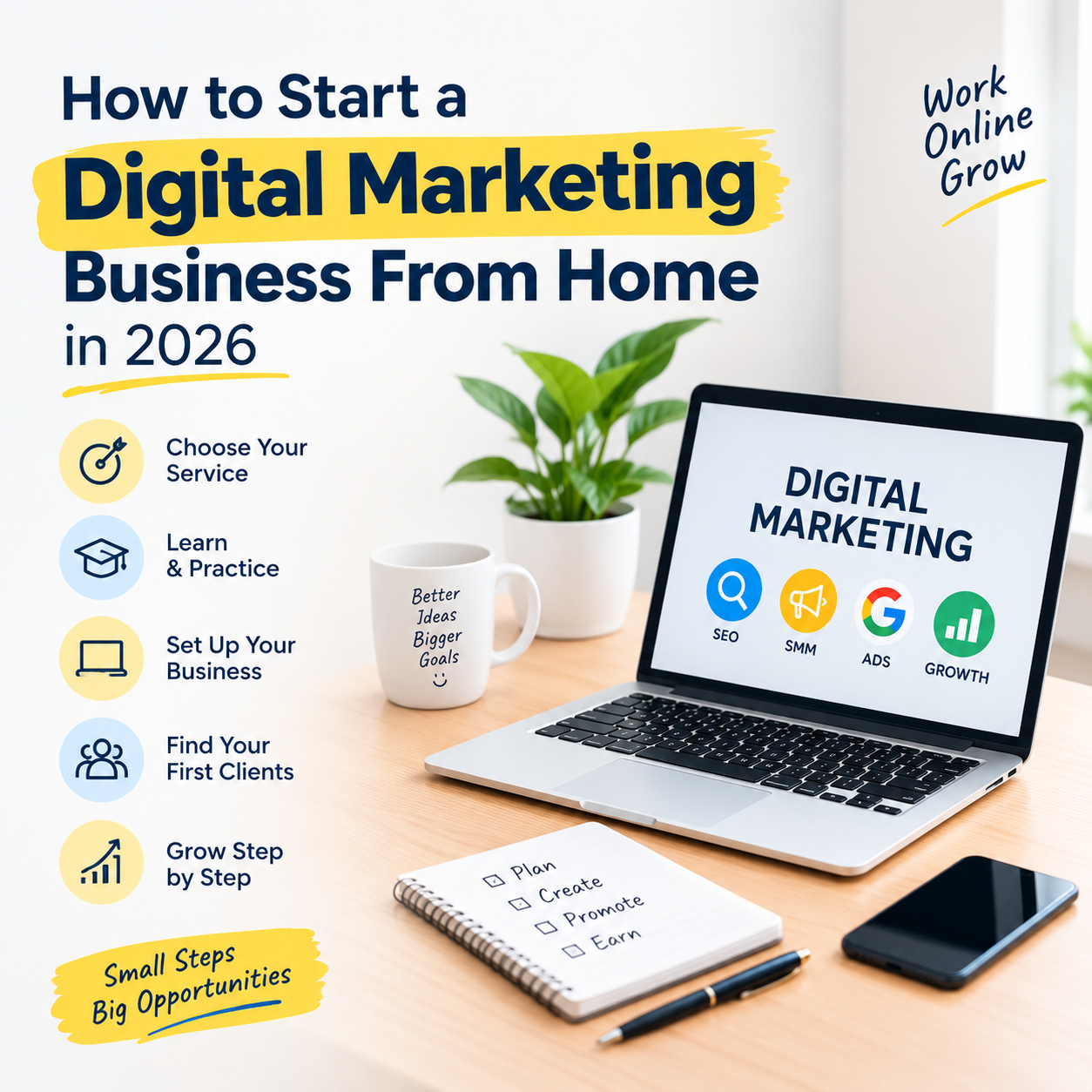
Learning how to start a small business from home begins with choosing a practical idea, understanding your customers, and testing whether people will pay for what you offer. You can start with a service, a small product collection, or an online business that uses skills you already have.
This guide explains the essential steps, explores 12 home business opportunities, and shares practical tips to help you control costs and build steady growth. You’ll also discover how to avoid common mistakes that can turn a promising startup into an expensive lesson.
Let’s turn that spare room, quiet corner, or slightly overcrowded desk into something productive!
What Is a Home-Based Business?
Table of Contents
A home-based business is a business you operate mainly from your home. You might sell physical products, provide professional services, teach students, or create digital products for customers around the world.
Some businesses need equipment and supplies. Others need little more than a computer, an internet connection, and a useful skill.
For example, a graphic designer can work with international clients from a home office. A baker can accept local orders. A tutor can teach students through video calls.
The important difference is that you don’t need a separate commercial office to begin many types of businesses. However, local rules may still require registration, permits, insurance, or approval for certain activities.
Why Start a Small Business From Home?
Starting at home can reduce some expenses and make it easier to test your idea before committing to a larger operation.Why Start a Small Business From Home?
Here are several potential advantages.
- Lower overhead: You may avoid separate office rent and some commuting costs.
- Flexible scheduling: You can organize your work around personal responsibilities.
- A smaller starting budget: Many service businesses need little equipment beyond what you already own.
- Access to global customers: Digital services and online stores can reach buyers outside your local area.
- Room to experiment: You can test products, prices, and marketing methods before expanding.
- Skill development: Running a business teaches sales, communication, budgeting, and customer service.
Of course, working from home isn’t a magic money machine. You still need customers, consistent effort, and a plan for managing expenses.
Your home office might be free, but your time certainly isn’t!
12 Small Business Ideas You Can Start From Home
The best business idea depends on your skills, interests, available budget, and customer demand. These 12 options provide a starting point for beginners who want to explore different business models.
1. Freelance Services
Startup costs: Low if you already have suitable equipment
Freelancing lets you sell a skill to businesses and individuals. You can start independently and expand into a small agency later.
Examples include:
- Content writing and copywriting
- Graphic design
- Video editing
- Website development
- Search engine optimization (SEO)
- Virtual assistance
Getting started: Choose one service, create three sample projects, define a clear package, and contact potential clients.
The pun: Your first client may be a small step, but it can make a big impression.
2. Online Tutoring
Online Tutoring
Startup costs: Low to moderate
If you understand a subject well, tutoring can turn your knowledge into a useful service.
Consider offering:
- Mathematics lessons
- English language tutoring
- Science lessons
- Exam preparation
- Computer skills training
- Music or art lessons
Getting started: Choose a subject and age group, prepare a sample lesson, set your schedule, and offer a trial session.
The pun: Help students reach new heights without making their grades a cliffhanger.
3. Home Baking and Food Products
Startup costs: Moderate, depending on equipment and regulations
A home kitchen may become the starting point for a small food business, provided local rules allow it.
Possible products include:
- Cookies and brownies
- Birthday cakes
- Bread and pastries
- Snack boxes
- Meal-preparation services
- Customized food gifts
Getting started: Choose a small menu, calculate ingredient and packaging costs, test recipes, and accept a limited number of orders.
Check applicable food safety, labeling, licensing, and home-business requirements before selling.
The pun: Make your business rise one order at a time.
4. Handmade Products
Startup costs: Low to moderate
Handmade goods can appeal to customers looking for personalized or distinctive products.
Ideas include:
- Handmade jewelry
- Greeting cards
- Decorative candles
- Knitted accessories
- Personalized gifts
- Home decorations
Getting started: Make a few sample items, photograph them clearly, calculate the cost of materials and labor, and test interest before buying supplies in bulk.
The pun: Put your creativity to work, one craft at a time.
5. Online Reselling
Startup costs: Low to moderate
Reselling involves buying products from legitimate suppliers and selling them to customers at a price that covers your costs.
Potential categories include:
- Clothing and accessories
- Stationery
- Home organization products
- Phone accessories
- Craft supplies
- Gift items
Getting started: Research demand, compare suppliers, test a small selection, and establish a reliable delivery process.
Keep inventory limited until you understand which products sell.
The pun: Find the right product, and your business could be a real bargain of an idea.
6. Digital Products
Startup costs: Low to moderate
Digital products are files or resources that customers can purchase and access online.
Examples include:
- Printable planners
- Budget spreadsheets
- Business templates
- Educational worksheets
- Digital invitations
- Original ebooks
Getting started: Identify a specific problem, create a useful product, prepare preview images, and choose a suitable sales platform.
Digital products can reduce shipping and inventory needs, although creation, marketing, customer support, and platform fees still require time or money.
The pun: Create it once, then let your digital ideas travel far and wide.
7. Social Media Management
Startup costs: Low if you own a suitable computer or phone
Small businesses often need help maintaining an active online presence. You can offer content planning, publishing, and basic reporting.
Services may include:
- Social media content calendars
- Post design
- Caption writing
- Short-form video editing
- Community management
- Performance reports
Getting started: Create sample content for a fictional brand, define monthly packages, and approach businesses that could benefit from consistent posting.
The pun: Give brands a reason to stop scrolling and start noticing.
8. Virtual Assistant Services
Startup costs: Low
Virtual assistants help business owners manage everyday administrative tasks remotely.
Common services include:
- Email organization
- Appointment scheduling
- Data entry
- Document formatting
- Customer support
- Research and reporting
Getting started: Select tasks you can perform reliably, prepare a service list, and establish clear working hours and communication rules.
The pun: Be the helping hand that keeps a busy business on its feet.
9. Photography and Photo Editing
Startup costs: Low to high, depending on equipment
If you have an eye for detail, photography or editing can become a home-based service.
Options include:
- Product photography
- Portrait editing
- Background removal
- Image retouching
- Event photo editing
- Commercial image preparation
Getting started: Build a portfolio, select a customer group, and offer a clearly defined package.
You may need a suitable camera, lighting, software, or access to clients’ original images.
The pun: Focus on quality, and let your work develop naturally.
10. Website Design and Development
Startup costs: Low to moderate
Businesses need websites that explain their services, build trust, and help customers take action.
You could offer:
- WordPress website creation
- Landing page design
- Website maintenance
- Basic SEO setup
- Online store setup
- Website speed improvements
Getting started: Build a demo website, choose a particular customer segment, and offer a defined service with clear deliverables.
The pun: Build websites that give businesses a place to click with customers.
11. Educational Content Creation
Startup costs: Low to moderate
If you enjoy explaining things, you can create educational content for a specific audience.
Potential formats include:
- Instructional videos
- Skill-based tutorials
- Educational newsletters
- Study guides
- Practical blog articles
- Downloadable learning resources
Getting started: Select a narrow topic, publish helpful examples, and learn which formats your audience finds useful.
Income may eventually come from services, sponsorships, product sales, or eligible platform monetization. It can take time to build an audience.
The pun: Share your knowledge; you never know whose next big idea you’ll spark.
12. Customized Gift Boxes
Startup costs: Low to moderate
Personalized gift boxes can serve customers who want thoughtful presents without assembling everything themselves.
Consider offering:
- Birthday gift boxes
- Corporate gift packages
- Stationery bundles
- Personalized keepsakes
- New-home gift sets
- Event favors
Getting started: Choose a theme, find reliable suppliers, calculate packaging and delivery costs, and create a few sample boxes.
The pun: Package your creativity into a business worth unwrapping.
How to Start a Small Business From Home in 9 Steps
Having an idea is a great start, but a business needs more than enthusiasm. A simple plan can help you make decisions, control risk, and find your first customers.
Step 1: Choose One Business Idea
Start with a business that fits your current abilities and resources.
Ask yourself three questions:
- What can I do well?
- What problem can I solve for other people?
- Who might pay for that solution?
For example, if you understand WordPress, you could offer website setup to small businesses. If you enjoy teaching, you could offer online lessons in a subject you know well.
Choose one main offer first. You can expand later when you understand your customers.
Step 2: Research Your Target Market
Before spending money, check whether people want what you plan to sell.
Research:
- Who your potential customers are.
- What alternatives they currently use.
- What competitors charge, where prices are public.
- What customers praise or complain about.
- What you could do differently.
Use search engines, online marketplaces, relevant forums, and public customer reviews to gather information.
You don’t need to invent a product nobody has ever seen. Sometimes, improving an existing service or serving a specific audience creates a stronger opportunity.
Remember, a business idea can look wonderful in your notebook and still need work in the real world.
Step 3: Test Your Idea Before Investing Heavily
This is one of the most valuable steps for beginners.
Create a small version of your offer and see whether customers respond.
For a service business, you might offer a paid trial project. For a handmade product, you could produce a limited batch. For a digital product, you could show a preview and collect feedback before developing a larger collection.
Track actual results rather than relying only on compliments.
Someone saying, “That’s a brilliant idea!” is encouraging. Someone paying for it provides stronger evidence of demand.
Step 4: Calculate Your Startup Costs
Prepare a basic budget before buying equipment, inventory, or advertising.
Include the following:
- Equipment and tools
- Materials or inventory
- Website and domain costs
- Software subscriptions
- Packaging and delivery
- Marketing expenses
- Registration, permits, and insurance where applicable
- A reserve for unexpected costs
Separate one-time expenses from recurring expenses.
For example, buying a camera may be a one-time purchase, while internet access and editing software may create ongoing costs.
A simple rule: Don’t spend your entire budget making your business look impressive before confirming that customers want your offer.
A stylish logo is useful. A stylish logo with no customers is just expensive wall art.
Step 5: Create a Simple Business Plan
You don’t need a fifty-page document to get started. A short plan can help you stay focused.
Write down:
- Business idea: What will you sell?
- Target customer: Who needs it?
- Customer problem: What will your offer solve?
- Pricing: How will you charge?
- Costs: What expenses will you need to cover?
- Marketing: How will people discover you?
- Goals: What do you want to achieve in the first 30, 60, and 90 days?
Keep your plan realistic and update it as you learn.
Your first plan is a starting point, not a promise that everything will go exactly as expected.
Step 6: Handle Legal and Administrative Requirements
Before accepting orders, check the rules that apply to your business and location.
Depending on where you live and what you sell, you may need to consider:
- Business registration
- Tax registration and reporting
- Home-business or zoning restrictions
- Industry-specific licenses
- Food safety requirements
- Product labeling rules
- Insurance and liability
- Privacy and consumer protection
Requirements differ between countries and sometimes between cities or regions.
If you operate internationally, check the rules that apply to your own business and the markets you serve. Seek qualified professional advice when necessary.
Keep records of income, expenses, customer agreements, and important business transactions from the beginning.
Step 7: Set Up Your Workspace
A home business doesn’t need a luxury office. It needs a place where you can work safely and reliably.
Depending on your business, you may need:
- A comfortable desk and chair
- A computer or smartphone
- Reliable internet access
- Storage for supplies
- Good lighting
- A quiet place for customer calls
- Secure storage for customer information
Set working hours and communicate them clearly.
This also helps separate work from personal life. Otherwise, your laptop may become a permanent dinner guest.
Step 8: Build Your Online Presence
Customers need a way to discover you, understand your offer, and contact you.
Choose the channels that fit your business rather than trying to maintain every platform at once.
Options include:
- A simple business website
- A professional social media profile
- A relevant online marketplace
- A portfolio showing your work
- A business email address
- A local business listing, if eligible
Make your offer clear. Explain what you provide, who it helps, how customers can place an order, and how to contact you.
Use real photographs or authentic examples where possible. Avoid exaggerated claims, misleading testimonials, and promises of guaranteed results.
For a helpful starting resource, explore the U.S. Small Business Administration’s business guidance. Its material is particularly relevant to businesses operating in the United States; readers elsewhere should also consult their local authorities.
Step 9: Find Your First Paying Customers
Marketing is how potential customers learn about your business. You can start with simple, low-cost methods.
Try these approaches:
- Tell your existing network what you offer.
- Publish helpful posts related to your service.
- Share examples of your work.
- Contact suitable potential clients with personalized messages.
- Ask satisfied customers for honest reviews.
- Encourage referrals.
- Participate constructively in relevant communities.
- Publish useful website content to support long-term search visibility.
Avoid sending mass messages that ignore people’s needs. Focus on building relationships and explaining how you can help.
Your first few customers can teach you a great deal about pricing, delivery, communication, and product quality.
Listen carefully, improve your offer, and make it easy for happy customers to recommend you.
How Much Money Do You Need to Start a Home Business?
The amount depends on the business model, your existing equipment, your location, and any legal or operating requirements.
A service business may cost less to launch than a product business because you may not need to purchase inventory. However, neither model is automatically profitable.
Here is a simple comparison.
| Business type | Main starting expenses |
| Freelance writing | Computer, internet, portfolio |
| Online tutoring | Computer, internet, teaching materials |
| Graphic design | Computer, design software |
| Home baking | Ingredients, equipment, packaging, permits |
| Handmade products | Materials, tools, packaging |
| Online reselling | Inventory, delivery, packaging |
| Digital products | Creation tools, platform fees, marketing |
| Website development | Computer, software, hosting for demonstrations |
These are cost categories, not fixed price estimates. Your actual budget will depend on what you already own and the requirements of your business.
A Simple Startup Budget Example
Imagine you want to launch a freelance design service from home.
Your initial budget might include a domain name, a portfolio website, design tools, and a small marketing budget. If you already own a computer and can use free tools, your initial expenses may be relatively low.
A product business could require more upfront spending because you need materials, inventory, packaging, or delivery arrangements.
Before spending, calculate your estimated startup costs and monthly expenses. Then determine how many sales you need to cover them.
For example, if your monthly business expenses are $100 and you earn $25 in contribution per sale after direct costs, you need four sales to cover those expenses. This calculation excludes taxes, your own labor, and other costs not already included.
The point is simple: understand your numbers before celebrating your revenue.
How to Price Your Products and Services
Pricing affects your profitability, customer expectations, and ability to grow.
Start by calculating the costs associated with delivering your offer.
For a physical product, include materials, packaging, shipping subsidies, payment fees, and other direct costs.
For a service, consider the time required for communication, preparation, delivery, revisions, and administration.
Then compare your proposed price with similar offers in the market.
Avoid choosing the lowest price simply because you’re new. A price that fails to cover your costs can make growth harder rather than easier.
You can offer introductory packages, but set clear limits on the work included. If you offer unlimited revisions, you might discover that your first customer has enough ideas to keep you busy until retirement.
How to Market a Small Business From Home
You don’t need to spend heavily on advertising to begin marketing. Choose methods that fit your target audience and budget.
1. Use Social Media Strategically
Select the platforms where your potential customers already spend time.
For example, a visual product business might benefit from image-focused platforms. A professional consulting service might focus on LinkedIn and a useful website.
Publish content that answers customer questions, demonstrates your work, and explains the benefits of your offer.
2. Create Helpful Website Content
A website can help customers find you through search engines and learn more about your services.
If you sell website design, you might publish articles about choosing a website platform or improving a small business website.
If you sell handmade products, you could create gift guides, care instructions, or product comparisons.
Use relevant keywords naturally, write original content, and make pages genuinely useful to readers.
Search engine optimization takes time, and rankings are never guaranteed.
3. Encourage Word-of-Mouth Marketing
Satisfied customers can introduce your business to other potential buyers.
Provide dependable service, communicate clearly, and ask customers whether they would be comfortable recommending you.
You can also create a referral program with transparent terms, provided it suits your budget and local rules.
4. Build Partnerships
Look for businesses that serve similar customers without directly competing with you.
A photographer might partner with a local event planner. A website designer might collaborate with a copywriter. A gift-box seller might work with a stationery business.
Good partnerships can introduce you to new audiences while providing value to both sides.
Common Mistakes to Avoid When Starting a Home Business
Even a promising business can struggle when its owner makes avoidable mistakes.
Watch out for these common problems.
- Trying to serve everyone: A clear target audience makes your offer easier to explain.
- Spending too much too soon: Test demand before investing heavily.
- Ignoring business expenses: Revenue is not the same as profit.
- Copying competitors: Learn from the market, but create your own products, content, and brand identity.
- Underpricing your work: Account for your time and operating costs.
- Neglecting customer service: Slow replies and unclear policies can damage trust.
- Expecting instant success: Building a customer base usually requires patience and repeated effort.
- Mixing personal and business finances: Keep organized records and separate accounts where practical.
- Relying on one marketing channel: Consider diversifying your customer acquisition methods over time.
- Ignoring local rules: Confirm the requirements for your business before operating.
Remember that mistakes are useful only when you learn from them. Repeating the same expensive mistake is less like entrepreneurship and more like subscribing to a problem.
A Practical 30-Day Plan to Launch Your Business
If you are unsure where to begin, use this four-week plan to turn your idea into a small, testable business.
Days 1–7
Week 1: Research and choose
- List three ideas that match your skills.
- Identify potential customers.
- Research competitors and pricing.
- Choose one idea to test.
Days 8–14
Week 2: Build your first offer
- Prepare a sample product or service.
- Calculate costs and set an initial price.
- Gather feedback from relevant potential customers.
- Improve your offer based on what you learn.
Days 15–21
Week 3: Prepare to launch
- Check applicable legal requirements.
- Set up your workspace and payment process.
- Create a basic website or business profile.
- Prepare clear service or product information.
Days 22–30
Week 4: Launch and learn
- Announce your offer.
- Contact relevant potential customers.
- Track inquiries, sales, costs, and feedback.
- Review what worked and plan your next steps.
This plan is a starting framework, not a guarantee of sales within 30 days. Some businesses need more time for training, approvals, product development, or customer research.
The most important outcome is progress backed by evidence.
How to Grow Your Home Business Over Time
Once you have a working offer and some customer feedback, focus on improving the business before expanding too quickly.
Improve What Already Works
Identify your most popular products, profitable services, and strongest customer sources.
Instead of adding ten new products, you might improve the three that customers already love.
Build Repeat Business
Depending on your business model, you could offer maintenance plans, repeat orders, subscriptions, ongoing services, or related products.
Make sure recurring offers provide real value and clearly explain their terms.
Automate Repetitive Tasks
Simple systems can save time as your business grows.
You might use scheduling software, invoice templates, automated order confirmations, or a customer relationship management tool.
Automation should reduce unnecessary work without making customers feel as if they’re talking to a particularly unhelpful toaster.
Reinvest Carefully
Use business results to guide spending decisions.
You might invest in better equipment, training, website improvements, inventory, or marketing once you have evidence that the investment supports your goals.
Avoid expanding simply because a competitor has launched a new product or purchased a larger office.
Growth should fit your customers, finances, and capacity.
Frequently Asked Questions
1. How do I start a small business from home with little money?
Choose a business that uses skills or equipment you already have, such as writing, tutoring, virtual assistance, or graphic design. Research demand, test a small offer, and spend only on essential tools. Remember to account for legal requirements and ongoing costs.
2. What is the easiest home business to start for beginners?
The easiest option depends on your skills and circumstances. Service-based businesses can be simpler to test because you may not need inventory or a dedicated commercial space. Freelancing, tutoring, and virtual assistance are examples, but each requires customer acquisition and reliable delivery.
3. Can I run a home business while working a full-time job?
Yes, some business models can operate part-time. Choose an offer that fits your available hours, establish clear customer expectations, and check any employment restrictions that apply to you. Start with a manageable workload rather than accepting more orders than you can fulfill.
Conclusion: Start Small, Learn Fast, and Grow Wisely
Learning how to start a small business from home is about more than finding a clever idea. It involves understanding customers, calculating costs, creating a useful offer, marketing effectively, and improving your business over time.
You can begin with freelance services, online tutoring, handmade products, digital products, or another opportunity that fits your skills and resources. Test demand before investing heavily, keep accurate records, and follow the rules that apply to your business.
You don’t need a perfect plan on day one. You need a realistic starting point and the willingness to learn.
Your first sale might be small. Your first website might need improvement. Your first marketing post might receive fewer likes than your family group chat. That’s all part of the process.
Ready to get started? Choose one business idea, write down your first three actions, and take the first step this week. Then share this guide with someone who wants to become their own boss, or leave a comment about the home business you would like to launch.

Pingback: 12 Business Ideas You Can Start With $100 in 2027