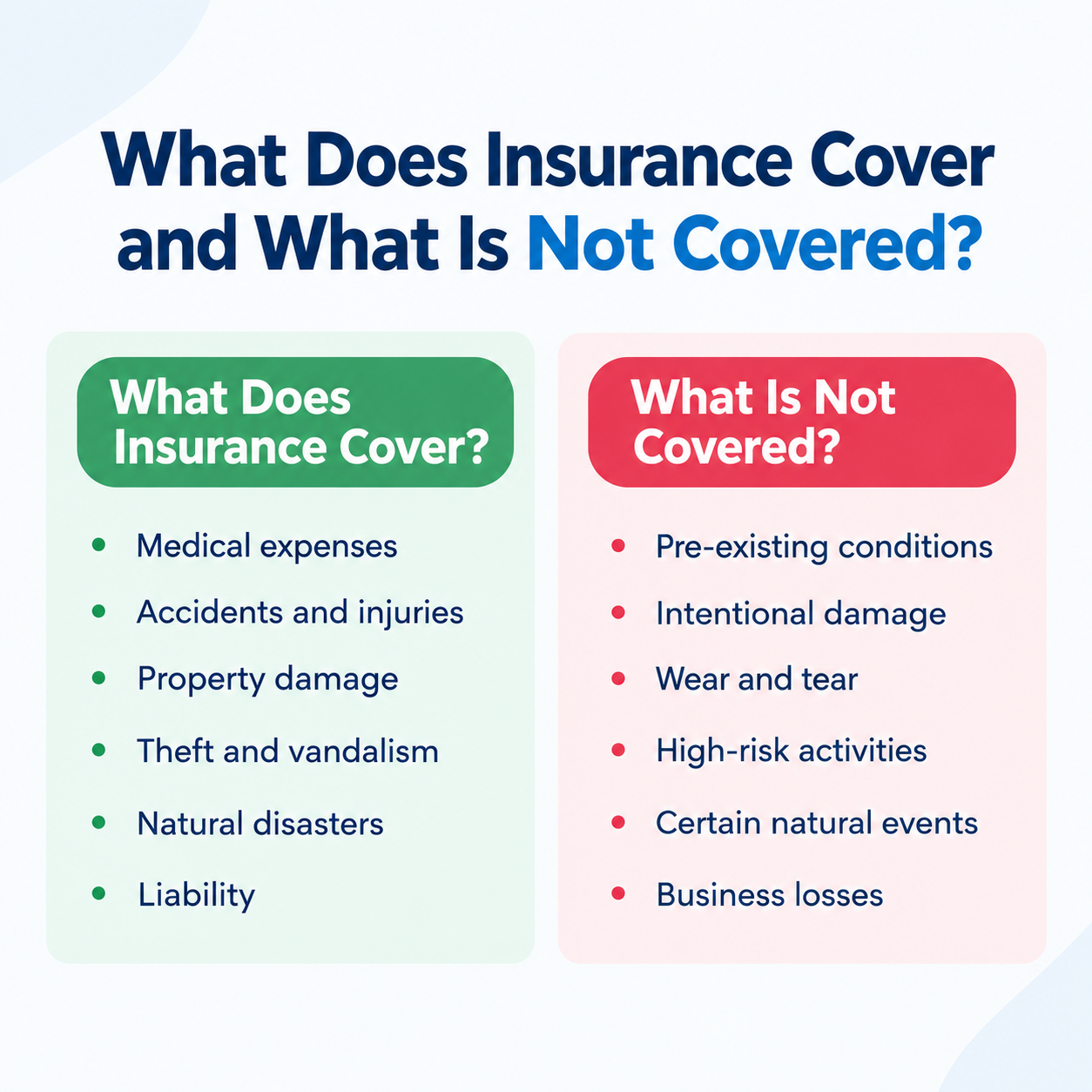

When buying insurance in the United States, you will often see a term called a deductible. It is an important part of almost every insurance policy, but many people do not fully understand how it works.
A deductible is the amount of money you must pay out of your own pocket for certain covered expenses before your insurance company starts paying its share.
Understanding your insurance deductible can help you compare policies, manage unexpected expenses, and choose coverage that fits your budget.
In this guide, we explain what an insurance deductible is, how it works, how much you may have to pay, and whether choosing a high or low deductible is better.
1. What Is an Insurance Deductible?
Table of Contents
An insurance deductible is the amount you are responsible for paying toward a covered claim before your insurance company contributes.
For example, imagine your car has covered damage worth $5,000 and your policy has a $1,000 deductible.
Here is how the payment may work:
- Total covered repair cost: $5,000
- Your deductible: $1,000
- Insurance company’s payment: $4,000
You pay the first $1,000, and your insurance company pays the remaining $4,000, assuming the claim is approved and no other policy limits or conditions affect the payment.
The deductible is your share of the covered loss. It is separate from the regular premium you pay to keep your insurance active.
2. How Does an Insurance Deductible Work?
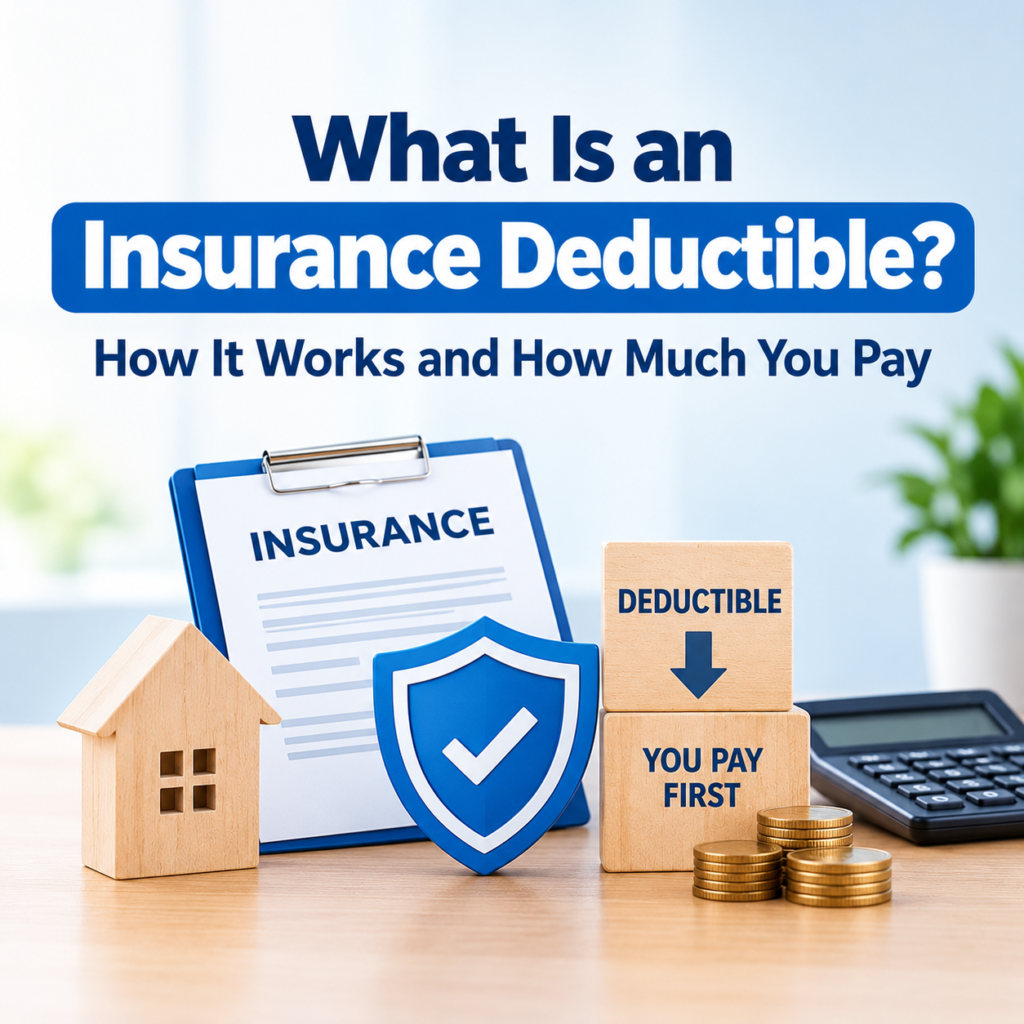
The process is usually straightforward.
- You purchase an insurance policy with a specified deductible.
- A covered accident, damage, or expense occurs.
- You report the claim to your insurance company when required.
- The insurer reviews the claim and determines the eligible covered amount.
- You pay the applicable deductible.
- The insurer pays its share according to the policy.
The deductible may apply differently depending on the type of insurance.
For example, health insurance deductibles often work over a coverage year, while auto and homeowners deductibles commonly apply to individual covered claims.
Always check your policy documents to understand exactly when a deductible applies.
3. What Are the Different Types of Insurance Deductibles?
Different insurance policies use different deductible structures.
Health Insurance Deductible
A health insurance deductible is the amount you pay for certain covered healthcare services before your plan begins paying its share.
For example:
Suppose your annual health insurance deductible is $2,000.
If you receive covered medical services subject to the deductible, you generally pay the eligible costs until you have paid $2,000.
After meeting the deductible, you may still have to pay copayments or coinsurance.
Some services, such as certain preventive care, may be covered before you meet your deductible.
Auto Insurance Deductible
An auto insurance deductible is the amount you pay toward a covered vehicle claim.
For example:
- Covered repair cost: $3,000
- Your deductible: $500
- Insurance payment: $2,500
Auto insurance deductibles commonly apply to collision and comprehensive coverage. They generally do not apply to liability claims in the same way.
Homeowners Insurance Deductible
A homeowners insurance deductible is the amount you pay toward a covered property loss.
For example:
- Covered home damage: $10,000
- Your deductible: $1,000
- Insurance payment: $9,000
Some homeowners policies also have separate deductibles for specific risks, such as wind or hurricanes. These may be calculated as a percentage of the insured home’s value rather than a fixed dollar amount.
Renters Insurance Deductible
Renters insurance may have a deductible for covered damage or loss involving your personal belongings.
For example, if your covered belongings are damaged in a fire, your policy may require you to pay the deductible before the insurer contributes toward the approved loss.
Business Insurance Deductible
Business insurance policies may also include deductibles.
A business owner might have a deductible for covered commercial property damage or certain other insured losses.
The amount depends on the policy, coverage type, and insurer.
4. High Deductible vs. Low Deductible: What Is the Difference?
When comparing insurance policies, you may have the option to select a higher or lower deductible.
Both options have advantages and disadvantages.
| Feature | High deductible | Low deductible |
|---|---|---|
| Monthly premium | Often lower | Often higher |
| Payment after a covered claim | Higher out-of-pocket cost | Lower out-of-pocket cost |
| Initial financial responsibility | More | Less |
| Suitable for | People who can afford larger unexpected costs | People who prefer lower claim expenses |
A higher deductible may help reduce your regular insurance premium. However, you must be prepared to pay more if you make a claim.
A lower deductible usually means higher premiums, but it can reduce your financial responsibility when a covered loss occurs.
The right choice depends on your budget and ability to handle unexpected expenses.
5. How Much Is a Typical Insurance Deductible in the USA?
There is no single deductible amount for every insurance policy.
The amount depends on the type of coverage, insurer, plan, and options you select.
Here are some illustrative examples:
| Insurance type | Example deductible |
|---|---|
| Health insurance | $2,000 per year |
| Auto insurance | $500 per claim |
| Homeowners insurance | $1,000 per claim |
| Renters insurance | $500 per claim |
| Business property insurance | $1,000 per claim |
These amounts are examples to explain how deductibles work. They are not national averages or standard requirements.
Your actual deductible will be listed in your policy documents.
6. What Happens If Your Claim Is Less Than Your Deductible?
This is an important question.
If the cost of a covered loss is lower than your deductible, the insurance company may not pay anything toward that claim.
For example:
- Covered repair cost: $700
- Your deductible: $1,000
- Insurance payment: $0
You would generally pay the full $700 yourself.
This is why it is important to understand your deductible before purchasing a policy.
7. Does a Higher Deductible Reduce Your Insurance Premium?
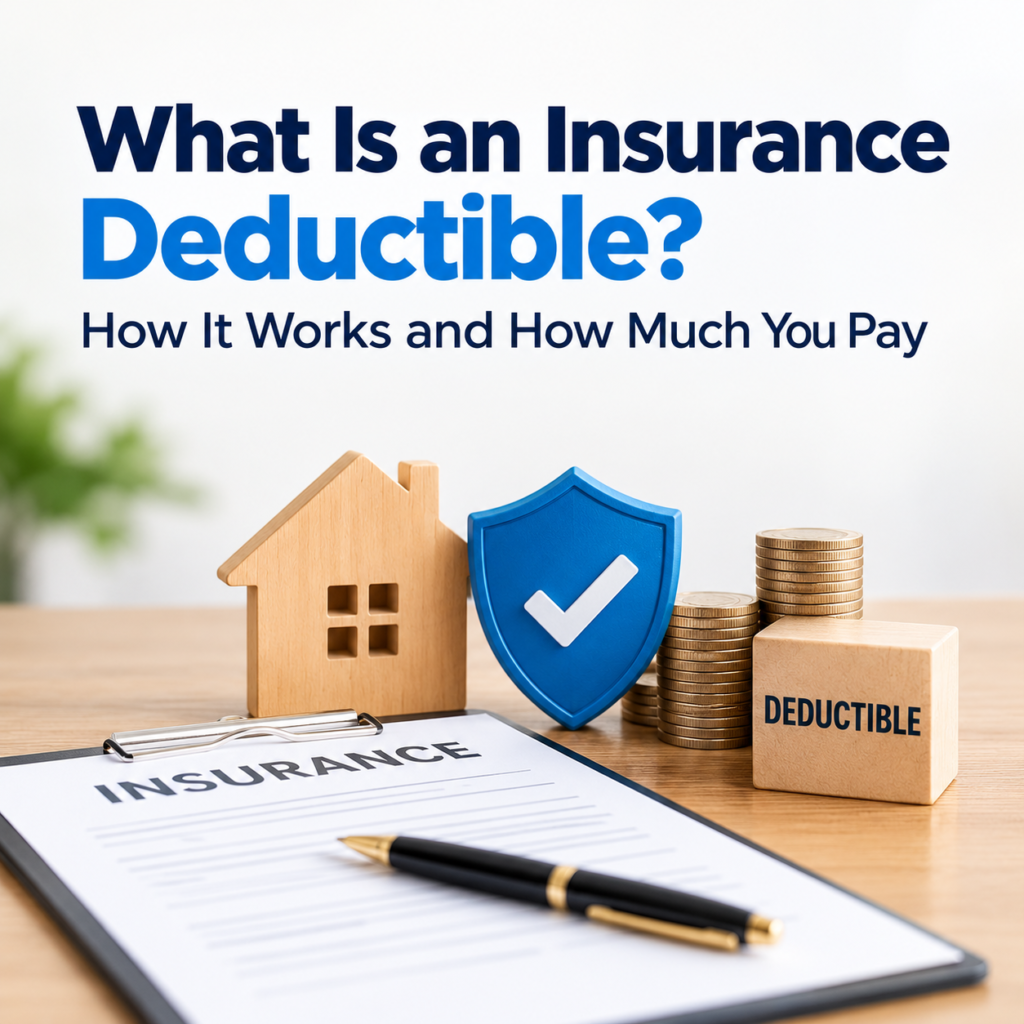
In many types of insurance, choosing a higher deductible can reduce your premium.
Insurance companies may offer lower prices because you agree to take responsibility for a larger portion of a covered loss.
For example, imagine two otherwise comparable auto insurance quotes:
- Plan A: $150 monthly premium with a $500 deductible.
- Plan B: $130 monthly premium with a $1,000 deductible.
Plan B costs $20 less per month, saving $240 over a year.
However, if you make a covered claim, you may have to pay an additional $500 compared with Plan A.
These are hypothetical figures, not actual insurance quotes.
Always compare the possible savings with the additional amount you may need to pay after a claim.
8. How to Choose the Right Insurance Deductible
Choosing the right deductible requires balancing your monthly budget with your ability to pay unexpected expenses.
Consider these points before making a decision:
- Check your savings: Could you afford the deductible immediately if an accident or loss occurred?
- Compare premiums: Find out how much you would save by choosing a higher deductible.
- Understand your risks: Consider how likely you are to need the insurance.
- Review policy conditions: Check whether separate deductibles apply to certain types of claims.
- Consider your financial responsibilities: Avoid choosing a deductible that would create serious financial difficulty.
Do not select a high deductible just because the monthly premium looks attractive.
9. Deductible vs. Premium vs. Copayment vs. Coinsurance
These insurance terms are related, but they do not mean the same thing.
| Term | Meaning |
|---|---|
| Premium | Regular payment to keep your insurance active |
| Deductible | Amount you pay before insurance pays its share for certain covered expenses |
| Copayment | Fixed amount you pay for a covered service |
| Coinsurance | Percentage of covered costs you pay after meeting the applicable deductible |
For example, a health insurance plan may require you to pay a deductible first, followed by a 20% coinsurance payment for certain covered services.
Understanding these terms helps you calculate the real cost of insurance rather than focusing only on the monthly premium.
10. Important Things to Check Before Buying Insurance
Before choosing a policy, review these details:
- The exact deductible amount.
- Whether the deductible applies per claim or per year.
- Whether separate deductibles exist for different services or risks.
- Whether the deductible is a fixed amount or a percentage.
- What expenses count toward the deductible.
- Whether certain services are covered before the deductible is met.
- How the deductible affects your total potential expenses.
For health insurance, review the Summary of Benefits and Coverage (SBC). For other policies, read the declarations page and relevant coverage conditions.
Frequently Asked Questions
What does a $1,000 insurance deductible mean?
It means you are generally responsible for the first $1,000 of an eligible covered loss before the insurance company pays its share, subject to the policy terms.
Is a higher or lower deductible better?
Neither is automatically better. A higher deductible may reduce your premium, while a lower deductible may reduce your out-of-pocket costs when making a claim.
Do I pay a deductible every month?
No. A deductible is generally paid when you use certain insurance coverage. Your premium is the regular payment you make to keep your policy active.
What happens if I never make an insurance claim?
You generally do not pay a claim deductible if you never make a claim that requires one. However, you still pay your insurance premiums.
Does every insurance policy have a deductible?
No. Some policies or types of coverage may have no deductible, while others have one or more deductibles. Check the policy documents.
Can I change my deductible after purchasing insurance?
Often, yes. You can contact your insurance company to ask about changing it. The change may affect your premium and could be subject to policy conditions.
Final Thoughts
An insurance deductible is an important part of understanding how insurance works.
It determines how much you may have to pay yourself before your insurer contributes toward certain covered expenses.
A higher deductible may help lower your premium, but it also means taking on more financial responsibility when a claim occurs. A lower deductible may cost more regularly but reduce the amount you pay after a covered loss.
Before choosing a policy, compare the deductible, premium, coverage limits, and exclusions together.
The best deductible is one that balances affordable monthly payments with an amount you can realistically afford if something unexpected happens.