
Buying insurance can provide financial protection against unexpected events, but many people do not fully understand what their insurance policy actually covers.
Some people believe that having insurance means every accident, medical expense, property loss, or financial problem will be covered. Unfortunately, that is not how insurance works.
Every insurance policy has specific coverage limits, conditions, exclusions, and responsibilities.
Understanding these details before purchasing a policy can help you avoid unexpected expenses and make better financial decisions.
In this guide, we explain what insurance generally covers, what it does not cover, and how to check your policy before making a claim.
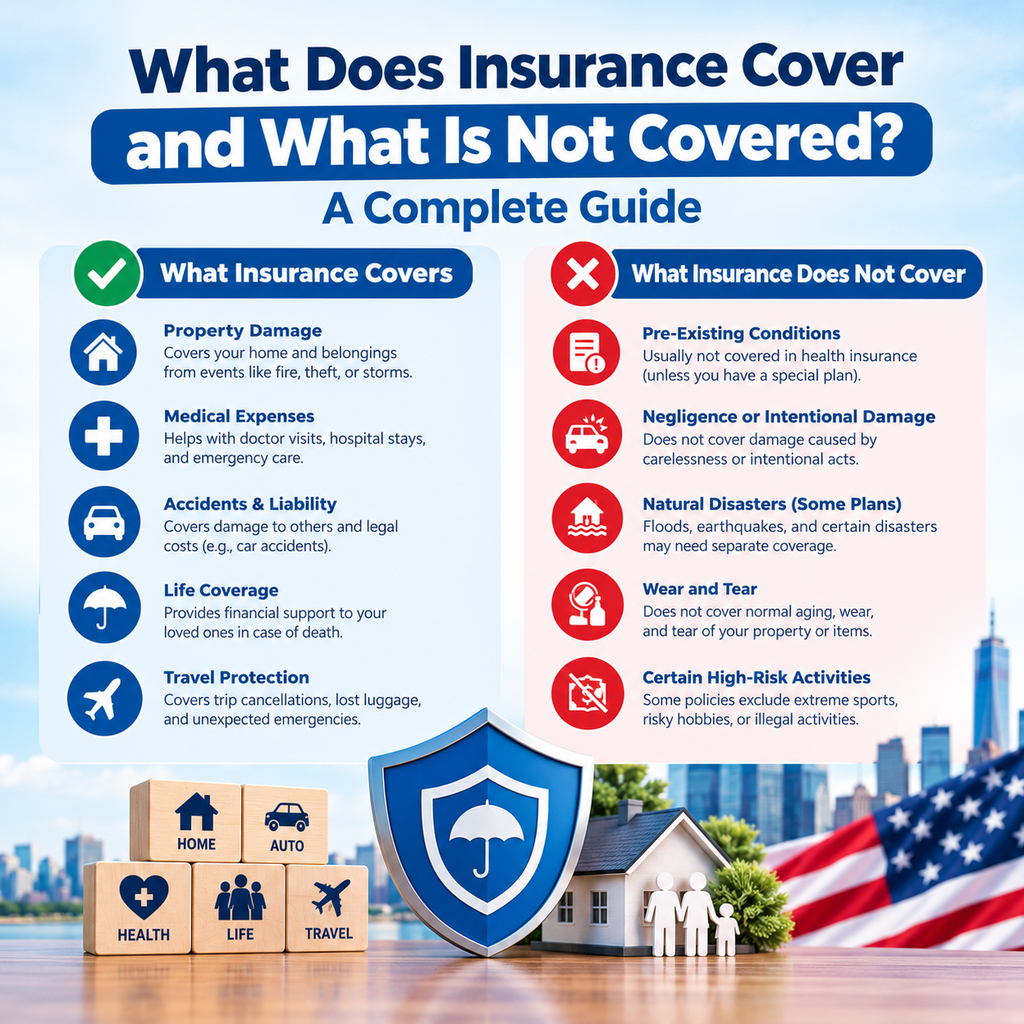
1. What Does Insurance Cover?
Table of Contents
Insurance provides financial protection against certain risks described in an insurance policy.
When a covered event occurs, the insurance company may pay for eligible expenses or losses according to the policy terms.
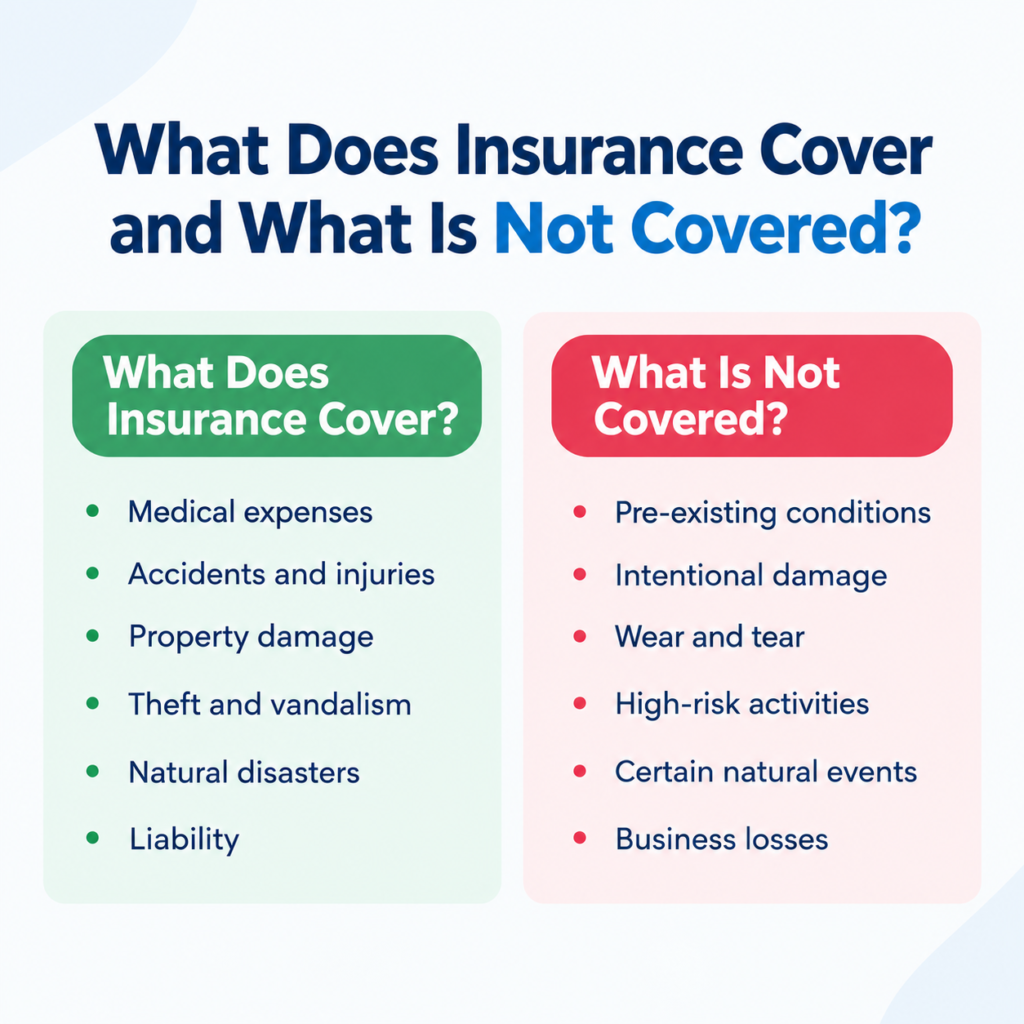
Depending on the type of insurance, coverage may include:
- Medical treatment and hospital expenses.
- Vehicle accidents and covered vehicle damage.
- Damage to homes and personal belongings.
- Financial support for beneficiaries after the insured person’s death.
- Business property damage and certain legal liabilities.
- Temporary living expenses after certain covered property losses.
However, coverage is never unlimited. The insurer only pays according to the policy’s conditions, exclusions, deductibles, and coverage limits.
2. What Does Health Insurance Cover?
Health insurance helps pay for eligible healthcare services.
Depending on the plan, covered services may include:
- Doctor visits.
- Hospitalization.
- Emergency medical services.
- Prescription medications.
- Preventive care.
- Laboratory tests.
- Certain mental health services.
- Maternity and newborn care.
In the United States, many ACA-compliant individual and small-group health plans must cover ten categories of essential health benefits.
These categories include emergency services, hospitalization, prescription drugs, maternity care, mental health services, and preventive services.
What may not be covered?
Depending on the plan, some expenses may be excluded or limited, such as:
- Certain cosmetic procedures.
- Treatments that are not medically necessary.
- Services outside the plan’s provider network, subject to applicable protections.
- Certain experimental or investigational treatments.
- Services exceeding specific plan limitations.
Always check your Summary of Benefits and Coverage (SBC) and the full plan documents.
You can learn more through the official website:
3. What Does Car Insurance Cover?
Car insurance helps protect drivers against certain financial losses involving vehicles and road accidents.
The coverage depends on the policy selected and the insurance requirements in your state.
Common types of car insurance coverage include:
Liability Coverage
Helps pay for injuries or property damage you cause to other people in an accident, subject to policy limits.
Collision Coverage
Helps pay for covered damage to your vehicle resulting from a collision, subject to the deductible.
Comprehensive Coverage
Helps cover certain non-collision losses, such as theft, fire, falling objects, or weather-related damage, depending on the policy.
Personal Injury Protection (PIP)
In states where it applies, PIP can help cover certain medical expenses and other specified losses after an accident.
Uninsured and Underinsured Motorist Coverage
Can provide protection when an at-fault driver has no insurance or insufficient insurance, depending on state law and policy terms.
What may not be covered?
Common exclusions or limitations may include:
- Normal vehicle wear and tear.
- Mechanical breakdowns not covered by an applicable endorsement.
- Intentional damage.
- Certain business or commercial vehicle use under a personal policy.
- Losses exceeding the policy’s coverage limits.
Never assume that every type of vehicle damage is covered by basic liability insurance.
4. What Does Homeowners Insurance Cover?
Homeowners insurance generally protects a house and certain personal belongings against specified risks.
A standard policy may provide the following protections:
Dwelling Coverage
Helps pay to repair or rebuild the insured home after covered damage.
Personal Property Coverage
Helps replace or repair eligible belongings such as furniture, clothing, and electronics after a covered loss.
Personal Liability Coverage
May help protect you financially if you are legally responsible for certain injuries or property damage involving others.
Additional Living Expenses
May help pay certain temporary living costs if a covered loss makes your home uninhabitable.
What may not be covered?
Common exclusions in standard homeowners policies include:
- Flood damage.
- Earthquake damage.
- Normal wear and tear.
- Maintenance problems.
- Certain pest or insect damage.
- Intentional damage.
Some of these risks may require separate insurance policies or additional coverage.
For example, homeowners in flood-prone areas may need separate flood insurance.
Official information:
5. What Does Renters Insurance Cover?
Renters insurance is designed for people who rent apartments, houses, or other residential properties.
It generally protects the tenant’s personal belongings rather than the building itself.
Common coverage includes:
- Furniture and household items.
- Clothing and personal belongings.
- Electronics.
- Personal liability for certain covered incidents.
- Additional living expenses after certain covered losses.
For example, if a covered fire damages your rented apartment and destroys your personal belongings, renters insurance may help pay for eligible replacement costs.
What may not be covered?
Depending on the policy, exclusions may include:
- Flood damage.
- Earthquake damage.
- Normal wear and tear.
- Damage caused intentionally.
- Certain high-value items above policy limits.
Some expensive items, such as jewelry or collectibles, may require additional coverage.
6. What Does Life Insurance Cover?
Life insurance provides a financial benefit to named beneficiaries when the insured person dies, subject to the policy conditions.
For example, a person may purchase a $500,000 life insurance policy. If the insured person dies while the policy is active and the claim is valid, the beneficiaries may receive the stated death benefit.
Families may use this money for:
- Household expenses.
- Mortgage payments.
- Children’s education.
- Outstanding debts.
- Funeral expenses.
- Other financial responsibilities.
What may not be covered?
Life insurance policies have specific exclusions and conditions. Depending on the policy, these may include:
- Material misrepresentation during the application.
- Certain exclusions during an initial contestability period.
- Suicide exclusions during a specified initial period, where permitted by law.
- Other exclusions specifically stated in the contract.
The exact rules depend on the policy and applicable state law.
Read the contract carefully before purchasing life insurance.
7. What Does Business Insurance Cover?
Business insurance helps protect companies against certain financial risks associated with operating a business.
The type of coverage depends on the business activity, industry, size, and insurance policy.
Common business insurance protections include:
General Liability Insurance
May cover certain third-party bodily injury, property damage, and personal or advertising injury claims.
Commercial Property Insurance
Helps protect business buildings, equipment, inventory, and other insured property against covered losses.
Workers’ Compensation Insurance
In many states, this provides benefits for employees with qualifying work-related injuries or illnesses, subject to state requirements.
Professional Liability Insurance
May help protect professionals against certain claims involving alleged errors, negligence, or professional mistakes.
Business Interruption Insurance
May help replace certain lost business income after a covered property loss causes a qualifying interruption.
What may not be covered?
Depending on the policy, exclusions may include:
- Intentional illegal activities.
- Certain contractual liabilities.
- Employee theft without appropriate coverage.
- Cyber incidents without suitable cyber insurance.
- Losses exceeding policy limits.
- Certain professional mistakes under a general liability policy.
Business owners should choose coverage based on their actual business risks.
8. Difference Between Covered Events and Exclusions
Understanding the difference between covered events and exclusions is essential.
| Covered event | Possible exclusion or limitation |
|---|---|
| Medical treatment covered by a health plan | Excluded or non-covered treatment |
| Car accident under applicable collision coverage | Normal mechanical breakdown |
| House fire under a covered homeowners policy | Flood damage under a standard policy |
| Theft of insured personal belongings | Items exceeding special coverage limits |
| Valid life insurance death benefit | Contract-specific exclusions |
| Covered third-party business injury | Certain contractual or intentional acts |
These are general examples. Actual coverage depends on the insurance contract and applicable laws.
9. How to Find Out What Your Insurance Policy Covers
Before purchasing insurance, take time to review the policy documents.
Here are seven useful steps:
- Read the declarations page: Check the insured person or property, coverage types, policy dates, and limits.
- Review the coverage section: Understand which events and expenses are included.
- Check exclusions: Look for situations that the insurance company will not cover.
- Understand deductibles: Find out how much you must pay before insurance contributes.
- Check coverage limits: Understand the maximum amount the insurer may pay.
- Ask about additional coverage: Some risks may require optional endorsements or separate policies.
- Get important explanations in writing: Keep written confirmation of any important coverage clarification.
Do not rely only on a sales conversation or advertisement. The actual insurance contract is what matters.
10. What Happens If an Insurance Claim Is Not Covered?
Sometimes an insurance company may reject a claim because the event is excluded, the policy has expired, information was incorrect, or required conditions were not satisfied.
If your claim is denied, you should:
- Request the denial explanation in writing.
- Read the relevant policy section.
- Check whether the insurer applied the policy terms correctly.
- Collect supporting documents and evidence.
- Ask about the company’s appeal or complaint process.
- Contact your state insurance department if you believe the claim was handled incorrectly.
A denied claim does not automatically mean the insurance company made the correct decision. You can review the reasons and challenge the decision through the available process.
Frequently Asked Questions
Does insurance cover everything?
No. Insurance policies cover specific risks and expenses. Exclusions, deductibles, conditions, and coverage limits determine what the insurer will pay.
What is an insurance exclusion?
An exclusion is a situation, event, or type of loss that an insurance policy does not cover.
Can I add coverage for something my insurance does not cover?
Sometimes. You may be able to purchase an endorsement, rider, or separate insurance policy. Availability depends on the insurer and type of coverage.
Does health insurance cover all medical expenses?
No. Health insurance may require deductibles, copayments, or coinsurance. Some services may also be excluded or subject to plan rules.
Does homeowners insurance cover floods?
Most standard homeowners insurance policies do not cover flood damage. Separate flood insurance may be necessary.
How do I know if my insurance claim will be approved?
No one can guarantee approval in advance. The insurer reviews the circumstances, evidence, coverage terms, exclusions, and applicable conditions before making a decision.
Final Thoughts
Insurance can provide valuable financial protection, but understanding your coverage is just as important as purchasing a policy.
Health, car, home, renters, life, and business insurance all protect against different risks. Each policy also has limitations and exclusions that you should understand before relying on its protection.
Read your policy carefully, ask questions, and confirm important details with your insurance provider.
Knowing what your insurance covers—and what it does not cover—can help you avoid unexpected financial problems when you need protection the most.