

Digital Marketing Business
Table of Contents
Starting a digital marketing business from home can be a practical way to earn money online. Businesses need help promoting their products and services, reaching new customers, and building their online presence. If you learn the right skills and find clients, you can start with a small budget without renting an office.
In this guide, you will learn what digital marketing businesses do, which services you can offer, how to find customers, and how to get started step by step.
What Is a Digital Marketing Business?
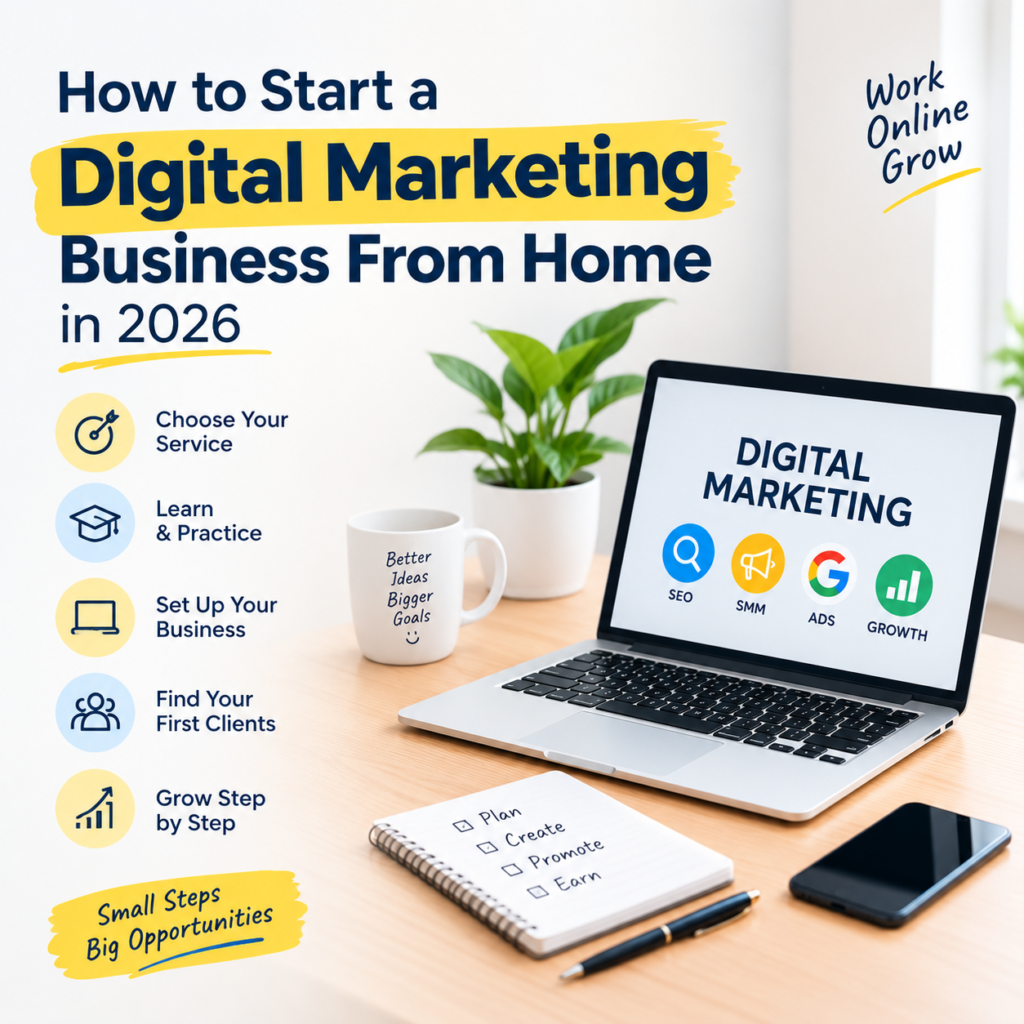
A digital marketing business helps other businesses promote themselves online. For example, a restaurant may need better Instagram posts, a clothing store may want to advertise its products, or a local company may need more visitors to its website.
You can provide these services remotely and charge clients per project or through a monthly package.
1. Choose One Service to Start With
You do not need to offer every digital marketing service at the beginning. Choose one service, learn it properly, and build your experience.
Here are four options:
Social Media Management: Create posts, plan content, schedule updates, and help businesses maintain their social media pages.
Paid Advertising: Help businesses run Facebook, Instagram, or Google Ads. Learn campaign setup, targeting, budgets, and performance tracking before managing a client’s money.
Search Engine Optimization (SEO): Improve website content and structure so search engines can understand it better. SEO takes time and does not guarantee first-page rankings.
Website Design: Build simple business websites using WordPress or other website builders. You can offer landing pages, contact pages, service pages, and basic website maintenance.
Choose the service that matches your interests and skills. You can add more services as your experience grows.
2. Learn the Skills You Need
Before approaching paying clients, learn the basics of your chosen service. You can begin with free tutorials, online guides, and practice projects.
For social media management, practise creating a weekly content calendar and designing sample posts. For SEO, learn keyword research, page titles, meta descriptions, and internal links. For website design, build a sample website to understand how pages, menus, and contact forms work.
Create two or three sample projects for a fictional business or a practice brand. Clearly label them as samples rather than claiming they are work completed for real clients.
3. Set Up Your Business
You do not need an expensive office to begin. A computer, reliable internet connection, professional email address, and portfolio can be enough for your first steps.
Create a simple portfolio that explains:
- What service you provide
- Which types of businesses you help
- Examples of your work
- How clients can contact you
You can use a basic website or a well-organized online portfolio. Keep your service description clear so potential customers understand what they are paying for.
Check the business registration, licensing, and tax rules that apply in your country before operating commercially.
4. Find Your First Customers
Finding customers is often more difficult than learning the service. Start with businesses that may genuinely benefit from your help, such as restaurants, salons, gyms, shops, and small service providers.
Follow these steps:
- Choose one type of business to approach.
- Search for businesses with a clear improvement opportunity.
- Review their public website or social media page.
- Prepare a short, personalized message explaining how you could help.
- Offer a clear service with specific deliverables and a realistic price.
For example, you might offer a restaurant a package containing 12 social media posts and a monthly content calendar. Explain exactly what is included and whether photography, advertising costs, or extra revisions cost more.
Avoid sending the same spam message to hundreds of businesses. Personalized communication and useful suggestions are more professional.
5. Decide What to Charge
Your prices should reflect your skills, the time required, the complexity of the work, and the market you serve.
You could charge per project, per hour, or through a monthly service package. For example, a beginner might offer a small, clearly defined social media package rather than a complete marketing service.
Research competitors who serve similar customers. Calculate your time and expenses before setting your price, and agree on payment terms in writing.
Do not promise guaranteed sales, viral content, or a specific search ranking. Explain what work you will perform and which results you will measure.
6. Use Tools to Save Time
Start with tools that fit your budget. Depending on your service, you may need a graphic design tool, a content scheduler, website analytics, keyword research tools, or an advertising platform.
Free versions may be enough for early practice. Paid subscriptions are optional unless a particular client project requires them.
You can also use AI tools to brainstorm content ideas, draft captions, or organize research. Always check the output for accuracy, originality, and suitability before sending it to a client.
7. Grow Your Business Gradually
Once you have your first customers, focus on delivering reliable work. Communicate clearly, meet deadlines, and provide simple reports showing what you completed.
Ask satisfied clients for honest testimonials or referrals. Keep records of your income and expenses, and reinvest only when you understand which tools or activities are helping your business.
As demand grows, you can specialize in one industry or add services that complement your main offer.
How Much Money Do You Need to Start?
Your startup cost depends on the service you choose and the equipment you already own. If you have a computer and internet connection, you may be able to begin learning and building sample projects with free tools.
You may later pay for a domain, hosting, software, registration, or advertising. Avoid spending your entire budget before you have tested demand and spoken with potential customers.
Remember that revenue is not the same as profit. You must account for software, taxes, payment fees, and other business expenses.
Final Thoughts
A digital marketing business can be started from home by choosing one service, learning the necessary skills, creating a portfolio, and approaching suitable customers. You do not need to build a large agency immediately.
Start small, be honest about your experience, and focus on solving real problems for businesses. With consistent practice and good customer service, you can gradually develop your skills and build a sustainable business.





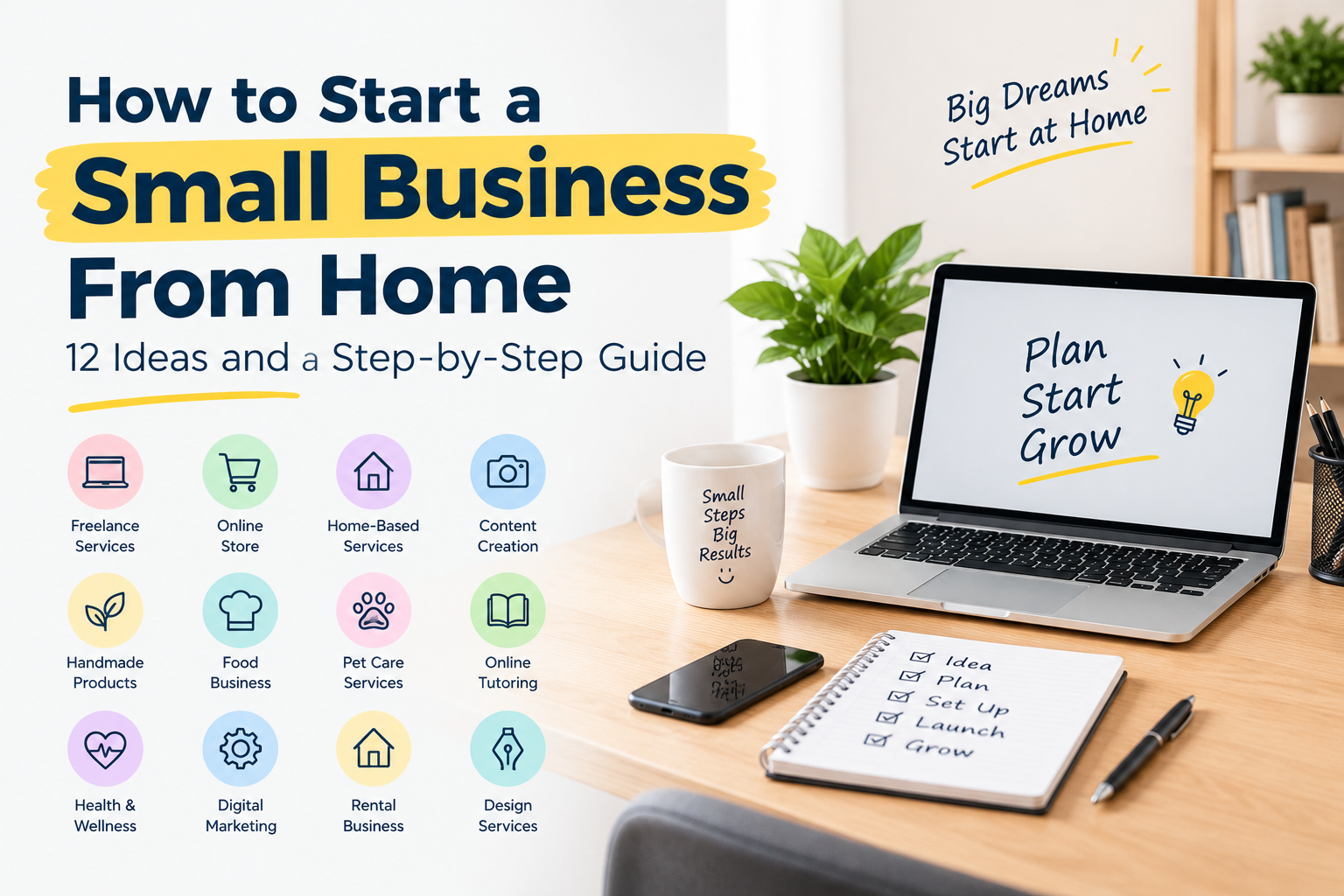
Pingback: How to Start a Small Business From Home: 12 Ideas in 2026