

martwatches
Smartwatches have become much more than simple accessories for checking the time. Modern smartwatches can track your daily activities, monitor your workouts, display notifications, measure your heart rate, and help you stay connected without constantly using your smartphone.
However, not every smartwatch feature is worth paying extra for. Some features are genuinely useful in everyday life, while others may sound impressive but offer little value to the average user.
Whether you are buying your first smartwatch or upgrading an older model, understanding which features matter most can help you make a smarter purchasing decision.
1. Long Battery Life for Everyday Convenience
Table of Contents
Battery life is one of the most important features to consider when buying a smartwatch. A watch that needs charging every few hours can quickly become frustrating, especially if you want to use sleep tracking and activity monitoring.
Some smartwatches last only one or two days, while others can operate for several days or even weeks, depending on their design and features.
Before purchasing, consider how frequently you are comfortable charging your watch. If you travel often or prefer not to charge your devices every night, choosing a smartwatch with longer battery life may be worth the additional cost.
2. Accurate Health and Fitness Tracking
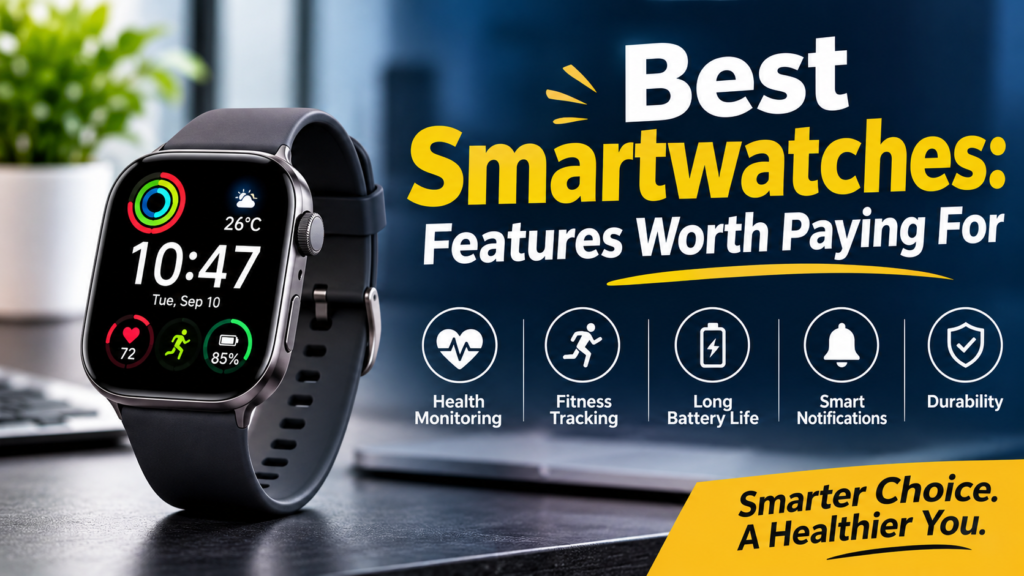
Health and fitness tracking is one of the main reasons people purchase smartwatches. Many modern devices can monitor daily steps, calories burned, heart rate, exercise duration, and other activity measurements.
These features can help you understand your daily habits and encourage you to become more active.
However, tracking accuracy varies between devices and activities. A more expensive smartwatch does not automatically guarantee perfect measurements.
Look for a device with reliable sensors, useful activity summaries, and an easy-to-understand health dashboard.
3. Built-In GPS for Outdoor Activities
Built-in GPS is particularly useful for people who enjoy walking, running, cycling, or hiking.
It allows a smartwatch to record outdoor routes, distance, pace, and location without always depending on a connected smartphone.
Some affordable smartwatches use connected GPS, which means they rely on your phone for location tracking. This can work well if you always carry your smartphone during exercise.
If you regularly exercise without your phone, paying extra for built-in GPS can be a worthwhile investment.
4. Heart Rate Monitoring
Heart rate monitoring is another feature worth considering. It measures your heart rate throughout the day and during physical activities.
This information can help you understand how your body responds to exercise and how your heart rate changes during rest and activity.
Some watches also provide high or low heart rate notifications and other heart-related alerts.
Keep in mind that smartwatch readings are not a replacement for professional medical equipment or a doctor’s assessment. Choose a device with reliable sensors and clear health information rather than paying extra for unnecessary features.
5. Sleep Tracking and Sleep Analysis
Sleep tracking helps users understand their sleeping habits. Depending on the device, a smartwatch may estimate total sleep time, sleep stages, nighttime movement, and sleeping patterns.
This information can help you identify whether you are getting enough rest and maintain a more consistent sleep schedule.
For sleep tracking, comfort and battery life are especially important. A large or uncomfortable watch may be difficult to wear throughout the night.
If you are interested in improving your sleep routine, this feature can provide useful general information.
6. Water Resistance for Swimming and Daily Use
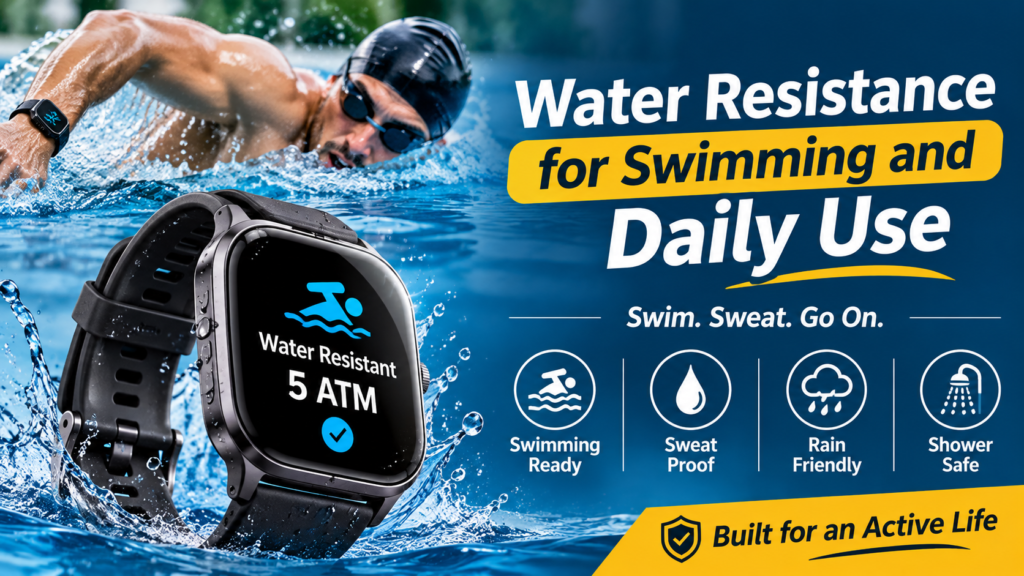
Water resistance is an important feature for people who exercise regularly, swim, or frequently come into contact with water.
Many smartwatches offer some level of water resistance, but not every model is suitable for swimming or diving.
Check the manufacturer’s water-resistance rating and instructions before using your watch in water. Water resistance can also change over time because of wear, damage, or aging seals.
For everyday use, basic water resistance may be enough. Swimming enthusiasts should look for a model specifically designed to support swimming activities.
7. Smartphone Notifications and Connectivity
One of the most convenient smartwatch features is the ability to receive smartphone notifications directly on your wrist.
You can check incoming calls, text messages, emails, calendar reminders, and notifications from supported applications without constantly taking your phone out of your pocket.
Some smartwatches also allow users to respond to messages, reject calls, or control certain smartphone functions.
Before buying, check whether the smartwatch is compatible with your phone. Some features may work differently depending on whether you use an Android phone or an iPhone.
8. Calling and Messaging Features
Some smartwatches include microphones and speakers that allow users to answer phone calls directly from their wrists.
Certain models also support cellular connectivity through an eSIM, allowing calls and messages without keeping a smartphone nearby.
These features can be especially useful while driving, exercising, or working when reaching for your phone is inconvenient.
However, cellular smartwatches usually cost more and may require an additional mobile plan. If you normally carry your phone everywhere, Bluetooth calling may be sufficient.
9. Bright and Easy-to-Read Display
A smartwatch display affects how comfortably you can use the device throughout the day.
AMOLED displays are popular because they offer vibrant colors, deep blacks, and strong contrast. Some watches also use LCD displays, which can be suitable for users who prefer affordable options.
Display brightness is another important consideration. A screen that is difficult to read outdoors can make checking notifications and fitness information frustrating.
If possible, compare screen quality, brightness, size, and readability before purchasing.
10. Smartphone App Compatibility
A smartwatch is only as useful as the software and applications that support it.
Most modern smartwatches connect to a companion application on your smartphone. These applications allow users to review fitness information, change watch settings, install supported apps, and customize notifications.
Before choosing a smartwatch, check whether its companion app works with your smartphone and whether it provides the features you need.
Also consider how easy the application is to use. A simple and well-organized app can make a significant difference in your overall experience.
11. Comfortable Design and Customizable Straps
A smartwatch should be comfortable enough to wear throughout the day. Even a device with excellent technology may not be a good purchase if it feels too heavy, large, or uncomfortable.
Consider the watch’s weight, case size, strap material, and overall design.
Silicone straps are often suitable for exercise because they are flexible and easy to clean. Leather and metal straps may be more appropriate for formal occasions or office environments.
Replaceable straps are also useful because they allow you to change the appearance of your smartwatch without buying another device.
12. Useful Safety and Emergency Features
Some smartwatches offer safety features such as emergency calling, fall detection, and location sharing.
These features can be helpful for people who exercise alone, travel frequently, or want additional safety options.
However, availability varies by model, country, mobile network, and connected smartphone. Some emergency functions may require a cellular connection or a compatible phone.
If safety features are important to you, confirm exactly how they work before paying extra for them.
Popular Smartwatch Brands Worth Comparing
Several established technology companies offer smartwatches with different features and price ranges.
Apple Watch: Apple Watch models are designed to work with iPhones and offer health tracking, notifications, fitness features, and a wide range of supported applications.
Samsung Galaxy Watch: Samsung Galaxy Watch models offer health monitoring, fitness tracking, smartphone connectivity, and integration with the Android ecosystem. Some features may require a compatible Samsung phone.
Garmin: Garmin is well known for sports and outdoor-focused watches. Many models offer GPS tracking, training information, and long battery life.
Fitbit: Fitbit devices focus heavily on activity tracking, health information, and sleep monitoring. They can be a suitable option for people who want to understand their daily fitness habits.
Amazfit: Amazfit offers a range of smartwatches at different prices, with features such as activity tracking, GPS on selected models, and extended battery life.
The best brand depends on your smartphone, budget, preferred design, and the features you actually plan to use.
How Much Should You Spend on a Smartwatch?
Smartwatch prices vary significantly depending on the brand, materials, sensors, software, and connectivity options.
Budget smartwatches can provide basic notifications, step counting, and activity tracking. Mid-range models often include better displays, additional fitness features, and more advanced connectivity.
Premium smartwatches may offer cellular connectivity, advanced health features, stronger materials, and more powerful software.
Instead of automatically choosing the most expensive model, decide which features are important for your daily routine.
For example, someone who mainly wants to check notifications and count steps may not need a premium smartwatch. However, a runner who needs built-in GPS and detailed training information may benefit from spending more.
Smartwatch Features That May Not Be Worth Paying Extra For
Some smartwatch features sound attractive but may not be useful to everyone.
For example, advanced watch customization may not matter if you prefer a simple display. Cellular connectivity may be unnecessary if your smartphone is always nearby. Premium materials may look attractive but offer limited practical benefits for someone who mainly uses a watch for exercise.
You should also avoid choosing a smartwatch based only on the number of health sensors it advertises. Consider whether those measurements are useful, understandable, and supported by reliable information.
The best purchase is not necessarily the watch with the longest feature list. It is the one that provides the features you will regularly use.
How to Choose the Best Smartwatch for Your Needs
Before making a final decision, compare a few important factors.
First, check smartphone compatibility because some smartwatches work better within specific technology ecosystems.
Second, decide which features matter most. You may prioritize battery life, GPS, fitness tracking, sleep monitoring, or calling capabilities.
Third, consider comfort and design. A smartwatch should fit properly and feel comfortable during everyday activities.
Finally, compare prices, warranty coverage, software support, and customer reviews. Buying an older model at a reasonable price can sometimes offer better value than purchasing the newest premium version.
Final Thoughts
The best smartwatch is not necessarily the most expensive one. Features such as long battery life, accurate activity tracking, built-in GPS, heart rate monitoring, comfortable design, and smartphone compatibility can provide genuine everyday value.
Before spending your money, think about how you plan to use your smartwatch. Choose a model that matches your lifestyle, supports your smartphone, and includes the features you actually need.
A carefully selected smartwatch can make daily routines more convenient, help you monitor your activities, and keep important information easily accessible.





Pingback: 12 Best Free Productivity Apps for Work and Study