
Insurance is designed to protect you from unexpected financial losses. Whether you have health insurance, car insurance, homeowners insurance, renters insurance, or life insurance, choosing the right policy can make a big difference when something goes wrong.
However, many people make mistakes when buying or managing insurance. Some choose a policy simply because it has the lowest price, while others do not understand their coverage limits, deductibles, or exclusions.
These mistakes can lead to unexpected expenses, insufficient protection, and problems when filing a claim.
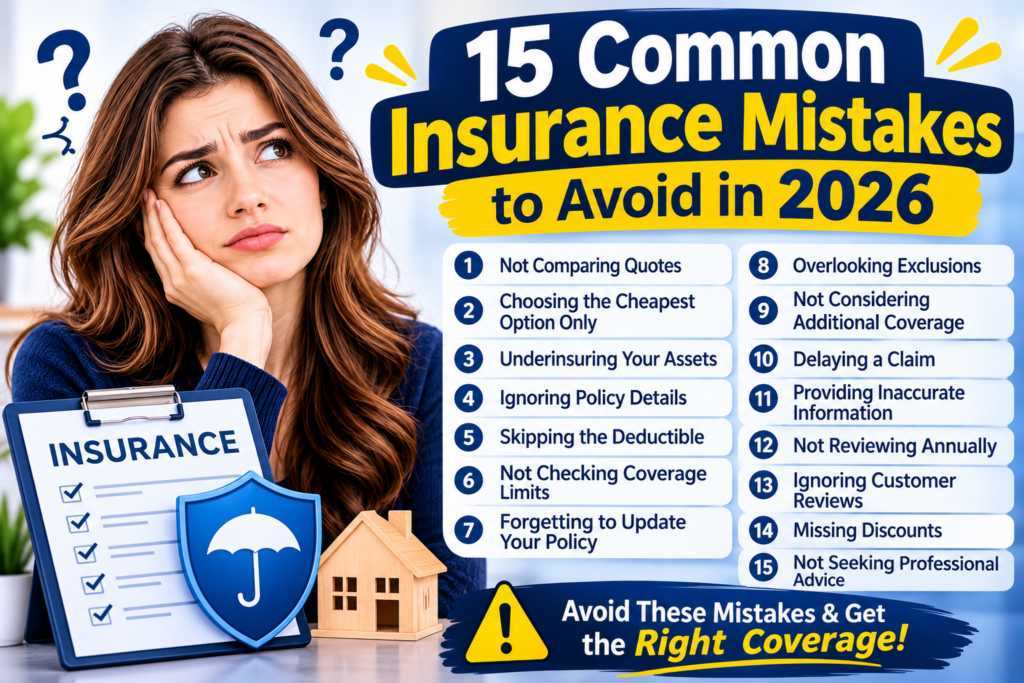
In this guide, we will discuss 15 common insurance mistakes to avoid in 2026 and explain how you can make better insurance decisions.
1. Choosing Insurance Only Because It Is Cheap
Table of Contents
One of the most common insurance mistakes is selecting the cheapest policy without checking what it covers.
A low premium may look attractive, but the policy might have lower coverage limits, higher deductibles, or important exclusions.
For example, a cheap homeowners insurance policy may not provide enough coverage to rebuild your home after a major covered loss.
How to avoid this mistake:
- Compare coverage limits, not just prices.
- Review deductibles and exclusions.
- Check what benefits are included.
- Compare quotes from multiple insurers.
The goal should be to find suitable protection at a reasonable price, not simply the cheapest policy.
2. Not Having Enough Insurance Coverage
Being underinsured means your insurance coverage may not be sufficient to cover a major financial loss.
For example, if your home would cost more to rebuild than your policy’s dwelling coverage limit, you may have to pay the difference yourself after a covered disaster.
The same issue can happen with car insurance, health insurance, life insurance, and business insurance.
How to avoid this mistake:
Calculate your potential financial needs before selecting coverage. Consider the cost of replacing property, medical expenses, income replacement, and your financial responsibilities.
Review your coverage whenever your circumstances change.
3. Ignoring Policy Exclusions
Insurance policies do not cover every possible situation.
Exclusions are specific events, circumstances, or types of losses that a policy does not cover.
For example, standard homeowners insurance generally does not cover flood damage. Separate flood insurance may be needed, depending on your location and circumstances.
How to avoid this mistake:
Read the exclusions section before purchasing a policy. Ask your insurance company or agent about risks that are not included and whether additional coverage is available.
4. Choosing the Wrong Deductible
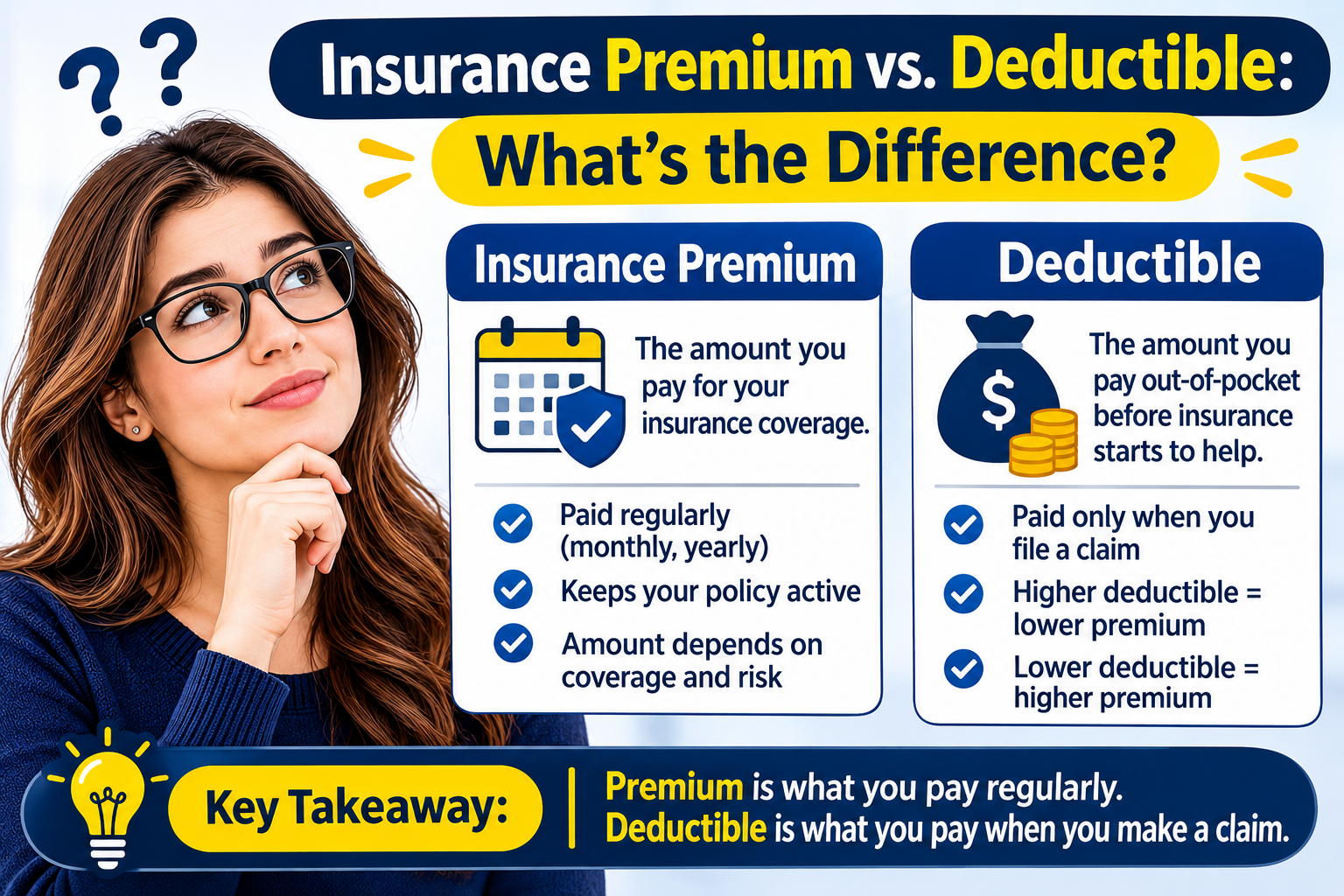
A deductible is the amount you pay toward an applicable covered claim before your insurance company pays its share.
Some people choose a very high deductible to reduce their premium without considering whether they can afford that amount after an accident or loss.
Others select a very low deductible and pay a higher premium than they are comfortable with.
How to avoid this mistake:
Choose a deductible that fits your emergency savings and monthly budget. Compare different deductible options before making a decision.
5. Not Comparing Insurance Quotes
Buying the first insurance policy you find can mean missing better coverage or pricing elsewhere.
Different insurance companies may offer different premiums, deductibles, coverage limits, and policy conditions.
How to avoid this mistake:
Get quotes from several insurance companies. Compare the same coverage limits and deductible amounts so you can make a fair comparison.
You can also work with a licensed insurance agent or broker to understand your options.
6. Providing Incorrect Information on Your Application
Some people provide incomplete or inaccurate information when applying for insurance.
For example, an applicant might enter the wrong vehicle details, property information, address, or driving history.
Incorrect information can cause problems with pricing, policy accuracy, and claims.
How to avoid this mistake:
- Answer application questions honestly.
- Check personal and property details carefully.
- Report relevant changes to your insurer.
- Correct mistakes as soon as you discover them.
Never hide important information to obtain a lower premium.
7. Forgetting to Update Your Insurance Policy
Your insurance needs can change over time.
You might purchase a new vehicle, renovate your home, get married, have children, start a business, or buy expensive belongings.
If you do not update your policy, your existing coverage may no longer match your needs.
How to avoid this mistake:
Review your insurance after major life changes. Contact your insurer to check whether your coverage limits, beneficiaries, and policy details need updating.
8. Missing Insurance Renewal Dates
Letting an insurance policy expire can leave you without important financial protection.
For example, if your car insurance expires and you continue driving without the required coverage, you may face legal and financial consequences.
A policy lapse can also create problems when trying to obtain new coverage.
How to avoid this mistake:
- Keep track of renewal dates.
- Read renewal notices carefully.
- Set calendar reminders.
- Confirm that payments have been processed.
- Contact your insurer if you plan to change policies.
Do not assume your policy has renewed until you have confirmation.
9. Not Understanding Your Health Insurance Network
Many health insurance plans use networks of doctors, hospitals, and other healthcare providers.
Some plans charge more for out-of-network care, while others may not cover certain non-emergency services outside their network.
Choosing a plan without checking its network can lead to unexpected medical bills.
How to avoid this mistake:
Before purchasing health insurance, check whether your preferred doctors, hospitals, and pharmacies are included in the plan’s network.
Also review referrals, prior authorization requirements, deductibles, copayments, and coinsurance.
10. Ignoring Life Insurance Beneficiaries
Life insurance provides financial support to the beneficiaries named in the policy if the insured person dies and the claim meets the policy requirements.
However, people sometimes forget to update beneficiary information after marriage, divorce, or other important family changes.
This can create confusion about who should receive the policy benefits.
How to avoid this mistake:
Review your beneficiary details regularly. Make sure the information is accurate and tell the appropriate people where your policy information is stored.
11. Not Keeping Insurance Documents Safe
Insurance documents contain important information, including policy numbers, coverage limits, deductibles, contact details, and claim instructions.
Losing these documents can make it harder to access your coverage information when you need it.
How to avoid this mistake:
Keep digital or physical copies of:
- Insurance policies
- Declarations pages
- Payment receipts
- Renewal notices
- Claim documents
- Insurer contact information
Store digital copies securely and make sure you can access them when necessary.
12. Waiting Too Long to File an Insurance Claim
After an accident, theft, property damage, or another covered event, delaying the claim process can create complications.
Insurance policies may include specific reporting requirements and deadlines.
Waiting too long can also make it harder to collect evidence and document what happened.
How to avoid this mistake:
Contact your insurer as soon as reasonably possible after an incident. Follow the policy’s reporting instructions and keep copies of all communications.
If the incident involves an emergency, prioritize safety and contact the appropriate emergency services first.
13. Not Documenting Damage Properly
When something happens to your home, car, or personal belongings, evidence can help support your insurance claim.
Without photographs, receipts, reports, or other records, it may be harder to demonstrate the extent of the loss.
How to avoid this mistake:
- Take clear photographs or videos of damage.
- Keep purchase receipts for valuable items.
- Save repair estimates and invoices.
- Obtain police or incident reports when relevant.
- Maintain a record of conversations with your insurer.
Do not dispose of damaged property before checking with your insurer, unless necessary for safety or preventing further damage.
14. Assuming Every Claim Will Be Approved
Having insurance does not mean every claim will automatically be accepted.
An insurer reviews the circumstances of a loss and checks whether it is covered under the policy.
A claim may be denied or reduced because of exclusions, policy limits, missed requirements, inaccurate information, or other policy conditions.
How to avoid this mistake:
Understand your policy before you need to make a claim. If a claim is denied, request a written explanation and review the insurer’s appeal or complaint process.
You can also contact your state’s department of insurance if you need help understanding your consumer rights.
15. Never Reviewing Your Insurance Coverage
Some people purchase insurance once and then forget about it for years.
However, property values, rebuilding costs, family responsibilities, income, and financial needs can change.
A policy that was suitable several years ago may no longer provide enough protection.
How to avoid this mistake:
Review your policies at least once a year and whenever a major life change occurs. Check your coverage limits, deductibles, exclusions, beneficiaries, and premium amounts.
How to Avoid Insurance Mistakes When Buying a Policy
Before purchasing insurance, follow this simple checklist:
- Identify the risks you want to protect against.
- Calculate how much coverage you may need.
- Compare quotes from multiple insurers.
- Review policy exclusions and limitations.
- Choose a deductible you can afford.
- Check the insurer’s reputation and complaint information.
- Read the policy documents carefully.
- Confirm that all application information is correct.
- Save your policy documents.
- Understand how to file a claim.
Taking these steps can help you make more informed decisions and avoid unnecessary surprises.
Why Is It Important to Understand Your Insurance Policy?
An insurance policy is a contract between you and an insurance company. It explains what is covered, what is excluded, how much the insurer may pay, and what responsibilities you must follow.
Understanding the policy can help you:
- Avoid unexpected out-of-pocket expenses.
- Choose appropriate coverage limits.
- Understand your deductible.
- Identify risks that need additional protection.
- Prepare for the claims process.
- Avoid unnecessary or unsuitable coverage.
If any policy term is unclear, ask your insurance company or licensed insurance professional to explain it before you purchase the policy.
Frequently Asked Questions
What is the biggest mistake people make when buying insurance?
One major mistake is choosing insurance based only on its price without checking coverage limits, exclusions, deductibles, and policy conditions.
Is the cheapest insurance policy always the best?
No. A cheaper policy may provide less coverage or have a higher deductible. Compare the complete policy details before making a decision.
How often should I review my insurance policies?
Review your policies at least once a year and whenever you experience a major life change, such as buying a home, changing vehicles, getting married, or starting a business.
What happens if I do not update my insurance information?
Outdated information can lead to incorrect policy details, pricing problems, or complications when filing a claim. Contact your insurer when relevant information changes.
Can an insurance company deny my claim?
Yes. An insurer may deny a claim if the loss is not covered, an exclusion applies, a policy condition has not been met, or other contractual requirements are not satisfied. The reason should be explained through the insurer’s claims process.
How can I avoid paying too much for insurance?
Compare quotes, review your coverage needs, ask about available discounts, and choose a deductible that fits your finances. Avoid removing important coverage just to reduce your premium.
Final Thoughts
Insurance can provide valuable financial protection, but choosing the wrong policy or misunderstanding its terms can create problems when you need help most.
Avoiding common insurance mistakes starts with understanding your coverage, comparing policies, choosing suitable deductibles, providing accurate information, and reviewing your insurance regularly.
Do not focus only on finding the lowest premium. Focus on getting the protection you actually need at a price you can afford.
A little research before purchasing insurance can help you make better financial decisions and avoid unnecessary stress in the future.