

Pets are an important part of many families. Whether you own a dog, cat, or another companion animal, keeping your pet healthy is a major responsibility. However, veterinary treatment can sometimes become expensive, especially when your pet needs emergency care, surgery, or long-term treatment.
This is why many pet owners consider Pet Insurance. It can help reduce the financial burden of unexpected veterinary expenses and make it easier to afford certain treatments.
But is pet insurance really worth the money? What does it cover, how much does it cost, and how can you choose the right plan?
In this guide, we explain everything you need to know about pet insurance in the United States.
What Is Pet Insurance?
Table of Contents
Pet insurance is a type of insurance that helps pet owners pay for eligible veterinary expenses when their pets become sick or injured.
Depending on the plan, it may cover expenses such as:
- Emergency veterinary treatment
- Accidental injuries
- Illnesses and infections
- Surgery and hospitalization
- Diagnostic tests and X-rays
- Prescription medications
- Certain hereditary conditions
Most pet insurance plans work through reimbursement. This means you usually pay the veterinarian first, submit a claim to your insurance company, and receive reimbursement for eligible expenses according to your policy.
Some insurers may also offer direct payment arrangements with participating veterinarians.
Pet insurance is different from human health insurance. It is generally classified as property and casualty insurance in the United States. <Cite refs={[“turn466839search2″,”turn466839search4”]}/>
How Does Pet Insurance Work?
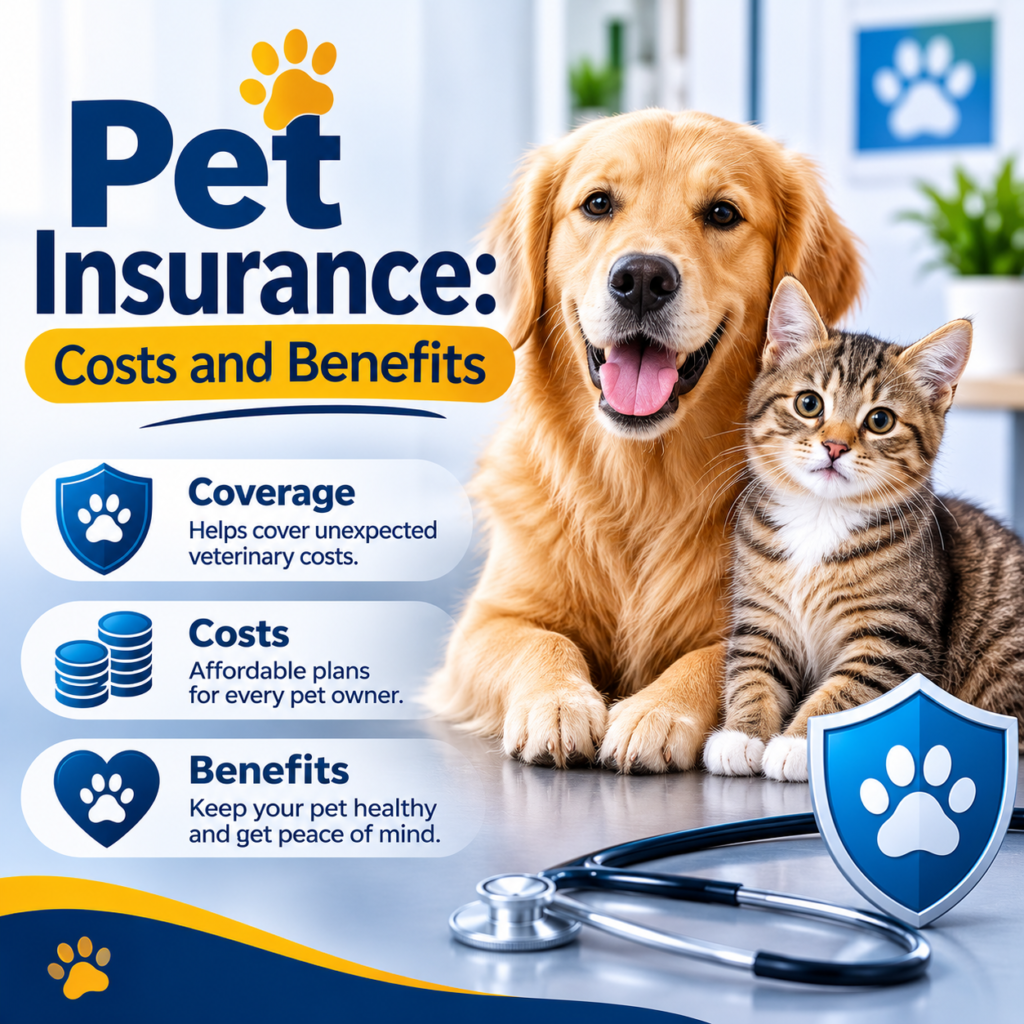
Understanding how pet insurance works can help you avoid confusion when purchasing a policy.
Here is a simple example:
Imagine your dog suddenly becomes sick and needs veterinary treatment costing $2,000.
You have a pet insurance policy with:
- Annual deductible: $500
- Reimbursement rate: 80%
- Eligible veterinary bill: $2,000
Assuming the deductible is applied first, the calculation would be:
- Total eligible bill: $2,000
- Deductible you pay: $500
- Remaining eligible amount: $1,500
- Insurance reimbursement at 80%: $1,200
- Your total cost: $800
In this example, the insurance company pays $1,200, and you pay $800.
Actual reimbursement calculations can vary by insurer and policy. Some plans apply the reimbursement percentage before the deductible, and annual limits or exclusions may also affect the payment.
Types of Pet Insurance Plans
Pet insurance companies generally offer different levels of coverage. The three common categories are accident-only, accident and illness, and wellness coverage. <Cite refs={[“turn466839search2″,”turn466839search6”]}/>
1. Accident-Only Pet Insurance
Accident-only insurance covers eligible injuries caused by unexpected accidents.
Examples may include:
- Broken bones
- Cuts and wounds
- Injuries from accidents
- Swallowed foreign objects
- Certain emergency treatments
This type of plan generally does not cover illnesses such as cancer, infections, or diabetes.
It may be suitable for pet owners who mainly want financial protection against unexpected injuries.
2. Accident and Illness Insurance
Accident and illness coverage is a more comprehensive option.
Depending on the policy, it may cover:
- Accidental injuries
- Infections and other illnesses
- Cancer treatment
- Diagnostic testing
- Surgery
- Hospitalization
- Prescription medications
- Certain hereditary conditions
This plan is popular among pet owners who want protection against both accidents and unexpected medical problems.
3. Wellness or Preventive Care Coverage
Wellness coverage is designed to help with certain routine veterinary expenses.
Depending on the plan, it may include:
- Annual checkups
- Vaccinations
- Routine blood tests
- Flea and tick prevention
- Heartworm prevention
- Dental cleaning
Wellness coverage is often offered as an optional add-on rather than included in a standard accident and illness policy.
Always check the policy because preventive care benefits and reimbursement limits can differ between companies.
How Much Does Pet Insurance Cost in the USA?
The cost of pet insurance depends on several factors, including your pet’s age, breed, location, and selected coverage.
According to the Insurance Information Institute, using figures from the North American Pet Health Insurance Association’s 2026 State of the Industry report, the average annual accident and illness premium in the United States for 2025 was:
| Pet | Average annual premium | Approx. monthly cost |
|---|---|---|
| Dogs | $836 | $70 |
| Cats | $435 | $36 |
These are industry averages, not guaranteed prices or personalized quotes. Your actual premium may be higher or lower. <Cite refs={[“turn466839search0”]}/>
What Factors Affect Pet Insurance Prices?
1. Pet’s age
Older pets may cost more to insure because they are more likely to develop health problems. Some companies also have age restrictions for new policies.
2. Pet’s breed
Certain breeds have a higher risk of specific medical conditions. This can affect insurance prices and available coverage.
3. Location
Veterinary treatment costs vary across the United States. Insurance premiums may be higher in areas where veterinary care is more expensive.
4. Coverage type
Accident-only plans are generally less expensive than broader accident and illness policies.
5. Deductible
Choosing a higher deductible may reduce your monthly premium, but you will have to pay more yourself before reimbursement begins.
6. Reimbursement percentage
A plan that reimburses 90% of eligible expenses may cost more than one that reimburses 70%.
7. Annual coverage limit
Plans with higher annual payout limits or unlimited coverage may have higher premiums.
Compare these factors before choosing a policy. <Cite refs={[“turn466839search2″,”turn466839search5”]}/>
What Does Pet Insurance Cover?

Coverage depends on the insurance company and the plan you purchase. A typical accident and illness policy may include the following:
Emergency Treatment
If your pet experiences an unexpected accident or serious medical problem, insurance may help cover eligible emergency veterinary expenses.
Surgery
Some policies cover medically necessary surgeries resulting from covered accidents or illnesses.
Diagnostic Tests
Your pet may need X-rays, blood tests, laboratory work, or other diagnostic procedures. These may be covered when related to an eligible condition.
Hospitalization
If your pet needs to stay at a veterinary hospital, eligible hospitalization expenses may be included.
Prescription Medication
Some policies help pay for prescription medicines required to treat covered conditions.
Chronic Illnesses
Certain plans cover ongoing conditions such as diabetes or other long-term illnesses, provided the condition is eligible under the policy.
Hereditary and Congenital Conditions
Some insurers cover certain inherited or congenital conditions, while others apply restrictions or exclusions. Check the policy carefully, especially if your pet’s breed has known health risks. <Cite refs={[“turn466839search4″,”turn466839search5″,”turn466839search6”]}/>
What Does Pet Insurance Not Cover?
Pet insurance does not cover every veterinary expense. Understanding exclusions is important before purchasing a plan.
Common exclusions may include:
- Pre-existing conditions: Medical problems that existed before coverage began are generally excluded.
- Waiting-period conditions: Illnesses or injuries that develop during the waiting period may not be covered.
- Routine care: Vaccinations and regular checkups may not be covered unless you purchase wellness benefits.
- Cosmetic procedures: Non-medical procedures, such as cosmetic surgery, are generally excluded.
- Breeding expenses: Pregnancy and breeding-related costs are commonly excluded unless special coverage is available.
- Certain dental treatments: Dental coverage varies, and some plans exclude routine cleaning or specific dental conditions.
- Elective procedures: Treatments that are not medically necessary may not qualify.
Exclusions vary between insurance companies. Read the complete policy before signing up. <Cite refs={[“turn466839search2″,”turn466839search6”]}/>
Benefits of Pet Insurance
Pet insurance offers several potential advantages for pet owners.
1. Protection Against Unexpected Veterinary Bills
Emergency treatment and surgery can be expensive. Insurance can help reduce the financial impact of eligible veterinary expenses.
2. Better Financial Planning
Paying a regular premium may make some unexpected medical costs easier to manage.
Instead of facing the full cost of an eligible treatment, you may receive reimbursement according to your policy.
3. More Treatment Options
When a serious medical problem occurs, financial concerns can make decisions difficult.
Having suitable insurance may give you more flexibility when considering eligible treatment options.
4. Coverage for Different Medical Problems
Depending on your plan, you may receive protection against accidents, illnesses, diagnostic tests, surgery, and medications.
5. Peace of Mind
Many pet owners value the reassurance of knowing that they have financial support available if their pet needs expensive medical care.
6. Coverage for Younger Pets
Buying insurance while your pet is young and healthy may help you obtain coverage before certain conditions become pre-existing.
However, coverage is never guaranteed for every future medical problem.
Disadvantages of Pet Insurance
Although pet insurance can be useful, it also has disadvantages.
Monthly premiums: You must continue paying premiums whether your pet needs treatment or not.
Deductibles: You may need to pay a certain amount yourself before receiving reimbursement.
Exclusions: Pre-existing conditions and some treatments may not be covered.
Waiting periods: Coverage does not usually begin immediately after purchasing a policy.
Claim delays: You may need to pay the veterinary bill upfront and wait for the insurer to process your claim.
Coverage limits: Some policies have annual or lifetime payout limits.
Pet insurance does not guarantee that you will spend less overall. Its value may also come from helping you manage large and unexpected veterinary bills. <Cite refs={[“turn466839search3″,”turn466839search4”]}/>
When Should You Buy Pet Insurance?
Many pet owners consider buying insurance when their pet is young and healthy.
There are several reasons for this:
- Younger pets may qualify for lower premiums.
- They are less likely to have existing medical conditions.
- You may have more policy choices.
- Coverage can begin before certain illnesses develop.
If you wait until your pet becomes sick, the existing condition may not qualify for coverage.
However, every insurer has its own eligibility rules, so check age requirements and exclusions before applying.
What Is a Pet Insurance Waiting Period?
A waiting period is the time between purchasing a policy and when certain coverage becomes active.
For example, an insurer may have:
- A short waiting period for accidents.
- A longer waiting period for illnesses.
- A separate waiting period for certain orthopedic conditions.
The exact duration depends on the insurer, policy, and state.
If your pet develops a medical problem during the waiting period, treatment for that condition may not be covered. <Cite refs={[“turn466839search2″,”turn466839search7”]}/>
How to Choose the Right Pet Insurance Policy
Choosing the right policy requires comparing more than just monthly prices.
Here are some important steps.
1. Compare Multiple Insurance Companies
Request quotes from several insurers. Compare premiums, coverage options, deductibles, and exclusions.
2. Check Pre-Existing Condition Rules
Ask how the insurer defines pre-existing conditions and whether certain curable conditions can become eligible after a symptom-free period.
3. Review Annual Coverage Limits
Check the maximum amount the insurer will pay each year. Make sure the limit is suitable for your financial situation and potential veterinary costs.
4. Compare Deductibles
Choose a deductible you could realistically afford if your pet needs treatment.
5. Check Reimbursement Rates
Compare reimbursement options such as 70%, 80%, and 90%. Remember that higher reimbursement rates may increase your premium.
6. Understand the Claims Process
Find out whether you must pay the veterinarian first or whether the insurer offers direct payment.
Also check how claims are submitted and how long reimbursement usually takes.
7. Read Customer Reviews
Look at customer experiences involving claims, customer service, policy renewals, and reimbursement.
8. Read the Full Policy
Do not rely only on advertisements or a short coverage summary. Read the policy wording and understand its exclusions, limits, and waiting periods.
Where Can You Buy Pet Insurance in the USA?
You can purchase pet insurance directly from insurance companies or compare policies through licensed insurance agents and brokers.
Here are some companies and resources you can explore:
- ASPCA Pet Health Insurance – Offers pet insurance options for cats and dogs.
- Embrace Pet Insurance – Provides accident and illness coverage options.
- Pets Best – Offers pet insurance plans and coverage information.
- Trupanion – Provides pet medical insurance and information about its payment options.
- Nationwide Pet Insurance – Provides information about pet insurance options.
Availability, prices, eligibility, and coverage vary by state and insurer. Compare current policy documents and obtain a personalized quote before making a decision.
Is Pet Insurance Worth It?
Pet insurance can be worth considering if you want protection against unexpected veterinary expenses.
It may be particularly useful for:
- Owners who cannot comfortably pay large emergency veterinary bills.
- People with young pets who want to arrange coverage early.
- Owners of breeds that may be more likely to develop certain medical conditions.
- Families who want predictable budgeting for potential veterinary expenses.
However, some pet owners may prefer to save money in a separate emergency fund instead of paying insurance premiums.
The right choice depends on your budget, your pet’s health, the available policies, and how much financial risk you are comfortable taking.
Frequently Asked Questions
1. Is pet insurance worth buying?
It can be worth buying if you want help managing unexpected veterinary expenses. However, whether it saves you money depends on premiums, claims, deductibles, and coverage.
2. Does pet insurance cover regular vet visits?
Most standard accident and illness plans do not automatically cover routine checkups and vaccinations. You may need an optional wellness plan.
3. Can I insure an older dog or cat?
Some insurance companies accept older pets, while others have age restrictions for new policies. Premiums may also be higher for older animals.
4. Does pet insurance cover pre-existing conditions?
Most pet insurance companies exclude pre-existing conditions. Some insurers may make exceptions for certain curable conditions after a specified period without symptoms.
5. Do I have to use a specific veterinarian?
Many pet insurance plans allow you to visit licensed veterinarians of your choice. However, always check the policy for provider restrictions.
6. How do I receive money from pet insurance?
Most plans require you to pay the veterinary bill first and submit a claim for reimbursement. The insurer then reviews the claim and pays eligible expenses according to your policy.
7. Can I insure more than one pet?
Yes. Many insurers allow multiple pets to be insured and may offer multi-pet discounts.
8. Does pet insurance cover vaccinations?
Standard accident and illness policies generally do not cover routine vaccinations. Some wellness add-ons may include them.
Final Thoughts
Pet Insurance can help pet owners manage the financial risks of unexpected accidents and illnesses. It may cover eligible expenses such as emergency treatment, surgery, hospitalization, diagnostic tests, and prescription medications.
Before choosing a plan, compare prices, deductibles, reimbursement rates, waiting periods, and exclusions.
Do not select a policy simply because it has the lowest monthly premium. Choose coverage that matches your pet’s needs and your budget.
A good insurance decision can help you prepare financially for unexpected situations and focus on providing proper care for your pet.
Disclaimer: This article is for educational purposes only and is not financial, veterinary, or insurance advice. Pet insurance coverage, costs, exclusions, and eligibility requirements vary by insurer, state, and policy. Review the policy documents and consult a licensed insurance professional before purchasing coverage.