
Car insurance is an important part of owning and driving a vehicle in the United States. It helps protect drivers financially if they are involved in an accident, their vehicle is damaged, or someone else’s property is affected.
However, choosing the right car insurance policy can be confusing. Different policies offer different levels of protection, and the price can vary significantly depending on your location, driving history, vehicle, and selected coverage.
In this guide, you will learn how car insurance works, what it covers, how much it may cost, and how to choose a policy that fits your needs and budget.
What Is Car Insurance?
Table of Contents
Car insurance is an agreement between you and an insurance company. You pay a regular amount called a premium, and the insurance company agrees to cover certain financial losses according to your policy.
For example, if you cause an accident, your liability coverage may help pay for the other driver’s medical expenses and vehicle repairs. If you have collision coverage, your policy may also help pay to repair your own vehicle.
The exact protection depends on your policy, coverage limits, deductibles, and exclusions.
In most US states, drivers must carry at least some form of auto liability insurance to drive legally. Requirements vary by state.
Types of Car Insurance Coverage
Understanding different types of car insurance coverage can help you avoid buying too little or paying for protection you do not need.
1. Liability Insurance
Liability insurance helps pay for injuries or property damage you cause to other people in an accident.
It generally includes two parts:
- Bodily Injury Liability: Helps pay for medical expenses and other covered injury-related costs for people injured in an accident you cause.
- Property Damage Liability: Helps pay for damage you cause to another person’s vehicle or property.
Liability insurance does not normally pay to repair your own vehicle.
2. Collision Coverage
Collision coverage helps pay to repair or replace your vehicle if it is damaged in a collision with another vehicle or object.
For example, it may help cover damage if you hit another car, a tree, a fence, or another object.
You usually have to pay a deductible before the insurance company pays the covered amount.
3. Comprehensive Coverage
Comprehensive coverage protects your vehicle against certain types of damage that do not involve a collision.
It may cover events such as:
- Vehicle theft
- Fire damage
- Hail and storm damage
- Flood damage
- Vandalism
- Falling objects
- Damage caused by hitting an animal
Comprehensive coverage is generally optional under state law, but a lender or leasing company may require it.
4. Uninsured and Underinsured Motorist Coverage
This coverage can help protect you if you are involved in an accident with a driver who has no insurance or does not have enough insurance to cover the damages.
Depending on the state and policy, it may help pay for medical expenses and other covered losses.
5. Personal Injury Protection (PIP)
Personal Injury Protection, commonly called PIP, helps cover certain expenses related to injuries after a car accident.
Depending on the policy and state rules, it may cover:
- Medical expenses
- Lost wages
- Certain household expenses
- Funeral expenses
PIP is required in some states and optional or unavailable in others.
6. Medical Payments Coverage
Medical Payments Coverage, also known as MedPay, can help pay medical and funeral expenses for you and your passengers after an accident.
It may apply regardless of who caused the accident, depending on the policy terms.
7. Rental Reimbursement Coverage
If your vehicle is damaged in a covered accident and needs repairs, rental reimbursement coverage can help pay for a temporary rental car.
The policy usually has daily and total payment limits.
8. Roadside Assistance
Roadside assistance can help when your vehicle breaks down or you experience certain problems while driving.
Depending on the plan, services may include:
- Towing
- Battery jump-starts
- Flat tire assistance
- Fuel delivery
- Lockout assistance
Check whether you already receive similar services through another membership or provider before purchasing this coverage.
How Much Does Car Insurance Cost in the USA?
There is no single price for car insurance in the United States. Two drivers living in the same city can receive very different quotes.
Your premium depends on several factors, including your driving history, age, location, vehicle, insurance company, and selected coverage.
Factors That Affect Car Insurance Costs
1. Driving Record
Drivers with accidents, traffic violations, or previous insurance claims may pay higher premiums. A clean driving record may help you qualify for lower rates.
2. Location
Insurance prices vary between states, cities, and ZIP codes. Areas with more accidents, vehicle theft, severe weather, or expensive repair costs may have higher premiums.
3. Age and Driving Experience
Young and inexperienced drivers often face higher insurance costs because insurers may consider them a greater risk.
4. Type of Vehicle
The make, model, age, safety features, and repair costs of your vehicle can affect your premium. Expensive vehicles and vehicles that cost more to repair may be more expensive to insure.
5. Coverage Type
A basic liability policy generally costs less than a policy that also includes collision and comprehensive coverage. However, lower-cost insurance may leave you responsible for more expenses after an accident.
6. Deductible Amount
A deductible is the amount you pay out of pocket before certain insurance benefits apply.
Choosing a higher deductible may reduce your premium, but you should only select an amount you can comfortably afford if you need to file a claim.
7. Annual Mileage
How often and how far you drive can affect your insurance price. Some insurers offer lower rates or usage-based policies for drivers who travel fewer miles.
Minimum Car Insurance Requirements in the USA
Car insurance requirements are different in each state. Most states require drivers to carry liability insurance, while some also require additional protection such as PIP or uninsured motorist coverage.
For example, a state may require drivers to carry a minimum amount of bodily injury and property damage liability coverage.
However, meeting the legal minimum does not always mean you have enough protection. If an accident causes damages greater than your policy limits, you may have to pay the remaining amount yourself.
Before purchasing insurance, check the requirements through your state’s Department of Insurance or motor vehicle agency.
How to Choose the Right Car Insurance Policy
Choosing the right policy requires more than selecting the cheapest quote. Consider your vehicle’s value, financial situation, driving habits, and the level of protection you need.
Here are some practical steps.
1. Understand Your State’s Requirements
Start by checking the minimum insurance requirements where your vehicle is registered. Make sure your policy meets the legal requirements.
2. Compare Multiple Insurance Quotes
Do not accept the first price you receive. Request quotes from several insurance companies and compare the coverage, limits, deductibles, and exclusions.
Make sure you compare similar policies rather than choosing a cheaper option with less protection.
3. Consider Your Vehicle’s Value
If you own an older vehicle with a low market value, collision and comprehensive coverage may not always be worth their cost.
Compare the annual cost of these coverages, your deductible, and the amount the insurer might pay if the vehicle is totaled.
4. Choose Suitable Coverage Limits
State minimum coverage may not be enough to protect your finances after a serious accident.
Consider whether higher liability limits would provide more appropriate financial protection.
5. Read the Policy Carefully
Before signing up, review the policy details. Pay attention to exclusions, deductibles, coverage limits, payment conditions, and cancellation rules.
Never assume that every type of accident or vehicle damage is covered.
10 Practical Tips to Save Money on Car Insurance
Car insurance can be a significant expense, but there are several ways to look for savings without automatically sacrificing important protection.
- Compare quotes: Get prices from multiple insurance companies before making a decision.
- Ask about discounts: Check whether you qualify for safe-driver, multi-car, good-student, or other available discounts.
- Maintain a clean driving record: Avoiding accidents and traffic violations may help reduce future premiums.
- Consider bundling policies: Some companies offer discounts when you purchase auto and homeowners or renters insurance together.
- Review your deductible: A higher deductible may lower your premium if you can afford the extra out-of-pocket cost.
- Choose your vehicle carefully: Research insurance costs before buying a new or used car.
- Check low-mileage programs: If you drive less than average, ask whether your insurer offers a mileage-based discount or policy.
- Review your coverage regularly: Your insurance needs may change as your vehicle gets older or your driving habits change.
- Check your policy information: Incorrect vehicle details, driver information, or missing discounts can affect your price.
- Pay attention to renewal dates: Compare available rates before renewing rather than automatically accepting the same policy.
Discounts and eligibility rules vary between insurance companies and states.
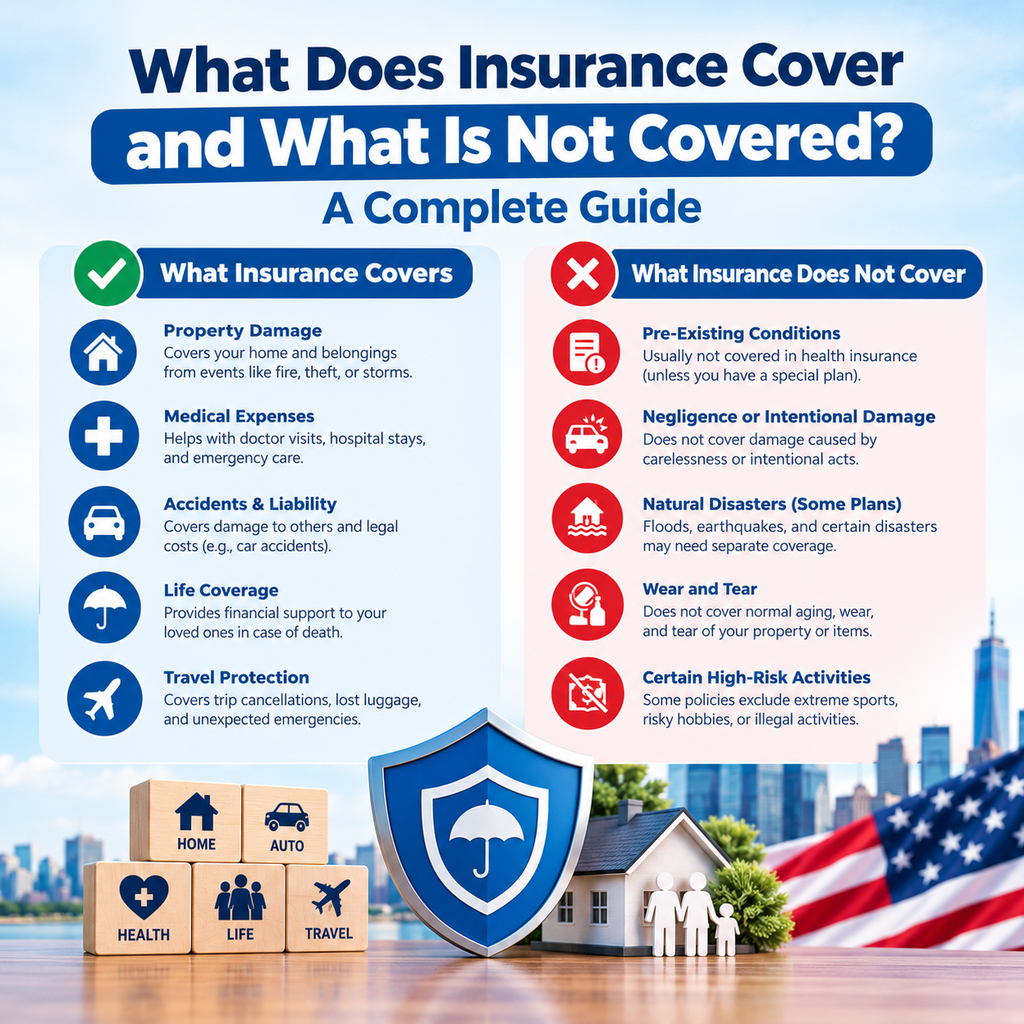
What Does Car Insurance Usually Not Cover?
Car insurance does not cover every type of vehicle-related expense. Common exclusions or limitations may include:
- Normal wear and tear
- Mechanical breakdowns unrelated to a covered event
- Routine maintenance
- Personal belongings stolen from your vehicle, unless covered by another policy
- Damage exceeding your coverage limits
- Certain business or commercial vehicle activities under a personal auto policy
Some situations may require separate protection, such as mechanical breakdown coverage, GAP insurance, or commercial auto insurance.
Always read the exclusions in your policy to understand what is not covered.
How to Buy Car Insurance in the USA
Buying car insurance is usually straightforward if you prepare the necessary information.
Step 1: Gather Your Information
You may need your driver’s license information, vehicle identification number (VIN), vehicle details, address, and driving history.
Step 2: Decide What Coverage You Need
Check your state’s legal requirements and consider whether you need liability, collision, comprehensive, or additional coverage.
Step 3: Request Quotes
Visit insurance company websites or contact licensed insurance agents to request quotes.
Step 4: Compare Policies
Compare premiums, coverage limits, deductibles, exclusions, discounts, and customer service options.
Step 5: Select a Policy
Choose the policy that offers suitable protection at a price you can afford.
Step 6: Review Your Documents
Check your insurance ID card, policy declarations, effective date, and payment details. Keep proof of insurance available when driving.
Is Full Coverage Car Insurance Worth It?
Full coverage is a commonly used term for an auto policy that combines liability insurance with collision and comprehensive coverage. However, it is not one standardized policy type, and the exact protection depends on the policy.
It may be worth considering if:
- You have a newer or expensive vehicle.
- You cannot comfortably afford major vehicle repairs.
- Your car is financed or leased.
- You want protection against theft, weather damage, and covered collisions.
If your vehicle is older and has a low market value, the cost of collision and comprehensive coverage may be harder to justify.
Compare the potential insurance payment with the vehicle’s value, deductible, and annual premium before deciding.
Final Thoughts
Car insurance helps protect drivers from potentially expensive financial losses. The right policy depends on your state requirements, vehicle, driving history, budget, and personal needs.
Before buying a policy, compare multiple quotes, understand the different coverage options, check available discounts, and read the policy carefully.
Remember, the cheapest policy is not always the best choice. Focus on finding affordable coverage that provides enough financial protection when you need it.
Disclaimer: This article is for general educational purposes only and is not financial or insurance advice. Insurance requirements, prices, coverage options, and exclusions vary by state and insurer. Review your policy and consult a licensed insurance professional for advice about your circumstances.