

Imagine working hard every month to earn money and support your family. Suddenly, an illness or injury makes it impossible for you to continue working. Your regular income stops, but your rent, bills, groceries, and other expenses do not disappear.
How would you manage your finances during that time?
This is where disability insurance can help. It is designed to replace a portion of your income if a covered illness or injury prevents you from working.
Many people understand the importance of health insurance and life insurance, but they often overlook disability insurance. However, protecting your income can be just as important as protecting your health and property.
In this guide, you will learn what disability insurance is, how it works, what it covers, how much it costs, and how to choose the right policy.
What Is Disability Insurance?
Table of Contents
Disability insurance is a type of insurance that provides income replacement when you cannot work because of a qualifying illness or injury.
Unlike health insurance, which helps pay eligible medical expenses, disability insurance is designed to replace part of your lost income.
For example, imagine you earn $4,000 per month. You experience a serious injury and cannot work for several months. If your disability insurance policy provides 60% income replacement, you could receive approximately $2,400 per month, subject to the policy’s terms and benefit limits.
This money can help you manage everyday expenses while you recover.
How Does Disability Insurance Work?
Disability insurance works by providing financial benefits when you meet the policy’s definition of disability.
Here is how the process generally works:
1. Purchase a Disability Insurance Policy
You can purchase disability insurance individually or receive coverage through your employer.
When applying, the insurance company may ask about your age, occupation, income, medical history, and other details.
2. Pay Your Insurance Premium
You pay a monthly or annual premium to keep your policy active.
The amount depends on factors such as your occupation, age, health, income, coverage amount, and policy features.
3. Experience a Qualifying Disability
If an illness or injury prevents you from working according to the policy’s definition of disability, you may become eligible to submit a claim.
Not every medical condition automatically qualifies. The insurer reviews your medical information and policy requirements.
4. Complete the Waiting Period
Most disability insurance policies have an elimination period, also called a waiting period.
This is the amount of time you must remain disabled before benefits can begin.
For example, a policy with a 90-day elimination period generally requires you to wait 90 days before eligible benefits start.
5. Receive Monthly Benefits
If your claim is approved, the insurance company pays benefits according to the policy.
These payments can help cover expenses such as:
- Rent or mortgage payments.
- Utility bills.
- Groceries.
- Transportation.
- Loan payments.
- Other everyday expenses.
The amount and duration of benefits depend on your coverage.
Types of Disability Insurance
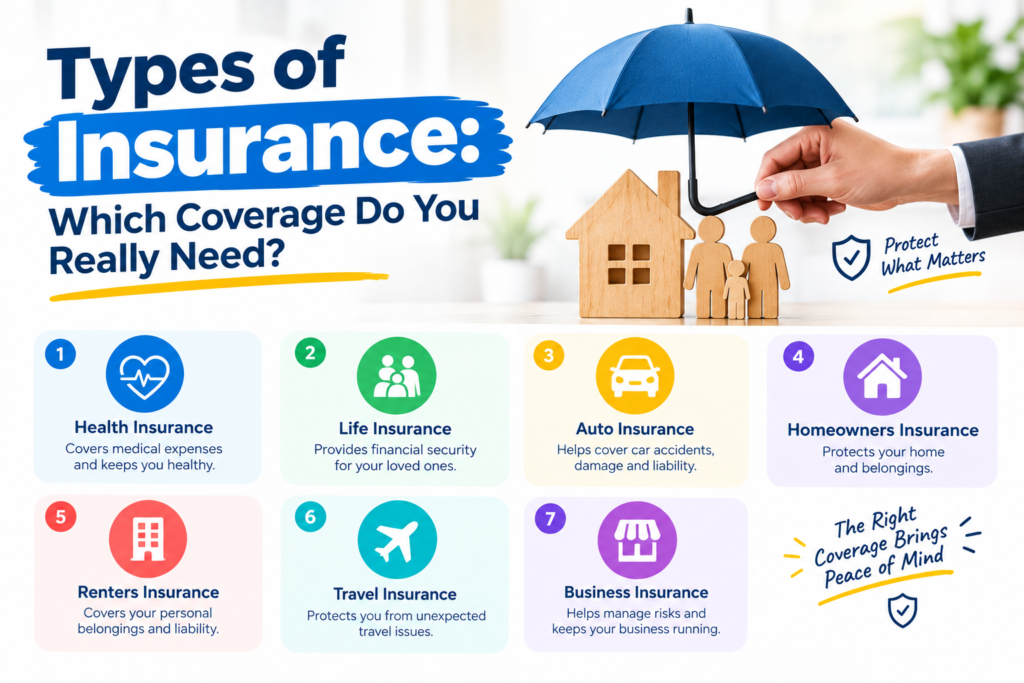
There are two main types of disability insurance: short-term disability insurance and long-term disability insurance.
1. Short-Term Disability Insurance
Short-term disability insurance provides temporary income replacement when you cannot work for a limited period because of a qualifying illness, injury, or other covered condition.
Depending on the policy, benefits may last for several weeks or months.
It may help cover situations such as:
- Recovery after surgery.
- Certain serious illnesses.
- Temporary injuries.
- Pregnancy-related medical conditions, when covered by the policy.
Short-term disability insurance is sometimes provided through an employer.
2. Long-Term Disability Insurance
Long-term disability insurance provides income protection when a qualifying disability prevents you from working for an extended period.
Depending on the policy, benefits may continue for several years or until a specified age, such as 65.
It may be useful for people who want protection against longer periods without income.
Long-term disability insurance generally has a longer waiting period than short-term coverage.
What Does Disability Insurance Cover?
Disability insurance generally focuses on replacing income rather than paying medical bills.
Depending on the policy, qualifying conditions may include:
- Serious injuries.
- Certain chronic illnesses.
- Back and spinal conditions.
- Cancer and other serious diseases.
- Certain neurological conditions.
- Recovery from qualifying surgery.
The policy’s definition of disability is extremely important.
Some policies cover you if you cannot perform the main duties of your own occupation. Other policies may require that you be unable to work in any occupation for which you are reasonably qualified.
Always review this definition before purchasing coverage.
What Is Own-Occupation vs. Any-Occupation Disability Insurance?
These terms explain how an insurance company decides whether you qualify for disability benefits.
Own-Occupation Disability Insurance
Own-occupation coverage may provide benefits if a qualifying illness or injury prevents you from performing the important duties of your specific occupation.
For example, a surgeon who cannot perform surgery because of a hand injury may qualify under an own-occupation policy, depending on its wording.
Some policies may allow you to work in another occupation while still receiving benefits.
Any-Occupation Disability Insurance
Any-occupation coverage generally has a stricter definition.
You may need to be unable to perform work in any occupation for which you are reasonably suited based on your education, training, or experience.
This can make it more difficult to qualify for benefits.
Policy definitions vary, so read the exact wording rather than relying only on the policy name.
How Much Does Disability Insurance Pay?
Disability insurance usually replaces a percentage of your eligible income rather than your entire salary.
For example:
| Monthly Income | 60% Replacement |
|---|---|
| $2,500 | $1,500 |
| $3,000 | $1,800 |
| $4,000 | $2,400 |
| $5,000 | $3,000 |
| $6,000 | $3,600 |
These are simple illustrations, not guaranteed benefit amounts. Actual payments depend on your policy’s monthly maximum, income definition, offsets, exclusions, and other conditions.
Some policies may also reduce benefits if you receive certain other disability payments.
How Much Does Disability Insurance Cost?
The cost of disability insurance varies depending on your personal circumstances and the coverage you choose.
Important factors include:
- Age: Premiums are often higher when you purchase coverage at an older age.
- Occupation: Jobs involving greater physical risks may cost more to insure.
- Health history: Your medical history may affect eligibility and pricing.
- Income: Higher income protection may require higher premiums.
- Benefit period: Coverage lasting longer may cost more.
- Waiting period: A shorter elimination period may increase the premium.
- Policy features: Additional protection and more flexible definitions may increase the cost.
There is no single price for everyone. Request quotes from multiple insurers and compare the policy details.
How to Apply for Disability Insurance
If you want to purchase disability insurance, follow these steps:
Step 1: Calculate Your Monthly Expenses
Work out how much money you need each month to manage essential expenses, including housing, food, transportation, and bills.
Step 2: Check Your Existing Benefits
Find out whether your employer already provides short-term or long-term disability coverage.
Also check whether you may qualify for government disability benefits.
Step 3: Compare Insurance Providers
Contact several insurance companies or licensed insurance agents.
Compare monthly premiums, benefit amounts, waiting periods, and coverage duration.
Step 4: Review Policy Definitions
Pay close attention to the definition of disability, exclusions, pre-existing condition rules, and how long benefits can continue.
Step 5: Complete the Application
Provide accurate information about your income, occupation, and medical history.
The insurer may request additional documents or medical information before making a decision.
Step 6: Keep Your Policy Active
Pay your premiums on time and keep copies of your policy documents.
Understand how to report a claim if you become unable to work.
How to File a Disability Insurance Claim
If an illness or injury prevents you from working, contact your insurance company or employer’s benefits department as soon as possible.
The general claim process includes:
- Notify the insurance company that you need to make a claim.
- Complete the required claim forms.
- Provide medical records and information from your treating healthcare professional.
- Submit employment and income documents if requested.
- Complete any additional assessments required by the insurer.
- Wait for the insurer to review and decide your claim.
The insurance company may request further information during the review.
Keep copies of all submitted documents and follow the deadlines stated in your policy.
Disability Insurance vs. Social Security Disability Insurance
In the United States, disability insurance can refer to private insurance or government disability benefits.
Social Security Disability Insurance (SSDI) is a federal program administered by the Social Security Administration.
Here are some key differences:
| Feature | Private Disability Insurance | Social Security Disability Insurance |
|---|---|---|
| Provider | Private insurance company | Federal government |
| Eligibility | Based on policy terms | Based on Social Security rules |
| Funding | Insurance premiums | Social Security taxes |
| Benefit amount | Based on policy and income | Based on Social Security earnings record |
| Disability rules | Depend on policy definition | Federal disability standards |
SSDI generally requires a qualifying disability that meets the Social Security Administration’s rules and sufficient work credits, although special rules apply to some applicants.
Private disability insurance and SSDI are not the same. Some private policies may offset benefits based on payments received from other programs.
You can learn more through the official Social Security website: https://www.ssa.gov/disability
Best Disability Insurance Companies to Consider in the USA
Several insurance companies offer individual disability insurance or employer-related disability coverage.
Here are some providers worth researching:
1. Guardian
Website: https://www.guardianlife.com/disability-insurance
Guardian offers disability insurance options for eligible individuals and professionals.
2. Northwestern Mutual
Website: https://www.northwesternmutual.com/disability-insurance/
Northwestern Mutual offers disability income insurance options.
3. Principal
Website: https://www.principal.com/individuals/products/disability-insurance
Principal provides disability insurance solutions, including income protection options.
4. MassMutual
Website: https://www.massmutual.com/insurance/disability-income-insurance
MassMutual offers disability income insurance for eligible customers.
5. Ameritas
Website: https://www.ameritas.com/individuals/products/disability-income-insurance/
Ameritas offers individual disability income insurance options.
Availability, eligibility, pricing, and policy features can vary. Compare the details directly with each provider or through a licensed insurance professional.
Advantages of Disability Insurance
Disability insurance can offer several financial benefits:
- Helps replace part of your income.
- Supports everyday living expenses.
- Can protect your savings from being used too quickly.
- Provides financial support during recovery.
- May offer protection for both short-term and long-term disabilities.
- Can provide additional financial security for families.
Disadvantages of Disability Insurance
Disability insurance also has some limitations:
- Monthly premiums can be expensive for some people.
- Policies may have waiting periods before benefits begin.
- Not every illness or injury qualifies.
- Certain medical conditions may be excluded or restricted.
- Benefits may cover only part of your previous income.
- The claim approval process may require detailed medical documentation.
Understanding these limitations helps you make a more informed decision.
Frequently Asked Questions
Is disability insurance worth it?
It can be worth considering if you depend on your salary to pay everyday expenses. It may help replace part of your income if a qualifying illness or injury prevents you from working.
Can I get disability insurance if I am self-employed?
Yes. Some insurance companies offer individual disability insurance to eligible self-employed people. Your income documentation and occupation may affect eligibility and pricing.
Does disability insurance cover mental health conditions?
Some policies cover qualifying mental health conditions, but coverage may have specific limitations, exclusions, or benefit-period restrictions. Review the policy carefully.
Does disability insurance cover pregnancy?
Some policies may cover qualifying pregnancy-related medical conditions or periods of disability. Normal pregnancy and childbirth are not automatically covered in every policy. Check the specific terms.
Can I have short-term and long-term disability insurance together?
Yes. Some people have both types of coverage. Short-term disability may provide benefits first, while long-term disability may begin after its waiting period, subject to the terms of each policy.
Does disability insurance pay 100% of my salary?
Usually not. Many policies replace only a portion of eligible income, subject to monthly benefit limits and other conditions.
What happens if I recover and return to work?
Benefits generally stop or change when you no longer meet the policy’s definition of disability. Some policies offer partial or residual disability benefits if you return to work with reduced income.
Final Thoughts
Disability insurance is an important financial protection option for people who depend on their income to support themselves and their families.
An unexpected illness or injury can make it difficult to continue working, even when regular expenses remain the same.
By understanding short-term and long-term disability coverage, comparing insurance providers, and reviewing policy conditions, you can decide whether this type of protection makes sense for your situation.
The most important thing is to understand what qualifies as a disability, how much income the policy replaces, and when benefits begin.
Disclaimer: This article is for general educational purposes only and does not provide legal, financial, medical, or insurance advice. Policy terms, eligibility, benefits, and exclusions vary by insurer and location. Review the official policy documents and consult a licensed insurance professional before purchasing coverage.



Pingback: How to File an Insurance Claim: Step-by-Step Guide