

Insurance is a financial protection tool that helps people manage unexpected expenses. Whether you are worried about medical bills, car accidents, damage to your home, or protecting your family’s financial future, the right insurance policy can help reduce the financial impact of unexpected events.
However, insurance can be confusing for beginners. What exactly is insurance? How does it work? How much does it cost? And how do you choose the right policy?
In this guide, you will learn the basics of insurance, understand common insurance terms, explore different types of coverage, and discover how to start shopping for insurance in the United States and the United Kingdom.
What Is Insurance?
Table of Contents
Insurance is an agreement between an individual or business and an insurance company. In exchange for regular payments called premiums, the insurer agrees to provide financial protection against certain losses described in the policy.
For example, imagine that your car is damaged in an accident. If your auto insurance policy covers the incident, your insurance company may pay some or all of the eligible repair costs, depending on your coverage, deductible, exclusions, and policy limits.
Without insurance, you might have to pay the entire cost yourself.
Insurance does not cover every possible situation. The exact protection you receive depends on the terms and conditions of your policy.
For a straightforward explanation, visit the National Association of Insurance Commissioners (NAIC).
How Does Insurance Work?
Insurance works by helping policyholders manage financial risks. Many people pay premiums into an insurance system, and the insurance company uses its resources to pay eligible claims according to the policies it has issued.
Here is how the process generally works:
1. Choose an Insurance Policy
First, you decide what you want to protect. It might be your health, car, house, belongings, income, or family.
You compare available policies and choose coverage that fits your needs and budget.
2. Pay Your Insurance Premium
A premium is the amount you pay to maintain your insurance coverage. Depending on the policy, you may pay monthly, every six months, annually, or according to another payment schedule.
Your premium can depend on factors such as the type of insurance, the coverage amount, your location, and the insurer’s assessment of risk.
3. An Unexpected Event Happens
Suppose you experience a covered car accident, a qualifying medical expense, or damage to insured property.
You contact your insurance company and follow the procedure required by your policy.
4. Submit an Insurance Claim
A claim is a formal request asking the insurer to provide benefits or pay eligible expenses under your policy.
You may need to provide photographs, receipts, medical documents, repair estimates, police reports, or other evidence.
5. The Insurance Company Reviews Your Claim
The insurer checks the circumstances, supporting documents, policy terms, exclusions, and coverage limits.
If the claim is covered, the company pays the eligible amount according to the policy. Depending on the situation, you may still have to pay a deductible or other out-of-pocket expenses.
Why Is Insurance Important?
Insurance can help protect your savings and reduce financial uncertainty.
Some of the main benefits include:
- Financial protection: Helps cover eligible expenses after certain unexpected events.
- Protection for your family: Life insurance may provide a payout to beneficiaries if the insured person dies and the policy conditions are met.
- Help with medical costs: Health insurance can cover eligible healthcare services.
- Protection for property: Homeowners or renters insurance may cover certain losses involving property and belongings.
- Legal compliance: Certain insurance policies, such as required auto liability coverage, may be legally necessary depending on where you live.
- Business risk management: Business insurance may help cover specified liabilities, property losses, and other business risks.
- Peace of mind: Knowing what your policy covers can make unexpected expenses easier to manage.
Insurance cannot prevent every loss, and it does not guarantee that every expense will be paid. Its value depends on selecting suitable coverage and understanding the policy.
What Are the Main Types of Insurance?
There are many types of insurance, but beginners can start by understanding these common categories.
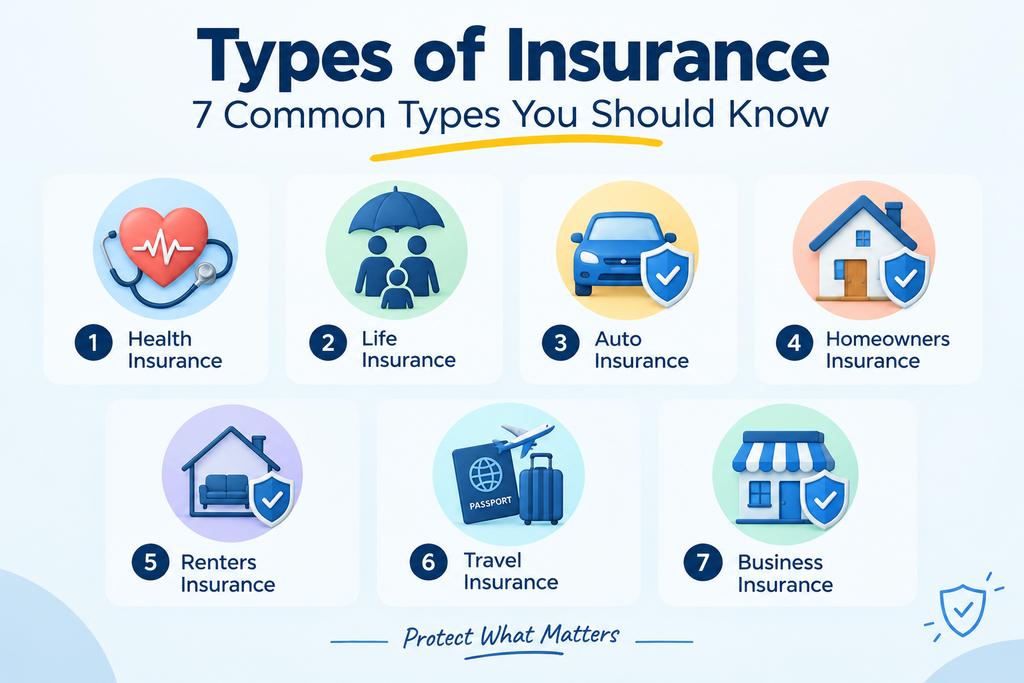
1. Health Insurance
Health insurance helps pay for covered medical expenses. Depending on the policy, benefits may include doctor visits, hospital treatment, prescription medicines, and preventive care.
Coverage, provider networks, deductibles, and out-of-pocket costs vary by plan.
If you live in the United States, you can learn about health coverage options through HealthCare.gov.
2. Life Insurance
Life insurance can provide a financial payout to named beneficiaries when the insured person dies, subject to the policy’s terms.
It may help a family manage funeral expenses, outstanding debts, education costs, or everyday living expenses.
Two common categories are term life insurance and permanent life insurance. They have different costs, durations, and features, so compare them carefully.
3. Auto Insurance
Auto insurance can help cover certain costs related to vehicle accidents, injuries, property damage, theft, or other specified events.
The coverage available depends on the policy. In many US states, drivers must carry at least certain liability coverage to drive legally.
Before buying a policy, compare the coverage limits, deductible, exclusions, and premium—not just the advertised price.
4. Homeowners Insurance
Homeowners insurance may protect a house and its contents against specified risks. Depending on the policy, it may also include personal liability protection.
Floods, earthquakes, and other risks may require separate coverage or may be excluded. Always check the policy wording.
5. Renters Insurance
Renters insurance is designed for people who rent a house or apartment. It may cover personal belongings, certain liability claims, and additional living expenses after a covered event.
A landlord’s insurance generally protects the landlord’s property interests, so renters should not assume it covers their own belongings.
6. Travel Insurance
Travel insurance may cover specified problems such as emergency medical expenses abroad, trip cancellation, travel delays, or lost baggage.
Benefits and exclusions differ significantly. Check medical exclusions, pre-existing condition rules, cancellation reasons, and coverage limits before purchasing.
7. Business Insurance
Business insurance helps businesses manage risks that could otherwise create major expenses.
Depending on the business, useful policies may include general liability, professional liability, commercial property, workers’ compensation, or business interruption coverage.
Small business owners should consider their industry, location, employees, contracts, and legal obligations when comparing options.
For more consumer information about different insurance categories, visit the UK MoneyHelper insurance guide.
Important Insurance Terms Every Beginner Should Know
Before purchasing insurance, understand these five terms.
Premium: The amount you pay to keep your insurance policy active.
Deductible: The amount you must pay toward certain covered losses before the insurer pays its share. The exact rules depend on the policy.
Coverage limit: The maximum amount the insurer will pay for a covered loss or benefit, subject to the policy terms.
Claim: A request for payment or benefits under an insurance policy.
Exclusion: A situation, event, or expense that the policy does not cover.
Example: Understanding a Deductible
Imagine your auto insurance has a $500 deductible and you experience a covered loss with $2,000 in eligible repair costs.
If the deductible applies to that loss, and there are no other adjustments, you would pay $500 and the insurer would pay the remaining $1,500.
Actual claim payments depend on the policy, coverage limits, fault rules where applicable, and the insurer’s claim assessment.
How Much Does Insurance Cost?
There is no single price for insurance. The cost depends on the type of policy, the insurer, your circumstances, the amount of coverage, and the risks being insured.
For example:
- Auto insurance prices may depend on your driving history, vehicle, location, and chosen coverage.
- Health insurance costs may depend on the plan, location, age, and eligibility for financial assistance.
- Life insurance prices may depend on age, health information, policy type, and coverage amount.
- Home insurance prices may depend on the property, location, rebuilding costs, and covered risks.
A lower premium is not always the best deal. A policy with a cheaper monthly payment might have a higher deductible, lower coverage limits, or important exclusions.
The best approach is to compare policies with similar benefits and limits.
How to Buy Insurance in the USA
If you are shopping for insurance in the United States, follow these steps.
Step 1: Identify Your Needs
Decide what you need to protect and how much financial risk you could reasonably afford to take yourself.
For example, a car owner may need auto insurance, while a renter may want protection for personal belongings and liability.
Step 2: Research Insurance Companies
Visit insurers’ official websites and review their available policies. You can also consider licensed insurance agents, brokers, and legitimate comparison services.
Useful starting points include:
- NAIC Consumer Insurance Resources
- HealthCare.gov for US health insurance marketplace information
- Your state’s department of insurance for local consumer guidance and insurer information
Step 3: Compare Multiple Quotes
Request quotes from more than one provider where possible. Make sure you compare similar coverage limits, deductibles, exclusions, and benefits.
Step 4: Read the Policy Carefully
Check what is covered, what is excluded, the claim process, cancellation rules, renewal terms, and any waiting periods or conditions that apply.
Step 5: Confirm the Provider and Purchase
Verify that the insurer or agent is properly authorized where required. Once you are comfortable with the terms, complete the application and keep a copy of your policy documents.
How to Buy Insurance in the UK
In the United Kingdom, you can explore insurance through insurers, insurance brokers, and comparison websites.
A practical starting point is the MoneyHelper insurance guide, which provides consumer information about different types of insurance and buying decisions.
Before buying a policy:
- Decide which risks you need to cover.
- Compare quotes and policy details.
- Check excesses, exclusions, limits, and important conditions.
- Review the provider and, where applicable, its regulatory status.
- Keep your policy documents and understand how to make a claim.
Remember that insurance requirements and available products differ between the United States, the United Kingdom, and other countries. A policy available in one country may not be available to residents of another.
Can You Get Your Money Back From Insurance?
This is a common question, especially among people buying insurance for the first time.
In most cases, insurance premiums are payments for coverage, not savings deposits. If you pay for a year of car insurance and do not make a claim, you generally should not expect the insurer to return all your premiums simply because nothing happened.
However, some situations may allow a refund or payout:
- Cancellation refund: Depending on the policy and applicable rules, you may receive some unused premium when you cancel a policy.
- Life insurance benefits: A valid claim may provide a payout to beneficiaries.
- Cash-value life insurance: Certain permanent life policies build cash value, subject to policy terms, fees, and other conditions.
- Return-of-premium policies: Some life insurance products include a return-of-premium feature under specific conditions, often at a higher cost.
- Overpayment correction: An insurer may refund an amount charged in error.
Do not assume every life insurance policy builds cash value or returns premiums. Read the policy details and understand any fees, surrender charges, exclusions, and conditions before purchasing.
Common Mistakes to Avoid When Buying Insurance
Avoid these common mistakes:
- Choosing a policy based only on its lowest price.
- Ignoring exclusions and coverage limits.
- Selecting a deductible you cannot afford.
- Providing inaccurate or incomplete information on an application.
- Assuming every accident, illness, or loss is covered.
- Missing premium payments or renewal dates.
- Buying a policy without checking whether the insurer is legitimate.
- Failing to keep receipts, policy documents, and claim records.
Taking time to compare policies can help you avoid expensive surprises later.
Frequently Asked Questions
What is insurance in simple words?
Insurance is an agreement in which you pay premiums to an insurer in exchange for financial protection against specified risks, subject to the policy’s terms.
Is insurance necessary?
It depends on your circumstances and local laws. Some insurance, such as required auto liability coverage, may be legally mandatory. Other types may help protect your savings, property, family, or business.
What happens if I never make an insurance claim?
You still receive the protection provided by your policy during the covered period. Most standard insurance premiums are not automatically refunded simply because you did not make a claim.
Can I buy insurance online?
Yes. Many insurers allow customers to obtain quotes, submit applications, purchase policies, and manage coverage online. Check the provider’s legitimacy and confirm that the policy is suitable for your location.
How do I choose the best insurance company?
Compare the coverage, price, exclusions, customer support, claims process, financial strength information, and relevant regulatory status. The cheapest company is not necessarily the best choice for your needs.
What is the difference between insurance and savings?
Savings are money you set aside for future use. Insurance transfers specified financial risks to an insurer in exchange for premiums. Some permanent life insurance products have a savings-like cash-value feature, but many insurance policies do not.
Final Thoughts
Insurance can be an important part of managing your financial risks. Understanding premiums, deductibles, coverage limits, exclusions, and claims will help you make better-informed decisions.
Before buying a policy, identify your needs, compare several options, and read the terms carefully. Use reliable consumer resources and check that providers are authorized to sell the relevant insurance in your location.
Disclaimer: This article provides general educational information and is not personalized financial, legal, or insurance advice. Insurance products, regulations, eligibility, and policy terms vary by country and provider. Always review the policy documents and consult an appropriately qualified professional when needed.
Affiliate disclosure: This article may contain affiliate links in the future. If you purchase a product through an affiliate link, the website may earn a commission at no additional cost to you. Any affiliate relationship should be disclosed clearly, and recommendations should remain accurate and transparent.