
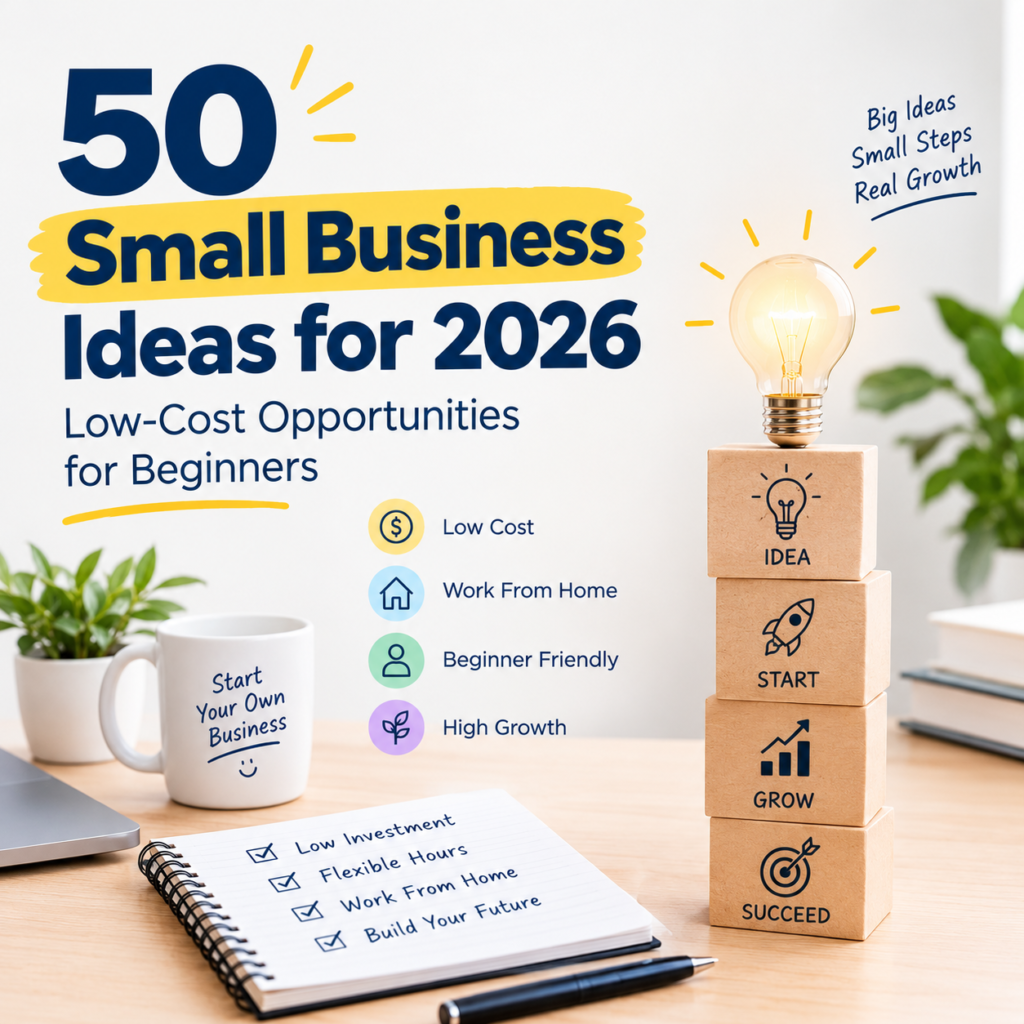
Starting a small business in 2026 does not necessarily require a large investment, a commercial office, or years of entrepreneurial experience. Many people begin with skills they already have, a laptop, a small amount of equipment, or a service they can offer to customers in their local community.
The challenge is finding a small business idea that fits your budget, abilities, available time, and the needs of your target market. An idea that works well for an experienced freelancer may not suit someone who prefers selling physical products. Similarly, a home-based business may be ideal for a beginner who wants to avoid commercial rent, while a local service business may work better for someone who enjoys meeting customers face to face.
This guide explores 50 small business ideas for 2026, including online businesses, freelance services, home-based opportunities, creative ventures, and local services. You will also learn how to compare startup costs, evaluate demand, attract your first customers, and turn a promising idea into a practical business plan.
The goal is not to promise overnight success. It is to help you choose a realistic opportunity and take your first steps with greater confidence.
Table of Contents
What Is a Small Business Idea?
A small business idea is a product, service, or commercial activity that an individual or small team can develop to serve customers and generate income. It might involve selling handmade products, providing website design services, tutoring students, managing social media accounts, or helping local businesses maintain their properties.
Some small businesses operate entirely online, while others depend on a physical location or face-to-face services. Many can begin part-time and expand as the owner gains experience, customers, and financial resources.
A promising business idea generally has three characteristics:
- A clear customer problem: It addresses a need people are willing to pay to solve.
- A workable business model: It explains how the business will attract customers, deliver value, and generate revenue.
- A realistic starting point: It fits the owner’s available budget, skills, time, and legal requirements.
Remember that revenue is not the same as profit. Revenue is the money a business receives from sales. Profit is what remains after business expenses. Take-home income is the amount the owner can actually withdraw after accounting for taxes, reinvestment, and other obligations.
Why Consider Small Business Ideas in 2026?

A small business can offer flexibility, an opportunity to develop valuable skills, and a potential source of income beyond traditional employment. However, the right opportunity depends on your circumstances rather than on whichever business happens to be trending.
Here are several reasons aspiring entrepreneurs explore small business opportunities.
You can start with skills you already have
Writing, graphic design, teaching, bookkeeping, photography, cooking, and technical support can all become the foundation of a business. Starting with an existing skill may reduce training expenses and help you deliver your first service sooner.
Some businesses can begin with limited capital
Service-based businesses often require fewer upfront purchases than businesses that need inventory, specialized machinery, or a rented storefront. For example, a freelance writer may need a computer and internet access, whereas a physical retail shop may need stock, shelving, and premises.
3. You can test an idea before making a major investment
You do not always need to build a complete website, rent an office, or purchase expensive equipment before finding your first customer. You can start by interviewing potential buyers, offering a small paid service, or testing a limited product range.
4. Digital tools create additional ways to reach customers
Websites, social media, online marketplaces, video calls, and digital payment services can help small businesses find customers beyond their immediate neighborhood. Their availability, costs, and legal requirements vary by country.
5. You can build gradually
A side business can begin with a few clients or orders each month. As demand becomes more predictable, you can improve your processes, introduce additional services, or hire help.
An important caution: Every business involves risk. Competition, changing customer preferences, operating expenses, and inconsistent sales can affect results. Choose an opportunity you can test affordably rather than relying on a trend or an earnings promise.
How to Choose the Right Small Business Idea
Before selecting from the list below, assess each opportunity against your personal circumstances.
Set a realistic startup budget
Decide how much you can invest without risking money needed for essential living expenses. Include equipment, supplies, software, registration, insurance, marketing, and an allowance for unexpected costs.
Evaluate your skills and experience
List the tasks you can already perform well. Then identify the training or qualifications required for your preferred business. Beginners can learn many skills, but some regulated professions require formal credentials.
3. Check customer demand
Speak with prospective customers, review competitors, study customer complaints, and test whether people will pay for your offer. Compliments and social media likes are not reliable substitutes for paying customers.
4. Match the business to your schedule
Consider whether you can work evenings, weekends, or during standard business hours. A service that requires immediate responses may be difficult to manage alongside a full-time job.
5. Calculate costs and potential profit
Estimate the price customers will pay and subtract direct costs, overhead, payment fees, taxes, and the value of your working time. A business with strong sales can still struggle if its margins are too low.
6. Check local rules and competition
Research registration, permits, zoning, insurance, tax obligations, and any professional requirements that apply to your location. Look for ways to serve customers better than existing alternatives.
50 Best Small Business Ideas to Consider in 2026
The following small business ideas cover different budgets, experience levels, and working styles. The startup costs are illustrative estimates in US dollars (USD), not verified market averages or quotes. They assume a lean launch, often from home, and exclude personal living expenses. Existing equipment, local registration fees, inventory choices, and professional requirements can change the actual amount considerably.
Quick Comparison of Small Business Ideas
| Business idea | Estimated startup cost (USD) | Skills required | Business model |
|---|---|---|---|
| Freelance writing | $0–$500 | Writing, research | Per article or package |
| Social media management | $50–$600 | Content, communication | Monthly retainer |
| SEO services | $50–$800 | SEO, analytics | Project or retainer |
| Graphic design | $0–$700 | Design, creativity | Per design or package |
| Website design | $100–$1,000 | Web development | Project fees |
| Virtual assistance | $0–$400 | Organization | Hourly or monthly |
| Online tutoring | $50–$500 | Teaching | Hourly or course fees |
| Video editing | $50–$1,000 | Editing, storytelling | Per video or package |
| Cleaning services | $200–$1,500 | Cleaning, reliability | Per visit or contract |
| Handmade products | $100–$1,500 | Crafting, sales | Product sales |
The estimates below are planning ranges, not guaranteed costs. Some options require substantially more capital than others, especially when inventory, transport, specialized equipment, or commercial premises are involved.
Category 1: Online and Digital Business Ideas
Online businesses allow you to serve customers remotely, although you may still need paid software, a reliable internet connection, training, or marketing.
1. Freelance Writing
Overview: Write blog posts, website pages, email newsletters, product descriptions, and business articles for clients.
How to get started: Prepare three writing samples, select a niche, and approach businesses that publish content regularly.
Startup cost: $0–$500 if you already own a computer. Essential expenses may include internet access; a website and premium tools are optional.
Skills and customers: Research, grammar, editing, and clear communication. Potential clients include agencies, publishers, startups, and online stores.
Revenue and marketing: Charge per article, word, or project. Find clients through professional networks, referrals, and targeted outreach. Expand into editing, content strategy, or recurring editorial packages.
Challenge: Competition is strong, and clients expect accuracy, original work, and reliable deadlines.
2. Social Media Management
Overview: Help businesses plan posts, publish content, engage with followers, and measure social media performance.
How to get started: Build a sample content calendar and offer a defined monthly package to a local business.
Startup cost: $50–$600, excluding an existing computer.
Skills and customers: Content planning, copywriting, analytics, and platform knowledge. Customers include restaurants, retailers, service providers, and startups.
Revenue and marketing: Charge monthly retainers or separate fees for content creation, publishing, and reporting. Develop recurring contracts and eventually hire content creators.
Challenge: Clients may expect immediate results, even though audience growth and sales depend on multiple factors.
3. Search Engine Optimization (SEO) Services
Overview: Help websites improve their search visibility through keyword research, content optimization, technical audits, and internal linking.
How to get started: Learn SEO fundamentals, practice on a website you control, and create a sample audit that demonstrates useful improvements.
Startup cost: $50–$800 for a lean setup, depending on the tools you already have.
Skills and customers: Technical understanding, research, analytical thinking, and writing. Target small businesses, publishers, and online stores.
Revenue and marketing: Offer fixed-price audits, optimization projects, or monthly retainers. Publish helpful SEO articles and use case studies based on verified results to win clients.
Growth and challenge: You can expand into content marketing and digital strategy. Search rankings are not guaranteed, and algorithm changes can affect results.
4. Graphic Design Services
Overview: Create logos, social media graphics, brochures, advertisements, and brand identity materials.
How to get started: Build a portfolio of sample projects and choose a target market, such as restaurants, coaches, or ecommerce businesses.
Startup cost: $0–$700 if you have suitable hardware.
Skills and customers: Visual communication, layout, typography, and design software. Customers include agencies, entrepreneurs, and established companies.
Revenue and marketing: Charge per design, project, or branding package. Market through a portfolio website and professional communities.
Growth and challenge: Add presentation design or brand guidelines as higher-value services. Protect your time by setting revision limits and defining usage rights.
5. Website Design and Development
Overview: Build websites for businesses that need an online presence, lead generation, online bookings, or ecommerce functionality.
How to get started: Learn a suitable platform, create demonstration websites, and offer a simple package with clear deliverables.
Startup cost: $100–$1,000 for a lean launch, excluding an existing computer.
Skills and customers: Responsive design, website maintenance, user experience, and basic troubleshooting. Customers include local businesses, consultants, and online retailers.
Revenue and marketing: Charge project fees and offer separate monthly maintenance plans. Build partnerships with marketers and branding professionals.
Challenge: Scope changes, security, accessibility, and ongoing maintenance can increase workload if the agreement is unclear.
6. Virtual Assistant Services
Overview: Help business owners manage email, scheduling, research, data entry, customer inquiries, and administrative tasks.
How to get started: Choose three or four services you can perform confidently and create a straightforward service package.
Startup cost: $0–$400 with existing equipment.
Skills and customers: Organization, communication, spreadsheets, and time management. Target consultants, small agencies, and busy business owners.
Revenue and marketing: Bill hourly or sell blocks of monthly support hours. Specialize in executive assistance, ecommerce administration, or appointment management.
Challenge: Confidential information requires careful handling, and unclear availability expectations can create excessive work.
7. Video Editing Services
Overview: Edit YouTube videos, podcasts, advertisements, educational content, and short-form social media clips.
How to get started: Produce a few sample edits and identify a niche where businesses regularly need video content.
Startup cost: $50–$1,000, depending on your computer and editing software.
Skills and customers: Storytelling, audio editing, pacing, and file management. Customers include creators, agencies, educators, and brands.
Revenue and marketing: Charge per video, editing hour, or monthly content package. Recurring creator contracts can make workloads more predictable.
Challenge: Large files, demanding deadlines, and repeated revisions can reduce profitability.
8. Online Tutoring
Overview: Teach school subjects, languages, exam preparation, software, or other skills through video calls or in-person sessions.
How to get started: Select a subject, define the learner level, and prepare a sample lesson.
Startup cost: $50–$500 for a basic remote setup, assuming you own a computer or suitable device.
Skills and customers: Subject knowledge, communication, lesson planning, and patience. Customers include students, parents, and adult learners.
Revenue and marketing: Charge per session, sell lesson bundles, or create group classes. Use referrals and educational communities to reach learners.
Challenge: Scheduling, cancellations, and seasonal demand may affect income. Certain subjects, ages, or locations can involve additional qualification or safeguarding requirements.
9. Online Translation Services
Overview: Translate documents, website pages, product listings, and marketing materials between languages you know well.
How to get started: Select language pairs and subject areas, prepare samples, and establish a review process.
Startup cost: $0–$500 for a basic service business.
Skills and customers: Strong command of both languages, cultural understanding, and editing. Customers include publishers, agencies, exporters, and online stores.
Revenue and marketing: Charge per word, project, or document. Specializing in a subject can help differentiate your service.
Challenge: Legal, medical, and certified translation work may require specific qualifications or credentials. Machine-assisted drafts still need appropriate human review.
10. Online Consulting
Overview: Advise clients in an area where you have demonstrable professional expertise, such as operations, marketing, customer service, or business processes.
How to get started: Define one specific problem you can solve and create a structured consultation offer.
Startup cost: $50–$800, depending on software and professional requirements.
Skills and customers: Subject expertise, communication, and problem-solving. Customers include startups and established small businesses.
Revenue and marketing: Sell consultations, workshops, or advisory retainers. Use professional referrals and informative content to build credibility.
Challenge: Consultants must demonstrate value and avoid offering regulated professional advice outside their qualifications.
Category 2: Home-Based and Creative Business Ideas
11. Handmade Crafts
Create candles, personalized gifts, decorative items, jewelry, or home accessories.
- Startup cost: $100–$1,500.
- Getting started: Make a small collection, calculate material costs, and test demand before buying supplies in bulk.
- Customers and revenue: Gift buyers, event planners, and home decorators; earn through individual sales, custom orders, or wholesale.
- Growth and challenge: Expand into seasonal collections. Account for production time, packaging, shipping, and product safety.
12. Print-on-Demand Products
Sell original designs on T-shirts, mugs, notebooks, and other products manufactured by a third-party supplier after an order.
- Startup cost: $50–$500, excluding major advertising experiments.
- Getting started: Research a specific audience, create original designs, and order samples before promoting them.
- Customers and revenue: Hobby communities, gift buyers, and niche audiences; earn the difference between the sale price and supplier, platform, and marketing costs.
- Growth and challenge: Introduce related products and collections. Competition, low margins, and intellectual property restrictions require attention.
13. Custom Gift Boxes
Assemble personalized gift boxes for birthdays, holidays, weddings, and corporate events.
- Startup cost: $200–$1,500.
- Getting started: Create two or three sample boxes and establish relationships with reliable suppliers.
- Customers and revenue: Individuals, event organizers, and businesses; earn from individual orders and bulk corporate packages.
- Growth and challenge: Offer seasonal collections and recurring corporate orders. Inventory, fragile products, and delivery deadlines can complicate operations.
14. Home Baking
Sell cakes, cookies, cupcakes, or other baked goods for celebrations and everyday orders.
- Startup cost: $300–$2,500 if you already have basic kitchen equipment.
- Getting started: Select a small menu, cost every recipe, and check local home-food business rules before accepting orders.
- Customers and revenue: Families, offices, and event planners; earn from custom orders, product boxes, and event packages.
- Growth and challenge: Build repeat business through consistent quality. Food safety, allergens, storage, and permitted kitchen activities are important considerations.
15. Meal Preparation Services
Prepare meals for customers who want convenient food options tailored to their preferences.
- Startup cost: $500–$3,000 for a lean operation, excluding commercial kitchen costs if required.
- Getting started: Research local demand, create a limited menu, and verify food preparation and delivery requirements.
- Customers and revenue: Busy professionals and households; charge per meal, weekly package, or catering order.
- Growth and challenge: Develop subscription packages. Ingredient price changes, food waste, and safe storage can affect margins.
16. Sewing and Clothing Alterations
Repair garments, adjust clothing, replace zippers, and offer custom alterations.
- Startup cost: $150–$1,500, depending on equipment already available.
- Getting started: Assemble basic tools, create a price list, and establish a reliable turnaround time.
- Customers and revenue: Residents, professionals, students, and clothing retailers; charge per alteration or offer bulk work.
- Growth and challenge: Add custom sewing or specialist garment services. Accuracy, fitting appointments, and seasonal demand matter.
17. Home-Based Bookkeeping
Help small businesses organize transactions, reconcile records, and prepare financial reports within your qualifications.
- Startup cost: $100–$800, depending on software and training.
- Getting started: Learn bookkeeping principles, practice with sample records, and identify the tasks you can legally and competently provide.
- Customers and revenue: Freelancers, consultants, and small companies; charge monthly packages or hourly fees.
- Growth and challenge: Build recurring client relationships. Data security, accuracy, professional competence, and boundaries around tax or accounting advice are essential.
18. Resume and Career Services
Help job seekers improve resumes, cover letters, professional profiles, and interview preparation.
- Startup cost: $0–$400.
- Getting started: Develop sample resumes and create clear service packages for specific job seekers.
- Customers and revenue: Graduates, career changers, and experienced professionals; charge per document, consultation, or bundle.
- Growth and challenge: Add interview coaching and career workshops. Protect client privacy and never promise employment outcomes.
19. Online Course Creation
Turn knowledge of a useful subject into structured lessons, downloadable resources, or video training.
- Startup cost: $100–$1,000 for a lean setup.
- Getting started: Validate interest with a workshop or small pilot course before recording a large curriculum.
- Customers and revenue: Learners seeking practical skills; sell individual courses, cohorts, or subscriptions.
- Growth and challenge: Update material and develop advanced courses. Course creation takes time, and sales depend on demand, trust, and distribution.
20. Digital Products
Create and sell templates, planners, spreadsheets, printable worksheets, guides, or design assets.
- Startup cost: $0–$500.
- Getting started: Find a specific customer problem and create a small product that solves it.
- Customers and revenue: Students, freelancers, business owners, and hobbyists; earn from individual downloads or product bundles.
- Growth and challenge: Add related products and improve your catalog. Competition, platform fees, piracy, and customer acquisition affect profitability.
Category 3: Professional and Freelance Services
21. Email Marketing Services
Help businesses build newsletters, automate welcome sequences, and improve customer communication.
- Startup cost: $50–$600.
- Getting started: Build a sample email sequence and learn consent, deliverability, and analytics fundamentals.
- Customers and revenue: Ecommerce stores, consultants, and service companies; charge setup fees and monthly retainers.
- Growth and challenge: Expand into automation and campaign strategy. Privacy laws, consent, and inbox placement require careful management.
22. Lead Generation Services
Help businesses identify suitable prospects and organize ethical outreach campaigns.
- Startup cost: $50–$800.
- Getting started: Choose an industry, develop a clear prospect profile, and define what qualifies as a useful lead.
- Customers and revenue: Agencies, software providers, and business-to-business companies; charge per project, retainer, or agreed qualified-lead model.
- Growth and challenge: Specialize in one sector. Data accuracy, outreach rules, and lead quality can be more important than raw volume.
23. Presentation Design
Create polished presentations for sales meetings, training, investor pitches, and educational purposes.
- Startup cost: $0–$500.
- Getting started: Prepare sample slides and establish a consistent design process.
- Customers and revenue: Consultants, trainers, executives, and startups; charge per deck or presentation package.
- Growth and challenge: Add pitch-deck design and presentation coaching. Confidentiality and revision limits should be agreed upon.
24. Podcast Production
Help podcasters plan episodes, edit audio, prepare show notes, and publish content.
- Startup cost: $100–$1,000, assuming you have suitable computer hardware.
- Getting started: Create a sample episode and offer a small editing package.
- Customers and revenue: Independent creators, companies, and educational organizations; charge per episode or monthly production package.
- Growth and challenge: Expand into distribution and repurposing. Audio quality, deadlines, and large editing workloads need management.
25. Website Maintenance
Maintain websites through updates, backups, performance checks, security monitoring, and routine troubleshooting.
- Startup cost: $100–$800.
- Getting started: Develop technical skills and create a documented maintenance checklist.
- Customers and revenue: Small businesses, bloggers, and online retailers; sell monthly maintenance plans.
- Growth and challenge: Add performance optimization and managed support. Security incidents can create liability, so define access controls, backups, and service limits.
26. Customer Support Outsourcing
Provide email, chat, appointment, or basic customer inquiry support for businesses.
- Startup cost: $50–$600.
- Getting started: Set up a professional workspace and practice customer communication and ticket management.
- Customers and revenue: Online stores, software businesses, and service providers; charge hourly, per shift, or through monthly contracts.
- Growth and challenge: Offer extended coverage as a team. Confidentiality, response standards, and time-zone differences matter.
27. Data Entry and Research Services
Organize spreadsheets, update databases, research public business information, and clean records.
- Startup cost: $0–$400.
- Getting started: Create sample spreadsheets and demonstrate accuracy and organized reporting.
- Customers and revenue: Consultants, researchers, and small businesses; charge per task, hour, or defined project.
- Growth and challenge: Specialize in data cleaning or research reporting. Protect personal information and avoid misleading or unauthorized data collection.
28. Online Advertising Management
Manage paid advertising campaigns on suitable search and social platforms.
- Startup cost: $100–$800, excluding client advertising budgets.
- Getting started: Learn campaign setup, conversion tracking, budgeting, and reporting. Develop sample campaign plans before approaching clients.
- Customers and revenue: Local service providers and online retailers; charge setup fees and monthly management retainers.
- Growth and challenge: Add landing-page optimization and analytics. Advertising performance varies, and client budgets must be kept separate from your own operating funds.
29. Translation and Localization for Websites
Adapt website content, product listings, and marketing materials to the language and culture of a target market.
- Startup cost: $0–$500.
- Getting started: Select a language pair and create examples showing how you adapt content for local audiences.
- Customers and revenue: International brands, exporters, and software companies; charge per project or ongoing localization package.
- Growth and challenge: Expand into terminology management and localization testing. Cultural nuance and subject expertise are essential.
30. Career or Skills Coaching
Help clients set professional goals, prepare for interviews, improve workplace communication, or develop job-search strategies.
- Startup cost: $50–$600.
- Getting started: Choose a defined coaching area, create a structured session plan, and clarify your qualifications and boundaries.
- Customers and revenue: Students, professionals, and career changers; charge per session or multi-session package.
- Growth and challenge: Offer group workshops and digital resources. Build credibility through relevant experience and avoid promising guaranteed career results.
Category 4: Local Service Business Ideas
Local services can be a practical choice if you prefer face-to-face work and want to build relationships within your community.
31. Residential Cleaning
Overview: Clean houses, apartments, and small residential properties.
Startup cost: $200–$1,500 for basic supplies and equipment.
Getting started: Choose your service area, prepare a checklist, price jobs by size and condition, and obtain any required insurance.
Customers and revenue: Homeowners, tenants, and landlords. Charge per visit, by property size, or through recurring weekly and monthly contracts.
Marketing and growth: Encourage referrals, establish a local online presence, and offer move-in or move-out cleaning. Travel time, physical demands, and competition can affect margins.
32. Mobile Car Washing and Detailing
Clean vehicle interiors and exteriors at customers’ homes or workplaces.
- Startup cost: $300–$2,500 for a lean equipment setup.
- Getting started: Research water-use and wastewater disposal rules, purchase suitable supplies, and practice on a few vehicles.
- Customers and revenue: Vehicle owners, small fleets, and dealerships; charge per vehicle or detailing package.
- Growth and challenge: Introduce maintenance plans and fleet contracts. Weather, transportation, and equipment costs need consideration.
33. Lawn Care and Gardening
Maintain lawns, trim plants, remove weeds, and provide basic garden care.
- Startup cost: $300–$3,000, depending on the tools required.
- Getting started: Start with a limited service area and acquire only the equipment necessary for your first jobs.
- Customers and revenue: Homeowners, landlords, and property managers; charge per visit or recurring maintenance contract.
- Growth and challenge: Add seasonal cleanups and planting services. Equipment maintenance, travel, weather, and pesticide regulations can affect operations.
34. Pet Sitting and Dog Walking
Care for pets while owners work, travel, or manage busy schedules.
- Startup cost: $100–$800 for basic supplies and business setup, excluding any major insurance costs.
- Getting started: Gain practical experience, define your service boundaries, and research local animal-care requirements.
- Customers and revenue: Pet owners; charge per walk, visit, overnight stay, or recurring package.
- Growth and challenge: Build repeat bookings and offer pet transportation where permitted. Animal safety, emergencies, and liability are important considerations.
35. Mobile Phone and Computer Repair
Diagnose and repair common hardware or software problems in phones and computers.
- Startup cost: $300–$2,500, depending on the tools and parts required.
- Getting started: Obtain suitable training, practice repairs, and develop a clear process for handling customer devices and data.
- Customers and revenue: Households, students, freelancers, and small businesses; charge diagnostic fees, labor, and parts.
- Growth and challenge: Add business IT support or device maintenance contracts. Damaged devices, warranties, and privacy risks require care.
36. Handyman Services
Handle permitted minor repairs, furniture assembly, fixture replacement, and basic home maintenance.
- Startup cost: $300–$2,500 if you already have some tools.
- Getting started: Identify tasks within your competence and verify licensing requirements for each service.
- Customers and revenue: Homeowners, landlords, and property managers; charge per job or hourly.
- Growth and challenge: Develop recurring property maintenance agreements. Electrical, plumbing, structural, and other regulated work may require specific qualifications or licenses.
37. Home Organization Services
Help clients organize closets, kitchens, home offices, storage rooms, and moving preparations.
- Startup cost: $100–$700.
- Getting started: Create a service checklist, photograph demonstration spaces with permission, and establish a consultation process.
- Customers and revenue: Busy households, families, and people preparing to move; charge hourly or per project.
- Growth and challenge: Partner with moving professionals and offer maintenance sessions. Travel, disposal rules, and clients’ privacy require attention.
38. Photography Services
Provide portraits, family photography, product images, or event coverage.
- Startup cost: $300–$3,000 if you need to purchase camera equipment.
- Getting started: Build a portfolio, practice lighting and editing, and choose a service niche.
- Customers and revenue: Families, small brands, restaurants, and event organizers; charge per session or package.
- Growth and challenge: Add photo editing and commercial licensing. Equipment replacement, seasonal bookings, and image usage rights affect profitability.
39. Event Planning
Organize birthdays, small business events, workshops, private celebrations, and community gatherings.
- Startup cost: $200–$1,500 for a lean service business.
- Getting started: Create planning checklists, establish supplier relationships, and begin with manageable events.
- Customers and revenue: Families, companies, and community organizations; charge a planning fee, project fee, or agreed coordination rate.
- Growth and challenge: Specialize in corporate events or weddings. Vendor reliability, deposits, cancellations, and tight deadlines can create pressure.
40. Laundry and Ironing Services
Collect, wash, dry, fold, or iron clothing for customers who want to save time.
- Startup cost: $200–$1,500 for a small collection-and-service model using suitable existing facilities; purchasing commercial equipment costs more.
- Getting started: Define service areas, turnaround times, pricing, and garment-handling procedures.
- Customers and revenue: Busy households, professionals, and selected accommodation providers; charge per load, weight, item, or recurring service.
- Growth and challenge: Introduce pickup and delivery routes. Utility costs, garment damage, and transportation must be priced into the service.
Category 5: Product-Based and Retail Business Ideas
Product businesses can create opportunities to develop a recognizable brand, but inventory, shipping, and unsold stock can tie up cash.
41. Niche Ecommerce Store
Sell a focused range of products for a particular audience, such as desk accessories, travel organizers, or hobby supplies.
- Startup cost: $500–$3,000 for a lean inventory-based launch; costs vary widely.
- Getting started: Research demand, compare suppliers, order samples, and test a small selection before expanding.
- Customers and revenue: A clearly defined niche audience; earn from product sales and relevant bundles.
- Growth and challenge: Add complementary products and repeat-purchase offers. Supplier reliability, returns, shipping, and advertising costs can reduce margins.
42. Dropshipping Store
Sell products online while a third-party supplier handles inventory and shipping directly to customers.
- Startup cost: $100–$1,000 for a lean test, excluding large advertising campaigns.
- Getting started: Check supplier reliability, order product samples, calculate shipping and return costs, and publish clear policies.
- Customers and revenue: Online shoppers in a selected niche; earn the difference between the selling price and all associated costs.
- Growth and challenge: Develop a stronger brand and improve customer support. Thin margins, delivery delays, and limited quality control are common concerns.
43. Thrift and Secondhand Reselling
Source and resell pre-owned clothing, books, furniture, collectibles, or household goods.
- Startup cost: $100–$1,500, depending on inventory and storage.
- Getting started: Choose a category you understand, research completed sales where available, and begin with a small inventory.
- Customers and revenue: Budget-conscious shoppers, collectors, and vintage enthusiasts; earn from resale margins.
- Growth and challenge: Specialize in a category and develop repeat sourcing channels. Unsold items, authenticity, returns, and storage can affect cash flow.
44. Personalized Products
Create customized mugs, notebooks, apparel, stationery, accessories, or keepsakes.
- Startup cost: $200–$2,500, depending on whether production is outsourced or handled in-house.
- Getting started: Test designs with a small catalog and compare outsourcing with equipment ownership.
- Customers and revenue: Gift buyers, businesses, schools, and event organizers; earn from individual orders and bulk customization.
- Growth and challenge: Add corporate merchandise and seasonal collections. Production errors, copyright restrictions, and delivery deadlines matter.
45. Subscription Boxes
Curate recurring boxes around interests such as books, crafts, stationery, snacks, or hobby products.
- Startup cost: $500–$3,000 for a small pilot, depending on inventory and packaging.
- Getting started: Survey potential subscribers and test a limited run before committing to recurring shipments.
- Customers and revenue: Enthusiasts who value discovery and convenience; earn through recurring subscription payments.
- Growth and challenge: Improve retention with thoughtful curation. Churn, fulfillment costs, inventory forecasting, and subscription cancellations require careful planning.
Category 6: Specialized and Community-Based Business Ideas
46. Senior Assistance Services
Provide nonmedical help such as errands, shopping, companionship, or household organization.
- Startup cost: $100–$800 for a basic service setup.
- Getting started: Define your permitted services, establish safety procedures, and verify relevant local requirements.
- Customers and revenue: Older adults and their families; charge per visit or recurring support package.
- Growth and challenge: Build trust through referrals and dependable service. Background checks, safeguarding, insurance, and boundaries around medical care are important.
47. Moving Assistance and Packing Services
Help customers pack belongings, label boxes, prepare inventories, and organize move-day tasks.
- Startup cost: $200–$1,500 for a packing-focused service; owning a suitable vehicle can increase costs considerably.
- Getting started: Assemble packing supplies, develop an inventory checklist, and establish clear service limits.
- Customers and revenue: Households, renters, and small offices; charge by hour, room, or defined package.
- Growth and challenge: Partner with movers and property managers. Breakage, physical demands, and scheduling can affect customer satisfaction.
48. Local Tour and Experience Planning
Create walking tours, food experiences, cultural activities, or customized itineraries for visitors.
- Startup cost: $100–$1,000 for a lean planning or guiding operation.
- Getting started: Research your local audience, develop an original route, and verify permits, safety requirements, and any rules governing guides.
- Customers and revenue: Visitors, families, and small travel groups; charge per person, private group, or customized itinerary.
- Growth and challenge: Partner with accommodation providers and local businesses. Weather, seasonality, safety, and competition can affect demand.
49. Plant Care and Indoor Gardening
Help households and offices maintain indoor plants, repot plants, and select suitable varieties for their spaces.
- Startup cost: $150–$1,000.
- Getting started: Learn plant-care basics, build a small tool kit, and create a menu of maintenance services.
- Customers and revenue: Plant owners, offices, and hospitality businesses; charge per visit, consultation, or maintenance contract.
- Growth and challenge: Add plant styling and workshops. Plant damage, pests, travel, and seasonal demand need consideration.
50. Small Business Technology Setup
Help small companies configure basic business software, email accounts, appointment systems, cloud file storage, and productivity tools.
- Startup cost: $100–$800, excluding specialized equipment.
- Getting started: Become proficient with a small set of tools and create a documented setup process.
- Customers and revenue: Consultants, local retailers, and small service businesses; charge per setup or ongoing support package.
- Growth and challenge: Add workflow automation and staff training. Security, access permissions, data protection, and technical support obligations must be handled responsibly.
Which Small Business Ideas Are Best for Different Budgets?
The best choice depends on what you already own, your skills, and the customers you can reach. Use the following table as a starting point rather than a promise about the cost of launching any particular business.
| Available startup budget | Ideas worth investigating | Main consideration |
|---|---|---|
| Under $100 | Writing, data entry, basic virtual assistance | Requires existing equipment and a way to find clients |
| $100–$500 | Resume services, digital products, basic tutoring | Validate demand before buying additional tools |
| $500–$1,500 | SEO services, cleaning, handmade products | Account for recurring expenses and customer acquisition |
| $1,500–$3,000 | Photography, mobile detailing, niche ecommerce | Equipment and inventory can tie up cash |
| Over $3,000 | Larger product operations, specialized equipment-based services | Research demand and operating costs before committing capital |
These are illustrative budget categories, not industry averages. A business may cost more or less depending on your location and existing resources.
A Simple Example: Testing an SEO Service Business
Imagine you want to offer SEO services to small businesses.
Instead of immediately purchasing expensive software or hiring a team, you could:
- Choose one customer group, such as local home-service companies.
- Review public information about their websites and search visibility.
- Speak with potential customers about their marketing challenges.
- Create a clearly scoped SEO audit and improvement package.
- Offer a paid pilot to a suitable client.
- Track the time required, delivery costs, customer feedback, and results.
- Improve the package before seeking more clients.
This process helps you learn whether the service is commercially viable before making a larger investment. The same approach can work for tutoring, design, cleaning, handmade products, and many other small business ideas.
Common Small Business Mistakes to Avoid
Even a promising small business idea can struggle if the owner overlooks basic planning. Avoid these common mistakes when starting out.
1. Investing before validating demand
Buying equipment, inventory, or expensive software before speaking with customers can leave you with costs but no sales. Test interest through interviews, samples, pilot services, or small product batches.
2. Trying to serve everyone
A broad offer can make marketing difficult. Start with a defined audience and a specific problem, then expand after you understand what customers value.
3. Setting prices too low
A price that covers materials but ignores labor, transportation, software, and overhead may leave little profit. Calculate the full cost of delivering your offer before setting prices.
4. Confusing revenue with profit
Receiving $2,000 in sales does not mean you earned $2,000. Deduct operating expenses and account for taxes and money needed to keep the business running.
5. Depending on a single customer or platform
One large client, marketplace, or social media account can be valuable, but relying entirely on it creates risk. Develop additional customer acquisition channels and maintain relationships with multiple clients.
6. Ignoring legal and tax requirements
A home-based business is not automatically exempt from registration, permits, insurance, food safety rules, or zoning requirements. Research the regulations that apply to your location and business activity.
7. Expecting immediate results
Building a reputation, developing a customer base, and improving operations takes time. Set realistic milestones, review performance regularly, and adjust your approach based on evidence.
Frequently Asked Questions
1. What is the best small business idea for 2026?
There is no single best small business idea for everyone. Freelance services, SEO, website design, tutoring, cleaning, and specialized online stores are worth evaluating because they can serve clearly defined customer needs. The right option depends on your budget, skills, location, competition, and access to customers.
2. Which small business can I start with little money?
If you already have a suitable computer and internet connection, consider freelance writing, virtual assistance, resume writing, data entry, or basic digital services. These businesses can have relatively low initial costs because you are primarily selling your time and expertise. You still need to account for training, marketing, software, taxes, and other applicable expenses.
3. Can I start a small business from home?
Yes. Many businesses can operate from home, including online tutoring, writing, graphic design, virtual assistance, digital product sales, and certain craft businesses. However, food production, customer visits, inventory storage, and other activities may be subject to local zoning, licensing, insurance, and safety requirements.
4. How do I choose a business idea as a beginner?
Start with a skill you possess or can reasonably learn, then identify a specific group of customers who need it. Compare startup costs, competition, time commitments, and potential margins. Speak with prospective customers and test a small offer before investing heavily.
5. How can I get my first business customers?
Begin with people and businesses that are likely to need your offer. Use personal and professional referrals, targeted outreach, local networking, relevant online communities, and a simple website or portfolio. For local businesses, a complete online presence and helpful customer reviews can support trust. For online services, demonstrate your skills through relevant samples and clearly defined packages.
6. Do I need a business license to start a small business?
It depends on your country, location, business structure, and activities. Some businesses need specific permits or professional licenses, while others have different registration obligations. For example, the US SBA provides guidance on business registration and permits, while Australian entrepreneurs can check official licensing guidance. Other countries have their own requirements.
Conclusion
The best small business idea is not necessarily the newest, most popular, or most expensive opportunity. It is the one that matches your abilities, fits your budget, addresses a genuine customer need, and offers a realistic path toward sustainable profit.
For beginners, service-based businesses such as writing, tutoring, virtual assistance, website design, and SEO can be useful starting points when you already have relevant skills and access to customers. Product-based businesses, food ventures, and local services can also work, but may require more equipment, inventory, permits, or operational planning.
Before investing, select one idea, research your target market, calculate the costs, and test whether customers will pay for your offer. Start with a manageable version of the business, learn from actual transactions, and expand when the numbers support it.
Your next step: Choose three small business ideas from this guide, compare their startup costs and required skills, and speak with at least five potential customers about the problem you want to solve. That simple exercise can help you move from browsing ideas to making an informed business decision.