
Planning a trip is exciting, whether you are traveling for a holiday, business, education, or visiting family. You usually spend time choosing flights, booking hotels, preparing documents, and organizing your travel schedule. However, one important thing that many travelers overlook is travel insurance.
Unexpected problems can happen during any trip. You might become sick in another country, lose your luggage, experience a flight delay, or need to cancel your travel plans because of an emergency. These situations can create unexpected expenses, especially when you are far away from home.
Travel insurance can help protect you financially against certain travel-related problems. Depending on the policy, it may cover emergency medical expenses, trip cancellations, lost baggage, travel delays, and other unexpected events.
But when do you actually need travel insurance? What does it cover, and where can you buy a suitable policy?
In this guide, we will explain everything you should know before purchasing travel insurance.
What Is Travel Insurance?
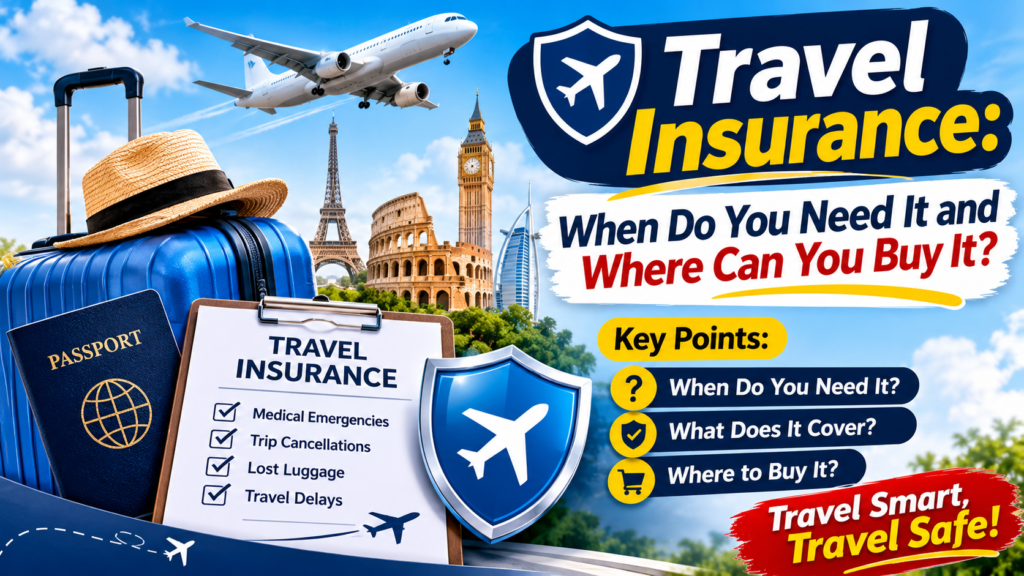
Table of Contents
Travel insurance is a type of insurance that provides financial protection against certain unexpected events that may happen before or during a trip.
When you purchase a travel insurance policy, you pay a premium in exchange for the coverage described in the policy. If a covered event occurs, you can submit a claim to the insurance company and receive compensation according to the policy’s terms and limits.
For example, imagine that you are traveling internationally and suddenly become ill. If your policy includes emergency medical coverage, the insurance company may pay eligible medical expenses, subject to the coverage limits and conditions.
Similarly, if your flight is delayed or your luggage is stolen, your policy may provide financial assistance if the situation meets its requirements.
Travel insurance does not cover every possible problem. Each insurance company has different coverage options, exclusions, claim requirements, and payment limits. Therefore, reading the policy carefully is important before buying it.
When Do You Need Travel Insurance?
Travel insurance can be useful in several situations. Although it may not be legally required for every trip, having appropriate coverage can reduce the financial risk of unexpected travel problems.
1. When Traveling Internationally
International travel can involve higher financial risks because your regular health insurance may not cover medical treatment outside your home country.
If you become sick or have an accident abroad, you may need to pay for hospital treatment, medication, emergency transportation, or other medical services.
Travel medical insurance can help cover eligible emergency medical expenses while you are away. Some policies also include emergency medical evacuation or transportation back to your home country when medically necessary.
Before traveling, check whether your existing health insurance provides international coverage. If it does not, travel medical insurance may be particularly important.
2. When You Have Expensive Travel Bookings
Suppose you have already paid for international flights, hotel reservations, tours, and other travel arrangements. A sudden illness or another covered emergency could force you to cancel your trip.
Without suitable cancellation coverage, you may lose some of the money you have already paid.
Travel insurance with trip cancellation protection may reimburse eligible non-refundable expenses if you cancel for a reason specifically covered by your policy.
Check the cancellation rules carefully because changing your mind or deciding not to travel is generally not a covered reason under standard policies.
3. When Traveling With Family
Family travel can involve several people, multiple bookings, and additional expenses.
If a family member becomes seriously ill or an unexpected emergency affects your plans, the entire trip may need to change.
Family travel insurance policies may provide coverage for eligible medical emergencies, cancellations, baggage problems, and travel disruptions.
Before purchasing a family policy, confirm which family members are included, their age limits, and whether everyone receives the same level of protection.
4. When Traveling to Countries With Expensive Healthcare
Healthcare costs can vary significantly between countries. In some destinations, emergency medical treatment and hospital stays can be extremely expensive for international visitors.
A serious accident or unexpected illness could result in medical bills that are difficult to manage without insurance.
Travelers visiting destinations with expensive private healthcare should pay particular attention to emergency medical coverage and medical evacuation benefits.
Check the maximum coverage amount and make sure it is appropriate for your destination.
5. When Taking Part in Adventure Activities
Some travelers enjoy activities such as skiing, scuba diving, hiking, mountain climbing, or water sports.
However, standard travel insurance policies may exclude certain high-risk activities.
If you plan to participate in adventure sports, check whether your insurance includes those activities. You may need to purchase additional coverage or a specialist travel insurance policy.
Never assume that an ordinary travel insurance policy automatically covers every activity.
6. When Traveling Frequently
If you travel several times during the year, purchasing a separate insurance policy for every trip may not be the most convenient option.
An annual multi-trip travel insurance policy may cover multiple trips within a specified period.
These policies often have limits on the length of each individual trip, the total coverage, and the destinations included.
Compare the annual premium with the cost of separate policies to decide which option makes more sense for your travel habits.
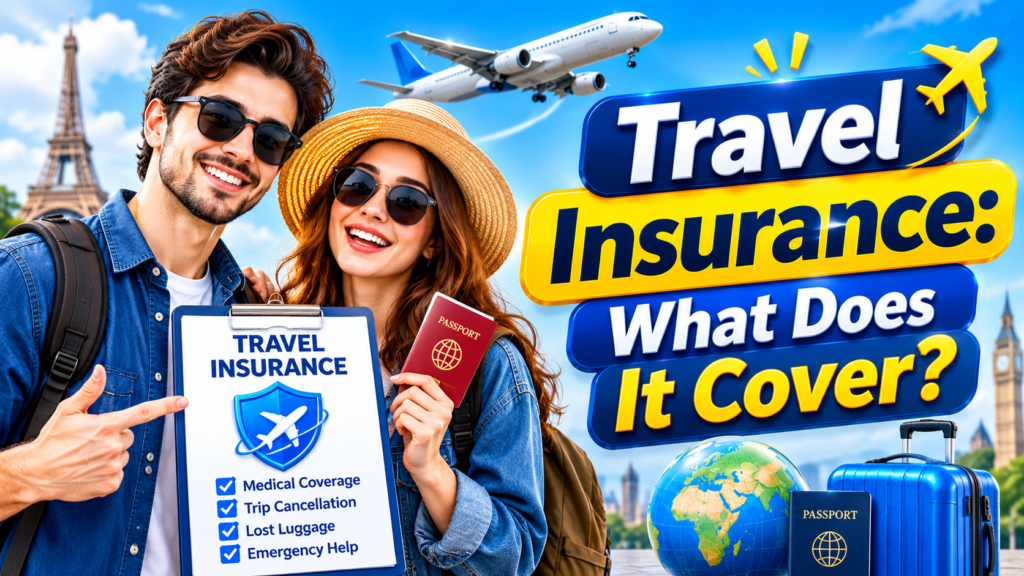
What Does Travel Insurance Usually Cover?
Travel insurance coverage depends on the insurance company and the type of policy you purchase. However, many policies offer some of the following benefits.
Emergency Medical Expenses
Emergency medical coverage can help pay for eligible treatment if you become sick or injured during your trip.
Depending on the policy, it may include hospital treatment, emergency doctor visits, medication, and other necessary medical services.
Always check the coverage limit, approved medical facilities, and whether the insurance company must authorize treatment in advance.
Emergency Medical Evacuation
Sometimes, a traveler may need transportation to a suitable hospital or back to their home country because of a serious medical emergency.
Medical evacuation coverage can help pay for eligible emergency transportation costs.
This benefit can be especially important when traveling to remote destinations where advanced medical facilities may not be available.
Trip Cancellation
Trip cancellation coverage may reimburse eligible prepaid and non-refundable travel expenses when you cancel your trip for a covered reason.
Examples may include a serious illness, a qualifying family emergency, or another event specifically listed in the policy.
The reason for cancellation must meet the policy conditions. Not every personal or unexpected change in plans qualifies for reimbursement.
Trip Interruption
Trip interruption coverage may help reimburse certain unused travel expenses or additional transportation costs if you have to end your trip early because of a covered event.
For example, a serious medical emergency at home may require you to return before your scheduled departure date.
Check the policy to understand which expenses qualify and what documentation is required.
Lost, Stolen, or Damaged Baggage
Baggage coverage may provide compensation if your luggage or personal belongings are lost, stolen, or damaged under circumstances covered by the policy.
However, coverage limits often apply to individual items and valuable belongings.
Some policies also require proof of ownership, receipts, or a report from the airline or local authorities.
Flight Delays and Missed Connections
Some travel insurance policies provide benefits when a covered delay causes additional expenses.
Depending on the policy, you may receive reimbursement for eligible accommodation, meals, or transportation costs.
Missed connection coverage may also help if a qualifying delay causes you to miss a connecting flight.
Always check the minimum delay period and documentation requirements.
What Does Travel Insurance Usually Not Cover?
Understanding exclusions is just as important as understanding benefits. A policy may look attractive because it offers several benefits, but certain situations may not be covered.
Common exclusions or limitations can include:
Pre-existing Medical Conditions: Some policies exclude medical problems that existed before purchasing insurance. Other policies may offer coverage if you disclose the condition and meet specific requirements.
High-Risk Activities: Activities such as certain types of skiing, climbing, diving, or motor sports may require additional coverage.
Travel Against Official Advice: Some policies exclude claims connected to destinations where official travel warnings or restrictions apply.
Intentional or Illegal Activities: Losses resulting from deliberate wrongdoing or illegal activities are generally excluded.
Alcohol and Drug-Related Incidents: Some policies exclude injuries or incidents associated with excessive alcohol consumption or drug use.
Unattended Belongings: Leaving valuable items unattended may affect whether a theft claim is accepted.
Changing Your Mind: Standard trip cancellation coverage usually does not reimburse travelers simply because they no longer want to take the trip.
These exclusions differ between providers. Read the policy wording and ask the insurer about anything you do not understand.
Where Can You Buy Travel Insurance?
There are several ways to purchase travel insurance. You do not always need to visit an insurance office because many providers allow customers to compare policies and purchase coverage online.
1. Directly From Insurance Companies
Many insurance companies sell travel insurance through their official websites.
You can enter your destination, travel dates, age, and other required information to receive a quote.
Buying directly allows you to review the insurer’s available plans, coverage limits, optional benefits, and policy conditions.
Before making a payment, confirm that the insurer is authorized to sell insurance in your country of residence and that the policy covers your planned trip.
2. Through Insurance Comparison Websites
Comparison websites allow travelers to review policies from different insurance providers in one place.
You can compare prices, medical coverage, baggage protection, cancellation benefits, and other policy features.
Examples of comparison services include:
- Compare the Market (UK): https://www.comparethemarket.com/travel-insurance/
- MoneySuperMarket (UK): https://www.moneysupermarket.com/travel-insurance/
- Squaremouth (USA): https://www.squaremouth.com/
- InsureMyTrip (USA): https://www.insuremytrip.com/
Availability and eligibility depend on your country of residence and the insurer’s requirements. Not every comparison website accepts customers from every country.
Compare more than one website when possible because different platforms may show different providers and policies.
3. Through Travel Agencies and Airlines
Some travel agencies and airlines offer travel insurance during the flight or holiday booking process.
For example, you may see an option to add insurance while purchasing an airline ticket or booking a holiday package.
This can be convenient because you can arrange your travel and insurance together.
However, do not automatically choose the first option presented. Compare its price and coverage with policies available directly from insurers.
4. Through Banks and Credit Cards
Some banks and credit card companies provide travel insurance as part of selected banking or card packages.
In certain cases, you may already have some travel protection without purchasing a separate policy.
However, complimentary coverage may have conditions. For example, you may need to pay for a specified portion of your trip using the eligible credit card.
Check who is covered, which destinations are included, how long the trip can last, and what benefits are provided.
5. Through Insurance Brokers
An insurance broker can help you compare different policies and identify coverage that matches your circumstances.
This option may be useful if you have pre-existing medical conditions, require specialist coverage, travel frequently, or need protection for unusual activities.
A broker can explain policy terms and help you understand the differences between available options.
Always confirm how the broker is paid and whether the insurance provider is properly authorized.
How to Choose the Best Travel Insurance Policy
Choosing travel insurance should involve more than selecting the cheapest available price. A low-cost policy may have limited medical coverage, high excess charges, or exclusions that do not suit your travel plans.
Consider the following factors before purchasing a policy.
Check the Medical Coverage Limit
Medical coverage is one of the most important parts of international travel insurance.
Compare the maximum amount the insurer will pay for emergency treatment and medical evacuation.
Make sure the limits are suitable for the country you are visiting.
Review the Trip Cancellation Benefits
If you have paid a significant amount for flights, accommodation, and other non-refundable bookings, consider whether the cancellation limit is sufficient.
Also check the reasons for cancellation that the policy accepts.
Compare Baggage Protection
If you are carrying valuable personal belongings, review the baggage coverage limit and the maximum amount payable for individual items.
Some expensive electronics, jewelry, and specialist equipment may need additional protection.
Understand the Excess
An excess is the amount you may need to pay yourself when making an eligible claim.
For example, if an accepted claim is worth $500 and your policy has a $100 excess, the insurer may pay $400, subject to the policy terms.
A policy with a lower premium may have a higher excess, so compare both costs.
Check the Destination and Trip Duration
Make sure every country you plan to visit is included in the policy.
This is especially important if your trip involves multiple destinations or transit stops.
Also confirm that the policy covers the full length of your trip and that your travel dates are correct.
Read the Policy Documents
Before purchasing, read the policy wording, benefit limits, exclusions, and claims procedure.
Do not rely only on a short summary or advertisement. If you have questions, contact the insurer and request clarification before paying.
When Should You Buy Travel Insurance?
In many cases, the best time to purchase travel insurance is shortly after booking your trip.
Buying early may provide protection against certain covered cancellation events that happen before your departure.
For example, if you book an international holiday several months in advance and later experience a qualifying emergency, an eligible cancellation policy may help recover non-refundable expenses.
Waiting until the day of departure could mean losing the opportunity to receive cancellation protection for events that have already happened or become known.
Some insurers also have specific purchase deadlines for certain benefits. Therefore, check the timing requirements before choosing a policy.
How Much Does Travel Insurance Cost?
The cost of travel insurance depends on several factors, so there is no single price that applies to every traveler.
Important pricing factors include:
- The traveler’s age.
- The destination country or region.
- The length of the trip.
- The total prepaid travel expenses.
- The level of medical coverage.
- Optional benefits and additional protection.
- Pre-existing medical conditions.
- The policy’s excess amount.
A basic policy may cost less than a comprehensive policy with higher medical limits and additional benefits.
The best approach is to request several quotes using the same travel details and compare what each policy actually covers.
Do not choose a policy based on price alone. The purpose of insurance is to provide useful protection when an unexpected covered event occurs.
How to Make a Travel Insurance Claim
If something goes wrong during your trip, contact your insurance provider as soon as reasonably possible.
Most insurers provide an emergency assistance number, online claims portal, or email address.
Follow these steps to help manage your claim:
- Contact the insurer and explain what happened.
- Ask whether the situation is covered under your policy.
- Follow the insurer’s instructions about medical treatment, emergency assistance, or other expenses.
- Keep receipts, medical reports, airline documents, and other relevant evidence.
- Report theft or loss to the appropriate authorities when required.
- Complete the claim form and submit the requested documents.
- Keep copies of all communication and claim reference numbers.
Some policies require advance authorization for certain expenses, especially medical treatment and evacuation. Always check the emergency instructions in your policy.
Final Thoughts
Travel insurance can provide valuable financial protection when unexpected problems affect your trip. It may help with emergency medical expenses, trip cancellations, lost baggage, travel delays, and other covered situations.
You can purchase travel insurance directly from insurance companies, through comparison websites, travel agencies, airlines, banks, or insurance brokers.
Before buying a policy, compare the coverage limits, exclusions, excess amounts, and claim requirements. Make sure the policy matches your destination, travel dates, health circumstances, and planned activities.
Remember that the cheapest policy is not always the best choice. The right travel insurance is the one that provides suitable protection for your actual travel needs.