
Buying insurance is an important part of protecting your finances, family, home, and valuable belongings. However, choosing the right insurance coverage can be confusing. Some people purchase too little coverage and face financial problems after an unexpected event. Others pay for more coverage than they actually need.
The right amount of insurance depends on your income, financial responsibilities, assets, lifestyle, and potential risks.
For example, a person with children and a mortgage may need more life insurance than someone who lives alone. Similarly, a homeowner may need different protection from someone who rents an apartment.
In this guide, you will learn how much insurance coverage you may need for life, health, auto, home, renters, and liability insurance in the United States.
What Does Insurance Coverage Mean?
Table of Contents
Insurance coverage is the amount of financial protection an insurance company provides under an insurance policy.
It determines how much the insurer may pay when a covered accident, illness, loss, or other event occurs.
For example, if you purchase a life insurance policy with a $500,000 death benefit, your beneficiaries may receive that amount if you die while the policy is active and the claim meets the policy requirements.
Similarly, if your auto insurance includes $100,000 in bodily injury liability coverage per person, that is generally the maximum the insurer will pay for one injured person under that coverage, subject to the policy terms.
Insurance coverage can include:
- Maximum payment limits.
- Deductibles.
- Copayments and coinsurance.
- Covered events and services.
- Exclusions and limitations.
- Conditions for receiving benefits.
Understanding these details helps you select a policy that provides suitable financial protection.
Why Is Choosing the Right Insurance Coverage Important?

Choosing the right coverage is important because unexpected expenses can affect your savings and financial stability.
Here are some reasons why adequate insurance matters.
1. Protects Your Financial Savings
Without suitable coverage, you may have to pay large medical bills, repair costs, or legal expenses from your own savings.
2. Protects Your Family
Life insurance can provide financial support to family members who depend on your income.
3. Helps Manage Unexpected Expenses
Insurance can reduce the financial impact of covered accidents, illnesses, property damage, and other unexpected events.
4. Protects Your Assets
Home, auto, and liability insurance can help protect your property and finances against certain covered losses.
5. Reduces Financial Uncertainty
Having suitable insurance can make it easier to plan your finances and prepare for unexpected situations.
How Much Life Insurance Coverage Do You Need?
Life insurance provides financial support to your beneficiaries if you die while your policy is active and the claim is covered.
The right amount depends on how many people depend on your income, your outstanding debts, and the financial support your family may need in the future.
Factors to Consider
Before choosing a life insurance amount, consider:
- Your annual income.
- Your mortgage or other outstanding debts.
- Your children’s education expenses.
- Your spouse’s financial needs.
- Final expenses.
- Other people who depend on you financially.
- Existing savings and life insurance.
A Simple Way to Estimate Life Insurance
You can use this basic calculation:
Life Insurance Needed = Financial Obligations + Future Family Expenses – Existing Assets and Insurance
For example:
| Financial responsibility | Amount |
|---|---|
| Mortgage and other debts | $200,000 |
| Future family living expenses | $250,000 |
| Education expenses | $50,000 |
| Final expenses | $15,000 |
| Existing savings and insurance | -$65,000 |
| Estimated coverage needed | $450,000 |
In this example, the family may consider approximately $450,000 in life insurance coverage.
This is only an illustration. Your actual needs may be different.
The National Association of Insurance Commissioners (NAIC) recommends considering income replacement, family responsibilities, debts, medical expenses, and future financial needs when estimating life insurance. <Cite refs={[“turn241860search0″,”turn241860search5”]}/>
How Much Health Insurance Coverage Do You Need?
Health insurance helps pay for eligible medical services, including doctor visits, hospital treatment, prescription medications, and preventive care.
Choosing health insurance requires looking beyond the maximum coverage amount.
You should understand the following:
1. Monthly Premium
This is the amount you pay regularly to maintain your health insurance coverage.
A lower premium does not always mean a cheaper plan overall.
2. Deductible
The deductible is the amount you generally pay for covered services before your plan begins paying its share, subject to the policy rules.
3. Copayments and Coinsurance
A copayment is a fixed amount you pay for a covered service.
Coinsurance is the percentage of the cost you pay after meeting applicable deductible requirements.
4. Out-of-Pocket Maximum
This is the maximum amount you pay during a plan year for covered in-network services under applicable plan rules.
For 2026, the maximum out-of-pocket limit for Marketplace plans is $10,600 for an individual and $21,200 for a family. Premiums, non-covered services, and certain out-of-network expenses do not count toward this limit. <Cite refs={[“turn241860search3”]}/>
How to Choose Health Insurance Coverage
Consider:
- Your current health needs.
- Prescription medication costs.
- Family members who need coverage.
- Hospital and specialist networks.
- Deductibles and out-of-pocket limits.
- Whether your preferred doctors accept the plan.
If you expect frequent medical treatment, a plan with a higher premium but lower out-of-pocket expenses may be worth comparing.
If you rarely use medical services, a lower-premium plan may be attractive, provided you can afford its deductible and potential medical costs.
How Much Car Insurance Coverage Do You Need?
Auto insurance protects drivers against certain financial losses involving vehicle accidents.
In most US states, drivers must carry at least some form of liability insurance. However, the minimum legal requirement may not provide enough financial protection after a serious accident.
Types of Car Insurance Coverage
1. Bodily Injury Liability
Helps pay for injuries you cause to other people in an accident for which you are legally responsible.
2. Property Damage Liability
Helps pay for damage you cause to another person’s vehicle or property.
3. Collision Coverage
Helps pay for covered damage to your own vehicle after a collision.
4. Comprehensive Coverage
Helps pay for covered non-collision losses, such as theft, fire, vandalism, and certain weather-related damage.
5. Uninsured and Underinsured Motorist Coverage
May help protect you if an at-fault driver has no insurance or insufficient insurance.
How Much Auto Insurance Should You Buy?
Consider the following:
- The value of your vehicle.
- Your savings and other financial assets.
- Your ability to pay for repairs.
- The cost of potential injuries or property damage.
- Your state’s minimum insurance requirements.
- Whether your vehicle is financed or leased.
If you have a car loan, your lender may require collision and comprehensive coverage.
The NAIC explains that auto insurance requirements vary by state and that drivers often purchase more than the legal minimum to obtain additional financial protection. <Cite refs={[“turn241860search2″,”turn241860search4″,”turn241860search7”]}/>
How Much Homeowners Insurance Coverage Do You Need?
Homeowners insurance helps protect your house and belongings against certain covered events.
However, choosing the correct amount requires understanding the difference between your property’s market value and its rebuilding cost.
1. Dwelling Coverage
Dwelling coverage should generally be based on the estimated cost of rebuilding your home, not simply its market value or purchase price.
Consider:
- Construction materials.
- Labor costs.
- Home size.
- Special features.
- Local rebuilding expenses.
2. Personal Property Coverage
This protects eligible belongings such as furniture, electronics, clothing, and appliances.
Make an inventory of your valuable possessions to estimate how much protection you may need.
3. Personal Liability Coverage
This helps protect you against certain claims if you are legally responsible for another person’s injury or property damage.
4. Additional Living Expenses
If a covered event makes your home temporarily unlivable, this coverage may help pay eligible additional living expenses.
5. Natural Disaster Protection
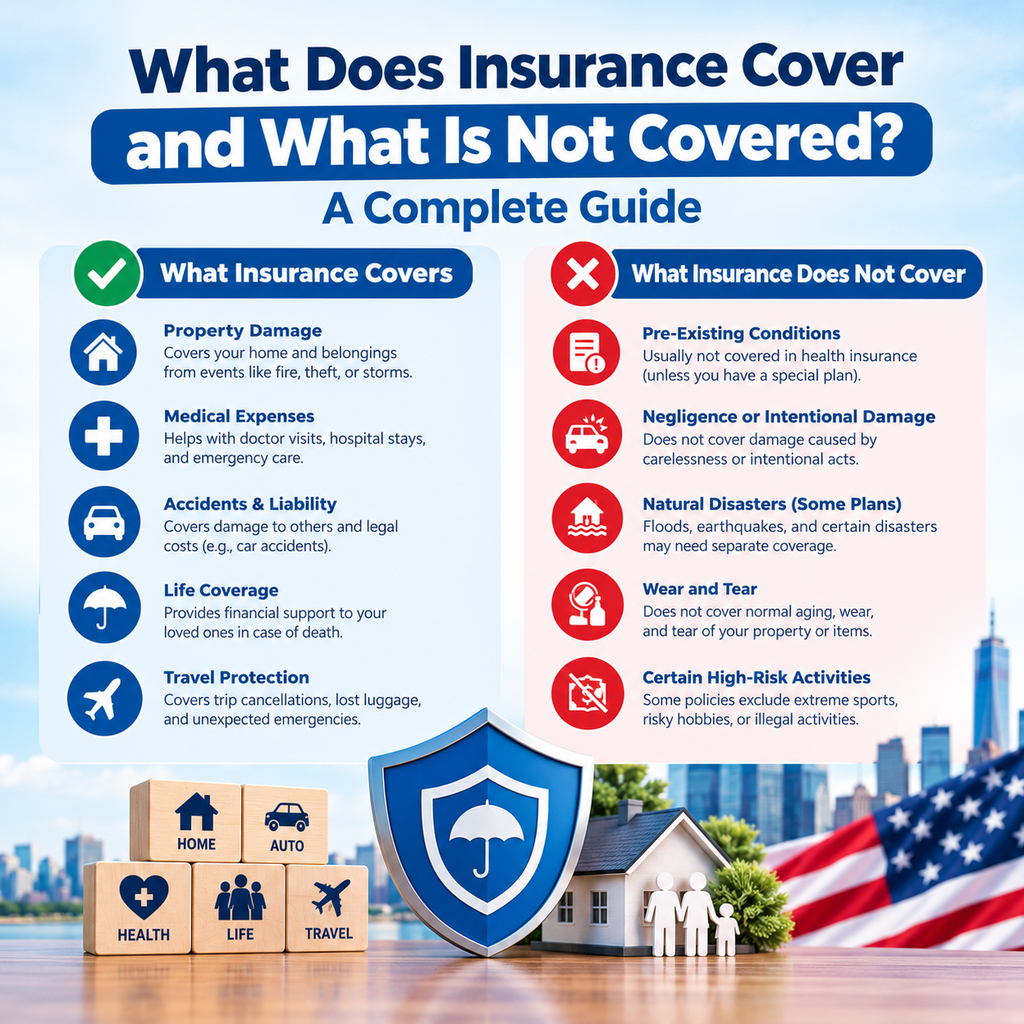
Standard homeowners policies do not cover every natural disaster.
For example, flood and earthquake coverage may require separate policies or endorsements.
The Insurance Information Institute recommends evaluating rebuilding costs, belongings, additional living expenses, and personal liability when determining homeowners insurance needs. <Cite refs={[“turn241860search8”]}/>
How Much Renters Insurance Coverage Do You Need?
If you rent an apartment or house, renters insurance can help protect your personal belongings and provide personal liability coverage.
Your landlord’s insurance generally protects the building, not your personal possessions.
To estimate how much renters insurance you need, calculate the replacement cost of your belongings.
For example:
| Personal belongings | Estimated value |
|---|---|
| Furniture | $3,000 |
| Electronics | $2,500 |
| Clothing | $2,000 |
| Kitchen items | $1,000 |
| Other possessions | $1,500 |
| Total | $10,000 |
In this example, you might consider at least $10,000 in personal property coverage, while allowing for price changes and additional belongings.
You should also review liability coverage and additional living expenses.
How Much Liability Insurance Coverage Do You Need?
Liability insurance helps protect you financially if you are legally responsible for injuries or property damage suffered by someone else.
The amount you need depends on your assets, occupation, business activities, and potential legal risks.
Personal Liability Insurance
Homeowners and renters policies often include personal liability protection.
You may consider higher limits if you own valuable assets or face greater liability risks.
Professional Liability Insurance
Professionals who provide advice, consulting, design, or other specialized services may need professional liability coverage.
The appropriate limit depends on the services offered, client contracts, possible financial losses, and professional requirements.
Business Liability Insurance
Business owners should evaluate their risks, including customer injuries, property damage, professional mistakes, and employee-related responsibilities.
Some businesses may need general liability, professional liability, commercial auto, workers’ compensation, or other specialized policies.
Umbrella Insurance
An umbrella policy provides additional liability protection above certain underlying home or auto insurance limits.
It may be worth considering if your assets or potential liability exposure are greater than the limits of your existing policies.
How Much Disability Insurance Do You Need?
Disability insurance can replace part of your income if you cannot work because of a qualifying illness or injury.
The amount of coverage you need depends on your monthly expenses, savings, existing benefits, and income.
Start by calculating:
- Monthly housing expenses.
- Food and household costs.
- Utility bills.
- Loan payments.
- Medical expenses.
- Family responsibilities.
- Other essential financial commitments.
For example, if your essential monthly expenses are $3,000, you may want to explore disability coverage that can replace a suitable portion of your income to help meet those expenses.
Remember that disability policies differ in waiting periods, benefit periods, definitions of disability, and payment limits.
How to Calculate Your Total Insurance Needs
You do not need to guess how much coverage to purchase.
A practical way to estimate your needs is to review your financial situation and identify the losses you could not comfortably afford.
Follow these steps:
Step 1: List Your Financial Responsibilities
Write down your income, debts, monthly expenses, family responsibilities, and valuable assets.
Step 2: Identify Major Financial Risks
Think about what could happen if you experience:
- A serious illness.
- A vehicle accident.
- Damage to your home.
- Loss of income.
- A legal claim.
- An unexpected death in the family.
Step 3: Review Existing Insurance
Check your current policies, employer benefits, and any coverage included with loans or other financial products.
Step 4: Calculate Potential Losses
Estimate how much money you would need to replace your belongings, pay debts, support your family, or manage other major expenses.
Step 5: Subtract Available Resources
Consider existing insurance, savings, and other resources that could help cover those costs.
Step 6: Compare Different Coverage Options
Request quotes with different coverage limits and deductibles.
Choose a balance between adequate protection and affordable premiums.
Signs That You May Not Have Enough Insurance Coverage
Your insurance coverage may need updating if:
- Your family has grown.
- You purchased a new home.
- Your income has increased significantly.
- You have taken on additional debt.
- You started a business.
- You purchased expensive belongings.
- Your existing policy limits have not been reviewed for several years.
Major life changes can affect your financial responsibilities and insurance needs.
Common Mistakes to Avoid When Choosing Insurance Coverage
Avoid these mistakes when selecting insurance.
1. Choosing the Cheapest Policy
A low premium may come with limited coverage, high deductibles, or important exclusions.
2. Buying Too Little Coverage
Insufficient limits may leave you responsible for expenses beyond what your insurer pays.
3. Paying for Unnecessary Coverage
You should not purchase benefits that do not match your actual needs without understanding their value.
4. Ignoring Policy Exclusions
Always check which events, services, and losses are not covered.
5. Forgetting to Update Your Policy
Your insurance needs can change as your income, family, property, and responsibilities change.
6. Relying Only on Employer Insurance
Employer-provided coverage may be useful, but it may not be enough for your family’s financial needs.
Frequently Asked Questions
1. How do I know how much insurance coverage I need?
Start by reviewing your income, debts, assets, family responsibilities, and potential financial risks. Compare these needs with your existing insurance and savings.
2. Is more insurance coverage always better?
Not necessarily. More coverage can provide additional protection, but it may also increase your premiums. Choose limits that match your financial risks and budget.
3. How much life insurance should a family have?
The amount depends on income replacement, outstanding debts, children’s education, living expenses, and existing financial resources. There is no single amount suitable for every family.
4. Should I buy more than the minimum car insurance?
Many drivers consider higher liability limits because state minimums may not cover all costs after a serious accident. Review your assets, risks, and budget before choosing.
5. How often should I review my insurance coverage?
Review your policies at least once a year and whenever you experience a major life change, such as marriage, having a child, buying a home, or starting a business.
6. Can I have multiple insurance policies?
Yes. You can have different policies for life, health, auto, home, disability, and liability protection. However, understand how coverage overlaps and whether any exclusions apply.
7. Does insurance coverage include deductibles?
Deductibles are part of many insurance policies. They represent the amount you pay yourself for certain covered losses before the insurer pays its share.
Final Thoughts
Choosing the right amount of insurance coverage is an important part of financial planning. The goal is to protect yourself, your family, and your assets without paying unnecessarily high premiums.
Review your financial responsibilities, understand your risks, and compare different policy options before making a decision.
Whether you need life, health, auto, homeowners, renters, or liability insurance, choose coverage that provides meaningful protection for your situation.
Remember that insurance needs are not permanent. Review your policies regularly and update them when your financial responsibilities change.
Disclaimer: This article is for general educational purposes only and does not provide financial, legal, or insurance advice. Coverage requirements and recommended limits vary by state, insurer, policy, and individual circumstances. Consult a licensed insurance professional before making coverage decisions.