

Taking care of your eyes is an important part of maintaining good health. Regular eye exams can help identify vision problems and detect certain eye conditions early. However, eye exams, prescription glasses, and contact lenses can become expensive without coverage.
This is why many people consider Vision Insurance. It helps pay for certain routine eye care services and prescription eyewear, making regular vision care more affordable.
But what exactly does vision insurance cover? How much does it cost? Is it worth buying?
In this guide, we explain how vision insurance works, its benefits, costs, limitations, and how to choose a suitable plan in the United States.
What Is Vision Insurance?
Table of Contents
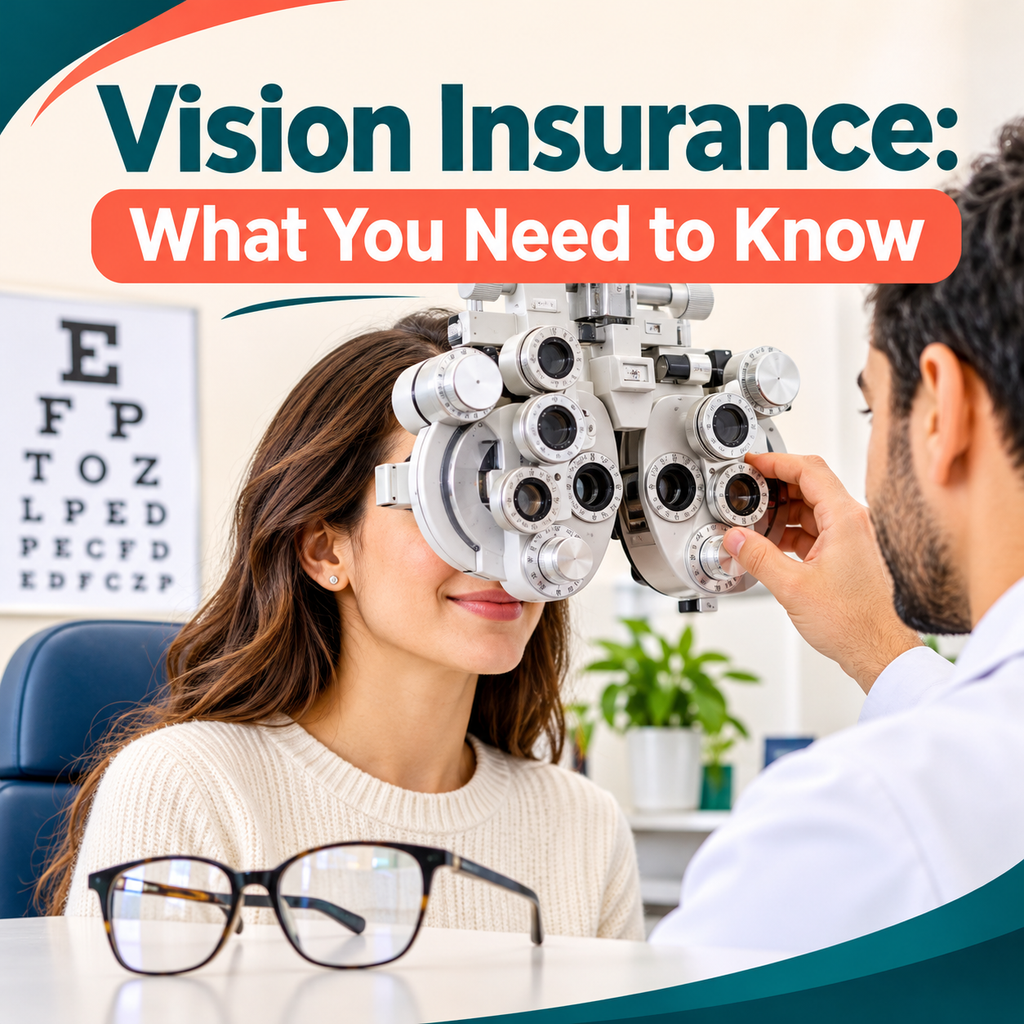
Vision insurance is a type of health benefit that helps cover the cost of routine eye care and prescription eyewear.
Depending on the plan, it may help pay for:
- Routine eye examinations.
- Prescription eyeglasses.
- Eyeglass frames and lenses.
- Contact lenses.
- Contact lens fitting.
- Discounts on selected vision services.
Vision insurance is often purchased as a separate plan or provided as an employee benefit.
It is different from regular health insurance because its main purpose is to help with routine vision care rather than treating serious medical conditions affecting the eyes.
For example, a routine eye examination or a new pair of prescription glasses may qualify for vision benefits. However, treatment for an eye disease may fall under your medical health insurance instead. <Cite refs={[“turn846260search0″,”turn846260search8″,”turn846260search9”]}/>
How Does Vision Insurance Work?
Vision insurance usually works through a network of eye doctors, optometrists, and optical retailers.
You pay a monthly or annual premium to maintain your coverage. When you need an eligible service, you visit a participating provider and use your insurance benefits.
Here is a simple example:
Imagine you have a vision insurance plan that provides:
- One routine eye exam every 12 months.
- A $150 allowance for eyeglass frames.
- Coverage for standard lenses.
- A fixed copayment for the eye examination.
When you visit an in-network eye doctor, you pay the required copayment and use your frame and lens benefits according to the plan.
If your selected frames cost more than the allowance, you may need to pay the remaining amount.
Some plans also provide out-of-network benefits, but you may have to pay the provider first and submit a claim for reimbursement.
Always check your policy because benefits, payment arrangements, and provider networks vary.
What Does Vision Insurance Cover?
Vision insurance plans offer different benefits, but many focus on routine eye care and prescription eyewear.
1. Routine Eye Exams
Most vision plans help pay for routine eye examinations, often once every 12 months.
During an eye exam, an eye care professional may check:
- Your eyesight.
- Your vision prescription.
- Eye coordination.
- General eye health.
- Signs of certain eye conditions.
Regular examinations can help identify vision changes and determine whether you need glasses or contact lenses.
2. Prescription Glasses
Many vision insurance plans provide benefits toward prescription eyeglasses.
Depending on your policy, coverage may include:
- Standard eyeglass lenses.
- Prescription frames.
- Single-vision lenses.
- Bifocal lenses.
- Trifocal lenses.
Some plans provide a fixed dollar allowance, while others use copayments or discounts.
3. Contact Lenses
If you prefer contact lenses instead of glasses, some plans provide a contact lens allowance.
Coverage may include:
- Daily disposable contacts.
- Monthly contact lenses.
- Conventional contact lenses.
- Certain medically necessary contact lenses.
Some plans allow you to choose either prescription glasses or contact lenses during a benefit period, rather than receiving the full allowance for both.
4. Contact Lens Fitting
Contact lenses require proper fitting to make sure they are suitable for your eyes.
Certain vision insurance plans help cover contact lens fitting and evaluation fees.
However, the amount covered may depend on the type of contact lenses and your selected plan.
5. Discounts on Additional Services
Some insurance providers offer discounts on additional vision products and services.
These may include:
- Extra prescription glasses.
- Lens upgrades.
- Prescription sunglasses.
- Selected laser vision correction procedures.
These benefits are not automatically included in every plan. <Cite refs={[“turn846260search1″,”turn846260search8″,”turn846260search3”]}/>
What Does Vision Insurance Not Cover?
Vision insurance does not cover every eye-related expense.
Common exclusions and limitations may include:
- Medical eye treatment: Treatment for conditions such as glaucoma, cataracts, or serious eye infections is generally handled through medical insurance.
- Eye emergencies: Emergency treatment may require medical health insurance.
- Cosmetic procedures: Non-medical cosmetic eye procedures are generally excluded.
- Non-prescription eyewear: Regular sunglasses and non-prescription glasses may not qualify for standard benefits.
- Lost or damaged glasses: Replacement costs may not be covered unless the plan provides a specific benefit.
- Extra examinations: Additional routine exams beyond the plan’s permitted frequency may require out-of-pocket payment.
- Certain lens upgrades: Premium coatings and specialized lenses may involve extra charges.
These exclusions vary by provider. Read the policy documents to understand exactly what is included. <Cite refs={[“turn846260search1″,”turn846260search4″,”turn846260search12”]}/>
How Much Does Vision Insurance Cost in the USA?
The cost of vision insurance depends on the company, plan benefits, location, and number of people covered.
Some individual plans are available for relatively low monthly premiums, while plans with higher allowances or additional benefits may cost more.
For example, Aetna’s advertised individual vision plans include options starting at $11 per month, with other plan levels listed at higher starting prices. These are advertised starting rates, not guaranteed prices for every applicant or location. <Cite refs={[“turn846260search1”]}/>
Factors That Affect Vision Insurance Costs
1. Type of Plan
A basic plan with limited benefits may cost less than a plan offering higher allowances and additional services.
2. Number of People Covered
Family coverage may cost more than an individual policy because it includes additional members.
3. Insurance Provider
Different companies offer different prices, networks, and benefit structures.
4. Coverage Allowances
Plans that provide higher allowances for frames, lenses, and contact lenses may have higher premiums.
5. Location
Prices and available plans can vary depending on the state and local insurance market.
How to Compare Vision Insurance Prices
Before purchasing a policy, compare:
- Monthly premium.
- Eye exam copayment.
- Frame allowance.
- Lens coverage.
- Contact lens allowance.
- Out-of-network reimbursement.
- Additional discounts.
- Annual benefit limits.
Do not choose a plan based only on its monthly price. Consider how much you are likely to spend on eye care throughout the year.
Benefits of Vision Insurance
Vision insurance can offer several advantages to individuals and families.
1. Lower Eye Care Expenses
Insurance can reduce the amount you pay for eligible eye examinations, glasses, and contact lenses.
2. Encourages Regular Eye Exams
When routine examinations are more affordable, people may be more likely to schedule regular appointments.
3. Savings on Prescription Glasses
Frame and lens allowances can help reduce the cost of buying prescription eyewear.
4. Contact Lens Benefits
People who regularly wear contact lenses may benefit from coverage or allowances for their lenses and fitting services.
5. Family Coverage Options
Some providers offer plans that cover multiple family members, helping households manage routine vision care expenses.
6. Predictable Budgeting
A regular premium and defined benefits can make routine eye care expenses easier to plan.
Disadvantages of Vision Insurance
Vision insurance is useful for some people, but it may not be the right choice for everyone.
Common disadvantages include:
- Monthly premiums: You pay for coverage even when you do not use it.
- Annual limits: Frame and contact lens allowances may have maximum amounts.
- Provider restrictions: You may receive better benefits from participating eye doctors.
- Extra expenses: Premium frames and lens upgrades may require additional payments.
- Limited frequency: Some benefits can only be used once every 12 or 24 months.
- Medical exclusions: Serious eye conditions may need separate medical coverage.
If you rarely need eye care or already receive vision benefits through your employer, purchasing another policy may not provide much additional value.
Vision Insurance vs. Regular Health Insurance
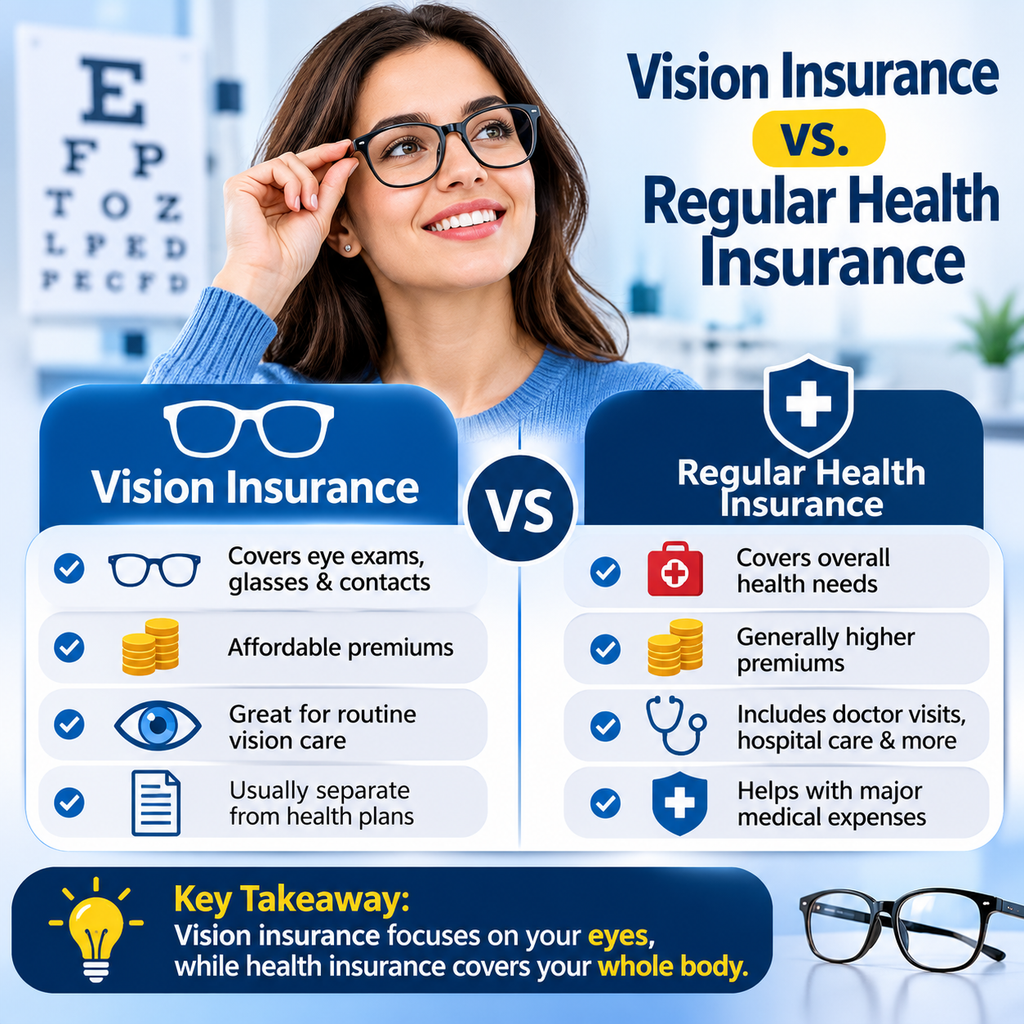
Many people confuse vision insurance with medical health insurance. Although both can help with eye-related expenses, they serve different purposes.
| Feature | Vision Insurance | Health Insurance |
|---|---|---|
| Main purpose | Routine vision care | Medical treatment |
| Routine eye exams | Often covered | Depends on the plan |
| Prescription glasses | May provide an allowance | Usually not covered |
| Contact lenses | May provide an allowance | Usually not covered |
| Eye infections | Usually medical coverage | May be covered |
| Cataract treatment | Usually medical coverage | May be covered |
| Eye emergencies | Usually medical coverage | May be covered |
For example, if you need a routine eye exam to update your glasses prescription, vision insurance may help.
If you develop a serious eye infection and need medical treatment, your regular health insurance may be the appropriate coverage.
Always check both policies because benefits and exclusions differ.
Vision Insurance for Children and Adults
Vision insurance benefits can differ depending on age and the type of health plan.
Vision Insurance for Children
In the United States, all Health Insurance Marketplace plans include vision coverage for children. Covered benefits may include routine eye care and prescription eyewear.
The exact benefits depend on the plan and applicable requirements. <Cite refs={[“turn846260search0″,”turn846260search2”]}/>
Vision Insurance for Adults
Adult vision coverage is not automatically included in every health insurance plan.
Some employer-sponsored plans provide vision benefits, while other adults may need to purchase a separate vision policy.
If adult vision coverage is important to you, review your existing health insurance benefits before buying another plan.
How to Choose the Right Vision Insurance Plan
Choosing the right vision insurance policy requires comparing its benefits with your actual eye care needs.
Here are some useful steps.
1. Understand Your Eye Care Needs
Think about how often you need eye examinations and whether you regularly purchase glasses or contact lenses.
Someone who buys new glasses every year may need different benefits from someone who rarely uses prescription eyewear.
2. Compare Monthly Premiums
Check the monthly cost of different plans and calculate the total annual premium.
Compare this amount with the benefits you expect to use.
3. Check Eye Exam Coverage
Find out whether the plan covers one routine eye exam every year and whether a copayment is required.
4. Review Frame and Lens Allowances
Check how much the plan contributes toward frames and lenses.
If you prefer expensive frames or specialized lenses, find out how much you would need to pay yourself.
5. Check Contact Lens Benefits
If you wear contact lenses, compare the available allowances, fitting fees, and replacement frequency.
6. Check the Provider Network
Make sure your preferred optometrist or optical store accepts the insurance plan.
Using an out-of-network provider may reduce your benefits or require additional payments.
7. Understand Exclusions
Read the policy documents carefully and check whether additional examinations, specialized lenses, and medical eye treatments are covered.
8. Compare Multiple Insurance Companies
Request quotes from different providers and compare their premiums, benefits, and customer service.
Choose the policy that provides useful benefits at a price that fits your budget.
Where Can You Buy Vision Insurance in the USA?
You can obtain vision insurance through an employer, a private insurance company, or a licensed insurance agent or broker.
Here are some providers and resources worth exploring:
- VSP Vision Care – Offers individual and family vision plan options.
- EyeMed – Provides vision benefits and access to participating eye care providers.
- Aetna Vision – Offers individual and family vision insurance options.
- Humana Vision – Provides vision coverage information and plan options.
- Covered California – Explains vision coverage for children and adults in California.
Availability, prices, enrollment rules, and benefits vary by state and provider. Check the official company websites for current plans and eligibility.
Is Vision Insurance Worth It?
Vision insurance may be worth buying if you regularly need eye examinations, prescription glasses, or contact lenses.
It can be particularly useful for:
- People who wear prescription glasses.
- Regular contact lens users.
- Families with children who need vision care.
- Individuals who prefer predictable routine eye care expenses.
- People who frequently update their prescriptions.
However, if you rarely visit an eye doctor and do not need prescription eyewear, paying for a separate vision plan may not save you money.
Compare the annual premium and expected benefits before making a decision.
Frequently Asked Questions
1. What is the main purpose of vision insurance?
The main purpose is to help cover routine eye care expenses, including eye examinations, prescription glasses, and contact lenses.
2. Does vision insurance cover glasses?
Many vision plans provide an allowance or other benefits toward prescription frames and lenses. Coverage amounts depend on the policy.
3. Does vision insurance cover contact lenses?
Yes, many plans provide contact lens benefits or an allowance. Some also cover fitting and evaluation services.
4. Is vision insurance included in health insurance?
Not always. Marketplace health plans include vision coverage for children, but adult vision coverage is available only in some plans. Adults can also explore separate vision policies.
5. Does vision insurance cover cataract surgery?
Cataract surgery is generally treated as medical care rather than routine vision care. It may be covered under qualifying medical health insurance, subject to the policy terms.
6. Can I buy vision insurance without health insurance?
Yes. Some insurance companies offer separate individual vision plans that can be purchased without enrolling in their medical insurance.
7. How often can I use vision insurance?
Many plans offer routine eye exams and eyewear benefits every 12 months. Some benefits may follow a different schedule, so check your plan.
8. Can I use vision insurance at any optical store?
Not necessarily. Plans often have provider networks. You may receive better benefits from participating optometrists and optical retailers.
Final Thoughts
Vision Insurance can make routine eye care more affordable by helping pay for eye examinations, prescription glasses, frames, and contact lenses.
Before buying a plan, compare premiums, eye exam copayments, eyewear allowances, provider networks, and exclusions.
Remember that vision insurance is mainly designed for routine vision care. Serious eye diseases and medical emergencies generally require medical health insurance.
The best plan is one that matches your eye care needs, provides useful benefits, and fits your budget.
Disclaimer: This article is for general educational purposes only and does not provide medical, financial, or insurance advice. Vision insurance coverage, prices, eligibility, and exclusions vary by insurer, state, and policy. Review official plan documents before purchasing coverage.



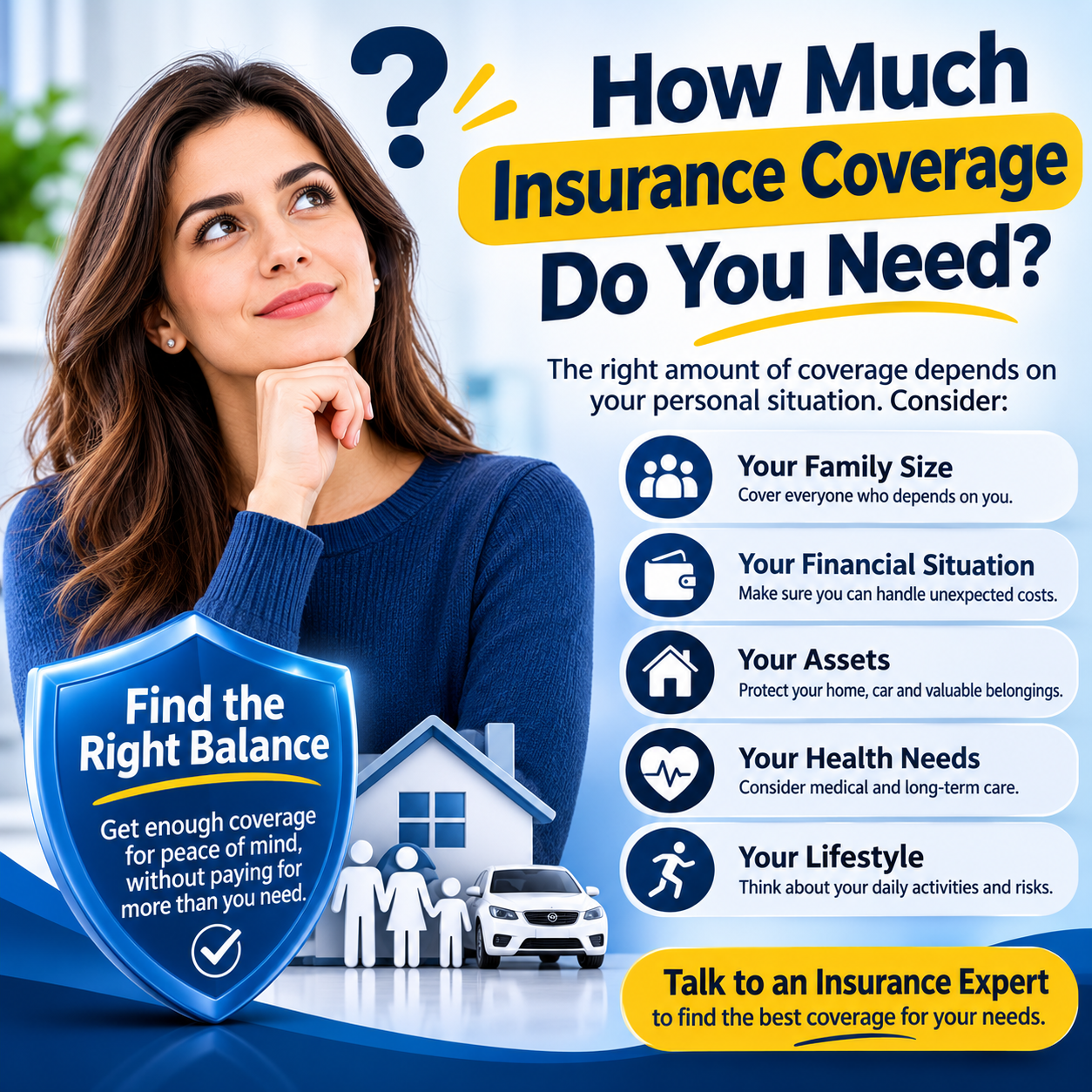

Pingback: How Much Insurance Coverage Do You Need? guide