
Starting a business can be an exciting way to earn money, build financial independence, and turn your skills into something valuable. However, choosing the right business idea is one of the most important decisions you will make.
Some businesses require significant investment, while others can be started from home with a computer, an internet connection, and a useful skill. The best option depends on your budget, experience, interests, and the demand for your product or service.
In this guide, we will explore 25 of the best business ideas to start in 2026, including online businesses, home-based opportunities, service businesses, and ideas for beginners.
What Makes a Business Idea Worth Starting?

Table of Contents
Before choosing a business, consider these important factors:
- Market demand: People should have a genuine need for your product or service.
- Startup costs: Choose an idea that fits your available budget.
- Skills and experience: Your existing knowledge can help you get started faster.
- Competition: Research other businesses offering similar products or services.
- Growth potential: Consider whether the business can expand over time.
- Profit potential: Calculate expenses, pricing, and expected revenue instead of assuming every sale will generate a profit.
25 Best Business Ideas to Start in 2026
1. Digital Marketing Agency
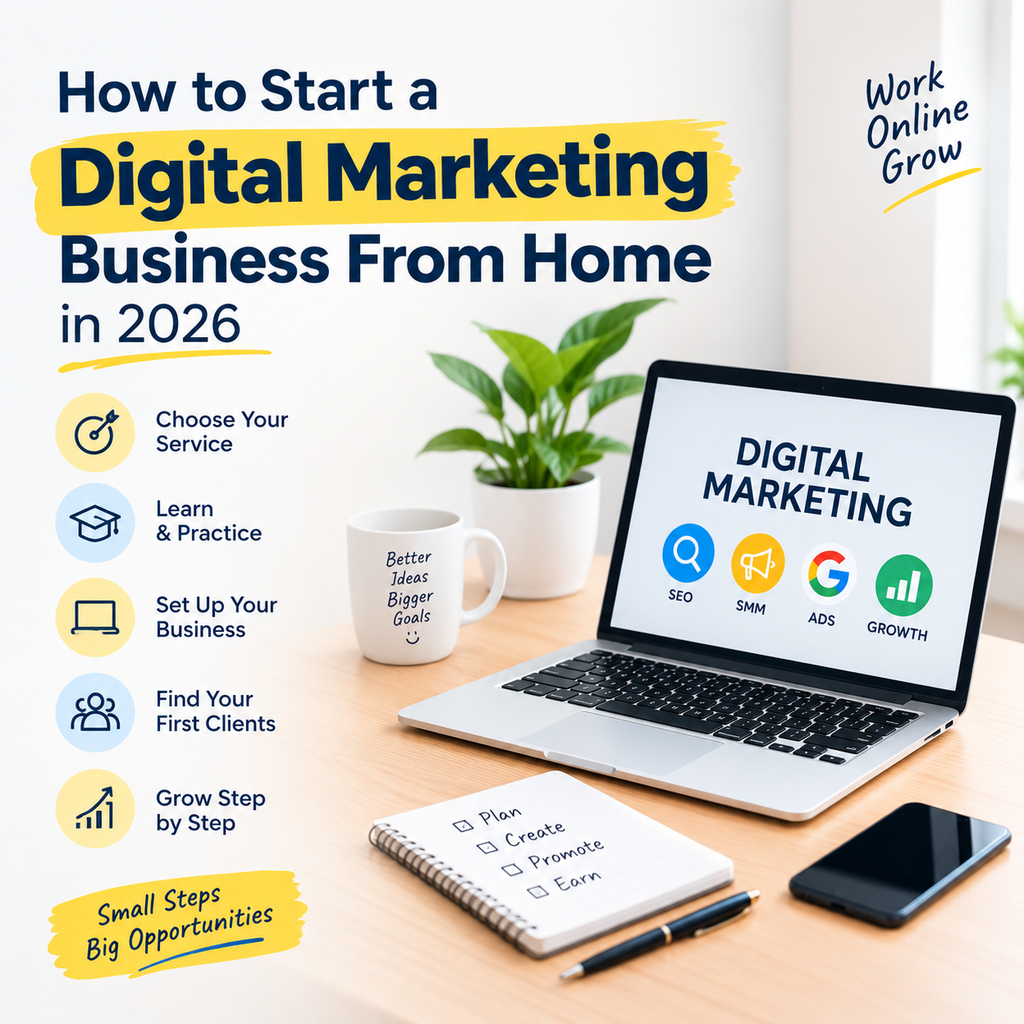
A digital marketing agency helps businesses reach more customers through online marketing. Services can include social media management, search engine optimization (SEO), paid advertising, and content marketing.
You can begin by offering one service to local businesses and expand your services as you gain experience.
Startup cost: Low to medium.
2. Social Media Management
Many small businesses need help managing their Instagram, Facebook, TikTok, and other social media accounts.
You can offer content planning, post creation, captions, scheduling, and basic performance reports. This business can be operated remotely.
Startup cost: Low.
3. E-Commerce Store
An e-commerce store allows you to sell products through your own website or an online marketplace.
Popular product categories include clothing, accessories, home products, beauty items, and specialty goods. Start with a focused product category and research shipping, returns, and supplier costs before investing.
Startup cost: Medium.
4. Print-on-Demand Business
Print-on-demand allows you to sell customized products such as T-shirts, mugs, phone cases, and posters without storing inventory yourself.
A third-party supplier prints and ships products after customers place orders. Your main responsibilities include creating designs, marketing products, and managing customer service.
Startup cost: Low.
5. Freelance Graphic Design

Businesses regularly need logos, advertisements, social media graphics, brochures, and promotional materials.
If you have graphic design skills, you can work with clients directly or use freelance platforms to find projects.
Startup cost: Low, especially if you already own a suitable computer.
6. Website Design Services
Many small businesses need professional websites but do not have the time or technical knowledge to build them.
You can create websites for restaurants, salons, contractors, consultants, and other businesses using website builders or coding skills.
Startup cost: Low to medium.
7. Online Tutoring
Online tutoring is a useful business opportunity for people with strong knowledge of academic subjects, languages, or professional skills.
You can teach students through video calls and offer individual lessons or group classes.
Startup cost: Low.
8. Cleaning Services
Residential and commercial cleaning services are needed in many communities.
You can start with basic cleaning services and gradually add specialized options such as deep cleaning, move-in cleaning, and office cleaning.
Startup cost: Low to medium.
9. Virtual Assistant Business
Virtual assistants help business owners with everyday administrative tasks.
Services may include email management, appointment scheduling, data entry, online research, customer support, and document preparation.
Startup cost: Low.
10. Content Writing Business

Companies need website articles, blog posts, product descriptions, newsletters, and marketing content.
If you can write clearly and research topics properly, you can offer writing services to businesses and website owners.
Startup cost: Low.
11. YouTube Channel
YouTube offers an opportunity to build an audience around subjects such as education, technology, finance, cooking, entertainment, or product reviews.
Income may come from advertising, sponsorships, affiliate marketing, and other eligible monetization features. Building an audience takes time, and earnings are not guaranteed.
Startup cost: Low to medium.
12. Affiliate Marketing
Affiliate marketing involves promoting another company’s products or services through special tracking links.
When someone makes an eligible purchase through your link, you may receive a commission. You can promote products through a website, blog, email newsletter, or social media account.
Always disclose affiliate relationships and choose products relevant to your audience.
Startup cost: Low.
13. Mobile Car Wash
A mobile car wash brings cleaning services directly to customers at their homes or workplaces.
You can offer exterior washing, interior cleaning, vacuuming, and detailing packages. Check local water-use and business regulations before starting.
Startup cost: Medium.
14. Pet Sitting and Dog Walking
Pet owners often need reliable people to look after their pets while they are working or traveling.
You can offer dog walking, pet sitting, feeding visits, and basic care services. Trust, safety, and experience are especially important in this business.
Startup cost: Low.
15. Personal Fitness Coaching
If you have appropriate fitness qualifications and experience, you can provide personal training or online fitness coaching.
Services may include workout planning, exercise guidance, and progress tracking. Avoid offering medical advice or treatment outside your qualifications.
Startup cost: Low to medium.
16. Bakery Business
A small bakery can sell cakes, cookies, cupcakes, bread, and customized desserts.
You can begin with a limited menu and take orders through social media or a website. Food safety rules, permits, and suitable preparation facilities must be checked before selling.
Startup cost: Medium.
17. Handmade Products Business
If you enjoy making things, consider selling handmade candles, jewelry, artwork, decorations, or personalized gifts.
You can sell through an online store, craft marketplaces, and local events.
Startup cost: Low to medium.
18. Photography Business
Photography services are useful for weddings, family events, business products, real estate listings, and professional portraits.
Start with one photography niche and build a portfolio that demonstrates your work.
Startup cost: Medium to high, depending on equipment.
19. Bookkeeping Services
Small businesses need help organizing financial records, tracking expenses, and preparing basic financial reports.
If you have relevant accounting knowledge and training, you can offer bookkeeping services. Understand applicable regulations and avoid providing services beyond your qualifications.
Startup cost: Low to medium.
20. Home Organization Services
Many people need help organizing closets, kitchens, garages, storage rooms, and home offices.
You can provide in-person organization services and create customized storage solutions based on each customer’s needs.
Startup cost: Low.
21. Subscription Box Business
A subscription box business sends customers a selected collection of products on a recurring schedule.
Possible niches include books, snacks, beauty products, stationery, and hobby supplies. Research product costs, packaging, shipping, and customer retention before launching.
Startup cost: Medium.
22. Online Course Business
If you have valuable knowledge in a particular subject, you can create an online course and sell access to it.
Possible topics include graphic design, digital marketing, language learning, photography, and business skills.
Startup cost: Low to medium.
23. Event Planning Business
Event planners help organize birthdays, corporate meetings, private parties, weddings, and other occasions.
You can start with smaller events and build relationships with venues, caterers, photographers, and decorators.
Startup cost: Low to medium.
24. Home-Based Clothing Business
You can sell clothing through social media, online marketplaces, or your own e-commerce website.
Choose a specific market, such as modest fashion, sportswear, children’s clothing, or everyday essentials. Compare suppliers and carefully calculate shipping and return costs.
Startup cost: Medium.
25. AI Automation Services
Businesses are increasingly exploring artificial intelligence tools to reduce repetitive work and improve customer service.
You can help businesses set up automated customer inquiries, appointment reminders, lead management, and simple workflow systems. Learn the tools properly and protect customer information.
Startup cost: Low to medium.
Best Business Ideas for Beginners
If you are starting your first business, consider options that do not require large investments or complicated operations.
| Business idea | Main requirement |
|---|---|
| Social media management | Social media skills |
| Virtual assistant | Organization and communication |
| Freelance writing | Writing and research |
| Graphic design | Design skills |
| Affiliate marketing | Audience and marketing |
| Online tutoring | Subject knowledge |
| Home organization | Planning and organization |
| Content creation | Consistent content production |
These businesses can often be tested on a small scale before making a larger investment.
Best Low-Cost Business Ideas
If you have a limited budget, consider starting with a service rather than buying large amounts of inventory.
Some options include:
- Freelance writing
- Virtual assistant services
- Social media management
- Online tutoring
- Graphic design
- Affiliate marketing
- Website design
- Online consulting, if qualified
Your biggest initial investment may be your time, training, and effort rather than physical products.
How to Choose the Right Business Idea
Choosing from 25 options can feel difficult. Use these steps to narrow down your choices.
Step 1: Understand Your Budget
Calculate how much money you can afford to invest without putting your essential expenses at risk.
Step 2: Identify Your Skills
Write down what you can already do. Consider whether you have experience in marketing, sales, writing, technology, customer service, or another field.
Step 3: Research Customer Demand
Talk to potential customers, study competitors, and look for problems people are willing to pay to solve.
Step 4: Calculate Your Costs
Include equipment, software, supplies, advertising, delivery, insurance, licenses, and other operating expenses.
Step 5: Test Your Idea
Before investing heavily, try selling a small service or a limited number of products. Customer feedback can help you improve your offer.
Step 6: Create a Simple Business Plan
Define your target customers, products or services, pricing, marketing strategy, expected expenses, and business goals.
Important Things to Know Before Starting a Business in the USA
If you plan to start a business in the United States, check the legal and financial requirements before accepting customers.
Depending on the business and location, you may need to:
- Choose a suitable business structure.
- Register your business where required.
- Obtain applicable federal, state, or local licenses and permits.
- Understand tax responsibilities.
- Open a separate business bank account where appropriate.
- Consider business insurance.
- Keep accurate records of income and expenses.
Requirements vary by industry, state, and local government.
Useful official resources:
- U.S. Small Business Administration (SBA) – Business planning and startup guidance.
- SBA Licenses and Permits – Information about permits and licenses.
- Internal Revenue Service (IRS) – Federal business tax information.
Final Thoughts
The best business idea is not necessarily the most popular or expensive one. It is the one that matches your skills, budget, interests, and the needs of your target customers.
If you are a beginner, consider starting with a low-cost service such as social media management, freelance writing, virtual assistance, or graphic design. If you prefer selling products, explore e-commerce or print-on-demand.
Start small, research your market, understand your expenses, and improve your business based on real customer feedback. A carefully tested idea is a better starting point than investing money based only on trends.