

Starting a business does not always require a large investment, professional qualifications, or years of experience. Many successful businesses begin with simple services, basic equipment, and a willingness to learn. The easiest business to start is usually one that matches your existing skills, solves a common problem, and does not require expensive equipment or a complicated setup.
If you want to become self-employed, earn extra income, or build a business from home, there are several beginner-friendly options worth considering.
In this guide, you will discover some of the easiest businesses to start, how much effort they may require, and how to find your first customers.
What Makes a Business Easy to Start?
Table of Contents
Before choosing a business idea, it is important to understand what makes a business beginner-friendly.
An easy business to start usually has the following characteristics:
- Low startup costs: You do not need to spend a lot of money before earning your first income.
- Simple skills: You can learn the basic skills through free online resources or short training.
- Consistent demand: People already need the product or service you offer.
- Flexible working hours: You can start part-time and increase your working hours later.
- Simple operations: You can manage most tasks without hiring employees or renting an office.
A business does not have to be complicated to become profitable. Sometimes, providing one useful service to a specific group of customers is enough to get started.
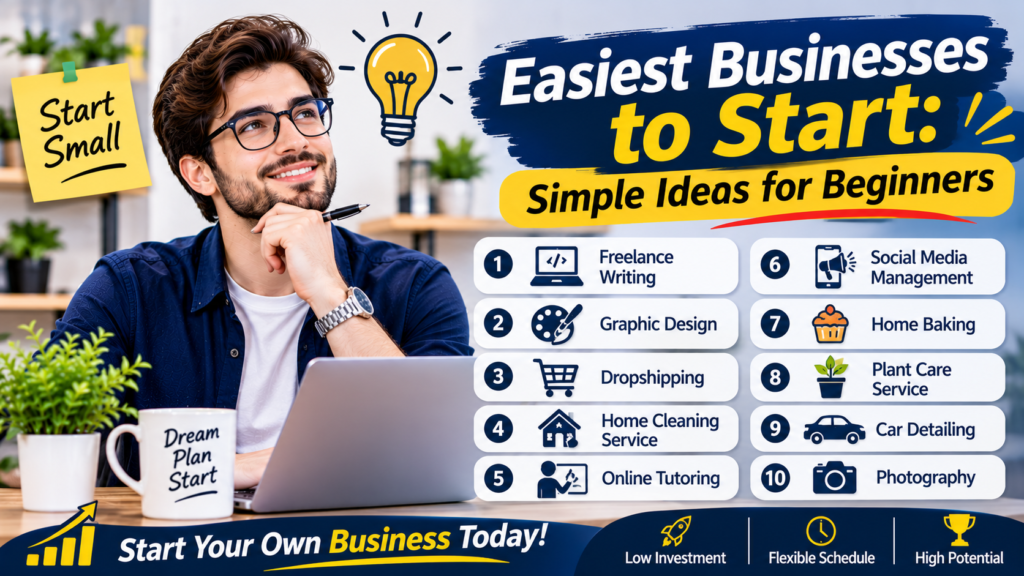
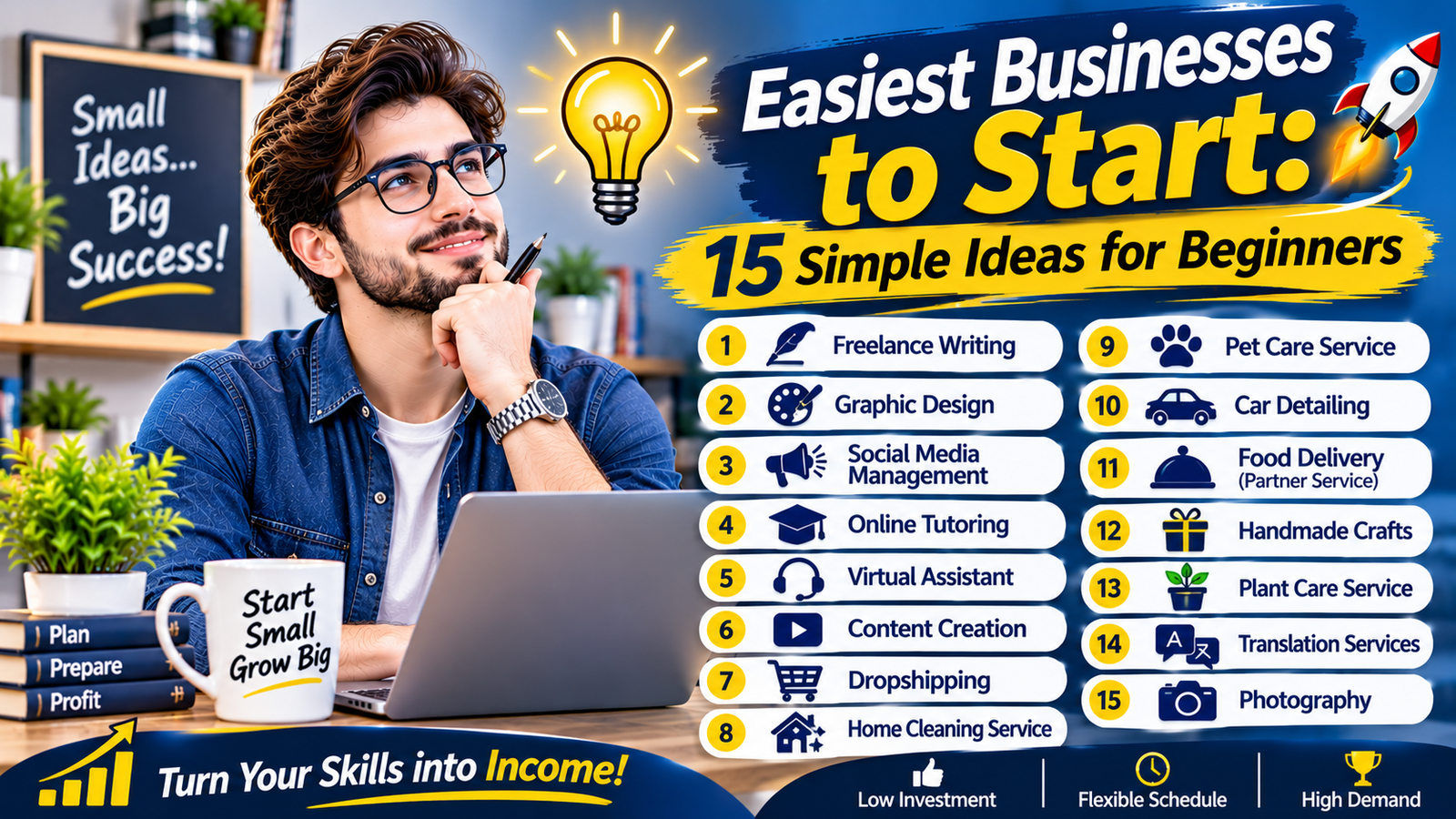
15 Easiest Businesses to Start for Beginners
Here are 15 practical business ideas that beginners can consider. Many of these can be started from home with a computer, smartphone, or basic equipment.
1. Social Media Management

Small businesses need social media platforms to promote their products and services, but many owners do not have enough time to manage their accounts.
You can offer services such as creating posts, writing captions, scheduling content, replying to comments, and maintaining business pages.
You do not need to start with a large agency. Choose one or two services and approach local shops, restaurants, salons, and other small businesses.
How to get started: Learn the basics of Instagram and Facebook, create a few sample posts, and contact businesses that have inactive or poorly managed social media pages.
2. Freelance Writing
Freelance writing is a good option for people who enjoy writing and researching different topics.
Businesses, website owners, and online publications need articles, product descriptions, website content, and blog posts.
You can begin with simple topics and gradually develop your writing skills. A small portfolio containing three to five quality samples can help you attract your first clients.
How to get started: Select a topic you understand, write sample articles, and create profiles on freelance platforms or approach website owners directly.
3. Graphic Design

Graphic design is another beginner-friendly business if you enjoy creative work.
Small businesses regularly need social media graphics, promotional banners, flyers, menus, business cards, and advertisements.
Free or affordable tools such as Canva can help beginners learn basic design without purchasing expensive software.
How to get started: Practise by designing sample advertisements and social media posts. Create a small portfolio and offer your services to local businesses.
4. Virtual Assistant Services
A virtual assistant helps business owners with everyday administrative tasks remotely.
Common tasks include managing emails, organizing appointments, entering information into spreadsheets, researching products, and handling basic customer support.
This business is suitable for people who are organized, reliable, and comfortable using computers.
How to get started: Learn basic office tools, prepare a list of services, and approach entrepreneurs or small companies that may need administrative support.
5. Online Tutoring
If you are good at a particular subject or skill, you can teach others online.
You could offer lessons in mathematics, English, computer basics, school subjects, or other areas you understand well.
Online tutoring can be managed through video calls, making it possible to work with students in different locations.
How to get started: Choose a subject, decide which age group you want to teach, prepare a simple lesson plan, and advertise your services.
6. Cleaning Services
Cleaning is a practical business because homes, offices, shops, and rental properties regularly need cleaning.
You can start independently instead of hiring employees immediately. Basic cleaning supplies may be enough for a small operation, depending on the services you offer.
How to get started: Decide whether you want to provide home cleaning, office cleaning, or move-in and move-out cleaning. Advertise in your local community and ask satisfied customers for referrals.
7. Mobile Car Washing
Many vehicle owners want their cars cleaned but do not have time to visit a car wash.
A mobile car washing service brings basic cleaning services directly to the customer’s home or workplace. Depending on your equipment and local requirements, you can begin with a limited range of services.
How to get started: Research local demand, calculate the cost of supplies and transportation, and offer introductory services to people in your area.
8. Affiliate Marketing
Affiliate marketing allows you to earn commissions by promoting products or services through special tracking links.
When someone purchases through your link, you may receive a commission according to the company’s affiliate program.
You can promote products through a website, blog, social media page, or YouTube channel.
How to get started: Choose a topic, build an audience, research legitimate affiliate programs, and publish useful content that helps people make purchasing decisions.
Remember that affiliate income is not guaranteed. Building an audience and gaining trust usually takes time.
9. Blogging
Blogging is a business idea for people who enjoy writing and sharing information.
You can create a website around topics such as business, technology, travel, personal finance, education, or lifestyle.
Potential income sources include advertising, affiliate marketing, sponsored content, and selling digital products.
How to get started: Choose a specific topic, publish helpful articles regularly, learn basic SEO, and work on attracting visitors from search engines.
Blogging usually takes time to generate income, so it is better to treat it as a long-term project.
10. YouTube Channel
YouTube allows people to build an audience by publishing useful or entertaining videos.
You can create educational tutorials, product comparisons, business tips, technology guides, cooking videos, or informational content.
You do not necessarily need an expensive camera. A smartphone and basic editing software may be enough to produce your first videos.
How to get started: Select a clear topic, plan your first five videos, and publish consistently. Study audience feedback to improve your content.
11. CV and Resume Writing
Job seekers often need professional CVs and resumes to apply for employment.
If you have good writing and formatting skills, you can help people prepare clear, well-organized CVs, cover letters, and professional application documents.
This business can be operated from home with a computer and document-editing software.
How to get started: Create a few sample CV templates, learn professional formatting, and promote your services in job-seeker communities.
12. Translation Services
If you understand two or more languages well, translation can become a useful service business.
Customers may need translations for business documents, website content, product descriptions, emails, and general communication.
Accuracy is important, especially when translating legal, medical, or official documents. Only accept work that matches your knowledge and qualifications.
How to get started: Select the language pairs you can translate confidently, prepare sample translations, and approach businesses or freelance clients.
13. Personal Shopping and Errand Services
Some people are too busy to complete everyday tasks such as grocery shopping, collecting packages, or purchasing household items.
You can offer a personal shopping or errand service to customers in your local area.
This idea is particularly useful in communities where people have demanding work schedules or limited transportation.
How to get started: Choose the errands you can safely and reliably provide, set clear service charges, and promote your business locally.
14. Pet Sitting and Dog Walking
Pet owners sometimes need someone to care for their animals while they are working, travelling, or managing other responsibilities.
You can provide services such as dog walking, feeding pets, and short visits to check on animals.
Experience with animals, reliability, and customer trust are especially important in this business.
How to get started: Start with people you know, establish clear service rules, and build a reputation through reliable work.
15. Digital Product Creation
Digital products are files or resources that customers can purchase and download online.
Examples include budget planners, printable calendars, social media templates, educational worksheets, business checklists, and digital guides.
One advantage is that you can create a product once and potentially sell multiple copies without handling physical inventory.
How to get started: Identify a problem people want to solve, create a useful digital product, and list it on a suitable online marketplace or your own website.
Easiest Businesses to Start With No Money
If you have very little money available, focus on businesses where your time and skills are the main resources.
Some suitable options include:
- Freelance writing
- Virtual assistant services
- Social media management
- Online tutoring
- CV writing
- Translation
- Basic graphic design using free tools
- Content creation
These ideas may require an internet connection and a smartphone or computer, but they generally do not require renting a shop, purchasing inventory, or hiring employees.
You should still consider possible expenses such as internet access, platform fees, advertising, and business registration where required.
Which Business Is Best for You?
The best business depends on your skills, budget, available time, and personal interests.
Here is a simple comparison to help you choose:
| Business | Starting Cost | Useful Skills |
|---|---|---|
| Social Media Management | Very Low | Marketing and communication |
| Freelance Writing | Very Low | Writing and research |
| Graphic Design | Low | Creativity and design |
| Virtual Assistant | Very Low | Organization and computer skills |
| Online Tutoring | Very Low | Teaching and subject knowledge |
| Cleaning Services | Low to Medium | Attention to detail |
| Mobile Car Washing | Low to Medium | Practical cleaning skills |
| Affiliate Marketing | Low | Content creation and marketing |
| Blogging | Low | Writing and SEO |
| YouTube Channel | Low | Communication and video creation |
| CV Writing | Very Low | Writing and formatting |
| Translation | Very Low | Language skills |
| Pet Sitting | Low | Animal care |
| Errand Services | Low | Time management |
| Digital Products | Low | Design and problem-solving |
The costs shown are general estimates, not guaranteed prices. Your actual investment will depend on your country, equipment, and business requirements.
How to Start a Small Business Step by Step
Choosing an idea is only the beginning. You also need a simple plan to turn that idea into a real business.
Step 1: Choose One Business Idea
Do not try to start five businesses at the same time. Select one idea that matches your skills and available resources.
For example, if you understand social media, begin with social media management instead of investing money in an unrelated business.
Step 2: Research Your Potential Customers
Find out who needs your service and what problems they want to solve.
Look at local businesses, online communities, competitors, and customer reviews. Research helps you understand what people are already paying for.
Step 3: Learn the Basic Skills
You do not need to become an expert before starting, but you should understand the service you are selling.
Use free tutorials, online courses, and practical exercises to improve your skills.
Step 4: Create Samples of Your Work
Customers are more likely to trust you when they can see what you can do.
For example, a graphic designer can create sample advertisements, while a freelance writer can prepare sample articles.
Step 5: Find Your First Customers
Start with people and businesses you can reach easily.
You can contact potential customers through social media, email, local business groups, and personal recommendations.
Explain what service you offer and how it can help their business.
Step 6: Set a Fair Price
Research what other service providers charge in your market.
When starting, you may offer a reasonable introductory price to build experience and collect customer feedback. However, avoid charging so little that you cannot cover your expenses.
Step 7: Deliver Quality Work
Your first customers can help you build a strong reputation.
Complete work on time, communicate clearly, and handle complaints professionally. Good customer experiences can lead to repeat business and referrals.
Step 8: Reinvest in Your Business
Once you begin earning money, consider investing part of your income in better equipment, training, software, or marketing.
Grow gradually instead of spending heavily before you have regular customers.
Common Mistakes Beginners Should Avoid
Starting a business is exciting, but beginners can make mistakes that waste time and money.
Starting without research: Do not assume that everyone will buy your product or service. Check whether there is genuine demand.
Spending too much at the beginning: Avoid expensive offices, unnecessary equipment, and large advertising budgets before testing your idea.
Trying too many ideas: Constantly changing business ideas makes it difficult to build experience and attract regular customers.
Ignoring customer service: Poor communication and missed deadlines can damage your reputation.
Expecting instant profits: Most businesses need time to find customers, improve their services, and become profitable.
Copying competitors completely: Learn from successful businesses, but offer something useful that gives customers a reason to choose you.
Final Thoughts
The easiest businesses to start are usually simple businesses that solve everyday problems. You do not need a large investment or a complicated business plan to take your first step.
If you have good communication skills, consider virtual assistance or social media management. If you enjoy creative work, try graphic design or digital products. If you prefer working with people locally, cleaning, tutoring, and personal services may be suitable options.
Start with one idea, learn the necessary skills, find your first customer, and improve as you gain experience.
The most important thing is not to find a business that guarantees easy money. It is to choose a business you can realistically start, manage, and grow over time.



Pingback: 15 Easiest Businesses to Start for Beginners