

Renting a home or apartment can be more affordable and flexible than buying a property. However, many renters forget that their personal belongings can still be at risk from theft, fire, water damage, and other unexpected events.
Imagine coming home one day and discovering that a fire has damaged your apartment. Your landlord’s insurance may cover damage to the building, but it generally does not cover your personal belongings, such as your furniture, clothes, laptop, television, and other valuables.
This is where renters insurance can help.
But is renters insurance really worth the money? Do you need it if you do not own a house? And what does it actually cover?
In this guide, we will explain how renters insurance works, what it protects, how much it costs, and when purchasing a policy makes sense.
What Is Renters Insurance?
Table of Contents
Renters insurance is a type of insurance designed for people who rent an apartment, house, or other residential property.
It helps protect a tenant’s personal belongings against certain covered events. Depending on the policy, it may also provide personal liability protection and help pay for temporary living expenses if a covered event makes the rented home uninhabitable.
Renters insurance usually provides three main types of protection:
- Personal property coverage: Helps pay to repair or replace covered personal belongings.
- Personal liability coverage: Helps protect you financially if you are legally responsible for certain injuries or property damage to others.
- Additional living expenses: May help pay for temporary accommodation and certain extra costs if a covered event makes your home unlivable.
Renters insurance does not usually insure the building itself. That is generally the landlord’s responsibility.
Is Renters Insurance Worth It?
For many renters, yes. Renters insurance can be worth the cost because replacing personal belongings after a major accident, fire, or theft can be expensive.
Think about the items inside your home:
- Bed and mattress.
- Sofa and furniture.
- Television and electronics.
- Laptop and mobile phone.
- Clothes and shoes.
- Kitchen appliances.
- Personal accessories.
Even if you do not own expensive items, replacing everything at once could put pressure on your finances.
Renters insurance can provide financial protection against certain covered losses, often for a relatively affordable premium.
However, whether it is worth it depends on the value of your belongings, your financial situation, your location, and the coverage available.
What Does Renters Insurance Cover?
Renters insurance policies can provide several types of coverage. The exact protection depends on the insurer and policy terms.
1. Personal Belongings
This is one of the main reasons people purchase renters insurance.
It may cover personal belongings such as:
- Furniture.
- Clothing.
- Electronics.
- Kitchen equipment.
- Home appliances.
- Books and personal items.
Covered events may include fire, theft, vandalism, and certain types of water damage.
For example, if someone breaks into your apartment and steals your laptop and television, your policy may help pay for their replacement, subject to your deductible and coverage limits.
2. Personal Liability Protection
Personal liability coverage may help protect you if you are legally responsible for accidentally injuring someone or damaging another person’s property.
For example, imagine a visitor slips inside your rented apartment and suffers an injury. If you are legally responsible, your renters insurance may help cover eligible legal expenses or damages.
Your policy will specify its liability limits and exclusions.
3. Additional Living Expenses
What happens if a fire or another covered event makes your apartment temporarily unlivable?
You may need to stay in a hotel or rent another place while repairs are completed.
Additional living expenses coverage, sometimes called loss of use coverage, may help pay for certain extra costs, such as:
- Temporary accommodation.
- Additional food expenses.
- Certain transportation costs.
- Other eligible living expenses.
Coverage is subject to policy limits and conditions.
4. Certain Personal Belongings Outside Your Home
Some renters insurance policies also cover personal belongings when you take them outside your apartment.
For example, a covered theft may involve a laptop stolen while you are travelling. However, limits and conditions can apply, particularly for expensive items.
Check your policy before assuming that every item is protected everywhere.
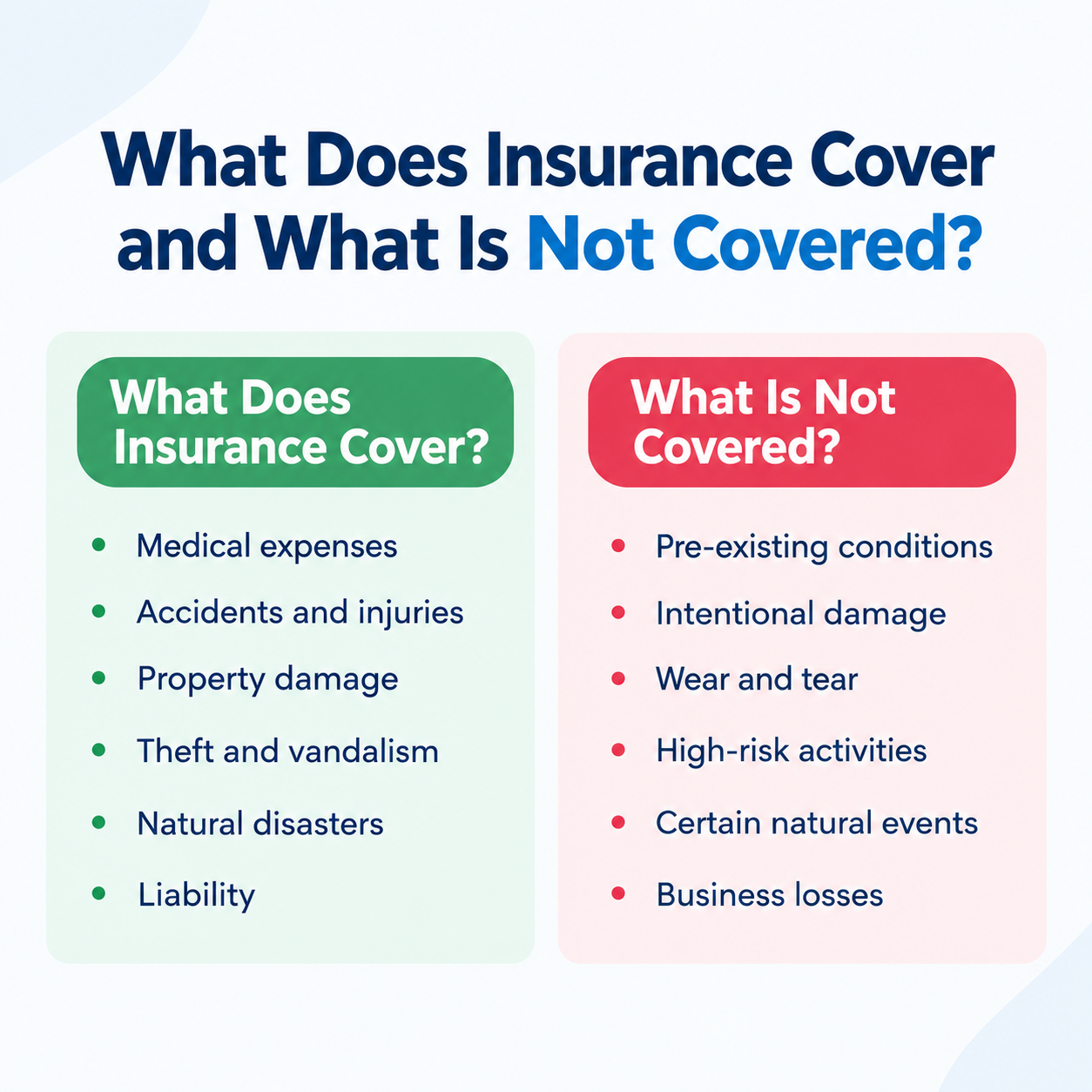
What Does Renters Insurance Not Cover?
Renters insurance does not cover every possible loss.
Common exclusions or limitations may include:
1. Flood Damage
Standard renters insurance policies generally do not cover damage caused by flooding.
If you live in an area with flood risks, you may need separate flood insurance or another specific coverage option.
2. Earthquake Damage
Earthquake damage is generally excluded from standard renters insurance policies unless additional coverage is purchased.
3. Your Landlord’s Building
Renters insurance generally protects your belongings and certain personal liabilities, not the building structure.
Your landlord normally needs separate property insurance for the building.
4. Expensive Jewellery and Collectibles
Certain valuable items may have special coverage limits.
If you own expensive jewellery, watches, artwork, or collectibles, you may need additional coverage or a scheduled personal property endorsement.
5. Damage Caused by Neglect
Insurance generally does not cover every type of damage caused by poor maintenance, neglect, or gradual deterioration.
For example, a long-term leak that was ignored may be treated differently from sudden accidental water damage.
Always read the policy exclusions carefully.
How Much Does Renters Insurance Cost?
Renters insurance is generally considered one of the more affordable types of insurance in the United States.
However, the actual price depends on several factors:
- Location: Premiums vary between states, cities, and neighbourhoods.
- Coverage amount: More personal property coverage can increase the premium.
- Deductible: A higher deductible may reduce your premium, but you will pay more out of pocket when making a claim.
- Claims history: Previous claims may affect the price.
- Building characteristics: Certain property features and risks can influence pricing.
- Additional coverage: Extra protection for valuable items or specific risks may increase the cost.
The best way to find your actual price is to request quotes from multiple insurance providers.
Do not compare prices alone. Check the coverage limits, deductibles, exclusions, and claim conditions.
How Much Renters Insurance Coverage Do You Need?
The right coverage amount depends on the value of your personal belongings and your financial circumstances.
A useful first step is to create a home inventory.
Walk through your apartment and make a list of your belongings, including:
- Furniture.
- Electronics.
- Clothing.
- Kitchen appliances.
- Personal accessories.
- Other valuable items.
Estimate how much it would cost to replace these items.
You should also consider your liability coverage needs and whether you could afford temporary accommodation if your apartment became unlivable.
Remember that some policies pay replacement cost, while others use actual cash value. Actual cash value generally accounts for depreciation, meaning you may receive less than the price of buying a new replacement.
Replacement Cost vs. Actual Cash Value
Understanding these two terms is important before buying renters insurance.
Replacement Cost Coverage
Replacement cost coverage generally pays the amount needed to replace a covered damaged or stolen item with a new item of similar kind and quality, subject to policy limits and conditions.
Actual Cash Value Coverage
Actual cash value generally considers depreciation when calculating the value of a damaged or stolen item.
For example, if your five-year-old television is stolen, an actual cash value policy may pay less than the cost of buying a new television because the original item has depreciated.
Replacement cost coverage may provide a higher payout, but it can also increase the premium.
How to Buy Renters Insurance
Buying renters insurance is usually straightforward. Follow these steps:
Step 1: Calculate the Value of Your Belongings
Make a list of your furniture, electronics, clothes, and other personal items. Estimate their replacement costs.
Step 2: Decide How Much Coverage You Need
Choose personal property and liability limits that make sense for your situation. Consider whether you need extra protection for valuable items.
Step 3: Compare Multiple Insurance Companies
Request quotes from different providers. Compare premiums, deductibles, coverage limits, and exclusions.
Step 4: Review the Policy
Read the policy carefully. Check which events are covered, how claims are calculated, and whether any important exclusions apply.
Step 5: Purchase and Keep Your Documents
After selecting a suitable policy, complete the application and keep a copy of your insurance documents.
If your landlord requires renters insurance, check the lease for the minimum coverage requirements.
Best Companies to Consider for Renters Insurance in the USA
Several insurance providers offer renters insurance in the United States. Availability, pricing, and coverage options vary by state.
Here are some companies you can compare:
1. State Farm
State Farm offers renters insurance and may provide options for combining different insurance policies.
2. Allstate
Allstate offers renters insurance with coverage options for personal belongings and liability.
3. Lemonade
Lemonade provides an online renters insurance purchasing experience in eligible locations.
4. Progressive
Progressive offers renters insurance options, including policies through insurance partners.
5. Nationwide
Nationwide offers renters insurance for eligible customers in available locations.
Before choosing a company, compare quotes and confirm the policy details directly with the insurer.
Can Your Landlord Require Renters Insurance?
Yes. In many situations, a landlord can include a renters insurance requirement in a lease agreement, subject to applicable state and local laws.
A landlord may ask tenants to maintain a certain amount of personal liability coverage.
However, renters insurance does not replace the landlord’s property insurance. It is designed to protect the tenant’s own belongings and provide certain personal liability protections.
Read your rental agreement carefully to understand what is required.
How to Save Money on Renters Insurance
You do not always need to pay a high premium to get suitable protection.
Here are some practical ways to reduce your insurance costs:
- Compare quotes: Get prices from several insurance providers.
- Ask about discounts: Some companies offer discounts for eligible customers.
- Bundle policies: Combining renters and auto insurance may reduce the overall cost with certain insurers.
- Choose your deductible carefully: A higher deductible may reduce your premium, but make sure you can afford it.
- Avoid unnecessary coverage: Choose limits based on your actual needs.
- Improve home security: Certain safety and security features may qualify for discounts.
Never reduce important coverage just to get the lowest possible price.
Frequently Asked Questions
Is renters insurance worth it for a cheap apartment?
It can be. The value of renters insurance depends more on the belongings you need to protect and your potential liability risks than on the monthly rent alone.
Does renters insurance cover theft?
Many renters insurance policies cover theft of personal belongings, subject to policy terms, deductibles, and coverage limits.
Does renters insurance cover my roommate?
Usually, a roommate is not automatically covered by your policy. They may need their own renters insurance unless the insurer specifically allows them to be included.
Does renters insurance cover a broken laptop?
It may cover a laptop damaged or stolen because of a covered event. However, accidental damage is not automatically covered, and special limits may apply.
Can I get renters insurance without a lease?
In some situations, yes. Requirements vary by insurer and living arrangement. Contact the insurance company to confirm eligibility.
Does renters insurance cover my car?
No. Renters insurance generally does not cover damage to your car. You need an appropriate auto insurance policy for vehicle protection.
How quickly does renters insurance start?
The effective date depends on the policy and insurer. Coverage may begin on the date stated in your policy documents, provided the application and payment requirements are completed.
Final Thoughts: Should You Buy Renters Insurance?
For many people renting a home or apartment in the United States, renters insurance is worth considering.
It can help protect personal belongings, provide certain liability coverage, and assist with temporary living expenses after a covered event.
Although it cannot prevent accidents or replace every loss, it may reduce the financial pressure of an unexpected situation.
Before purchasing a policy, calculate the value of your belongings, compare insurance providers, understand the deductible, and check the exclusions.
The right renters insurance policy should offer suitable protection without putting unnecessary pressure on your budget


Pingback: Disability Insurance: How It Works, Benefits and Costs